 Follow Us on Google News
 Follow Us on Google Discover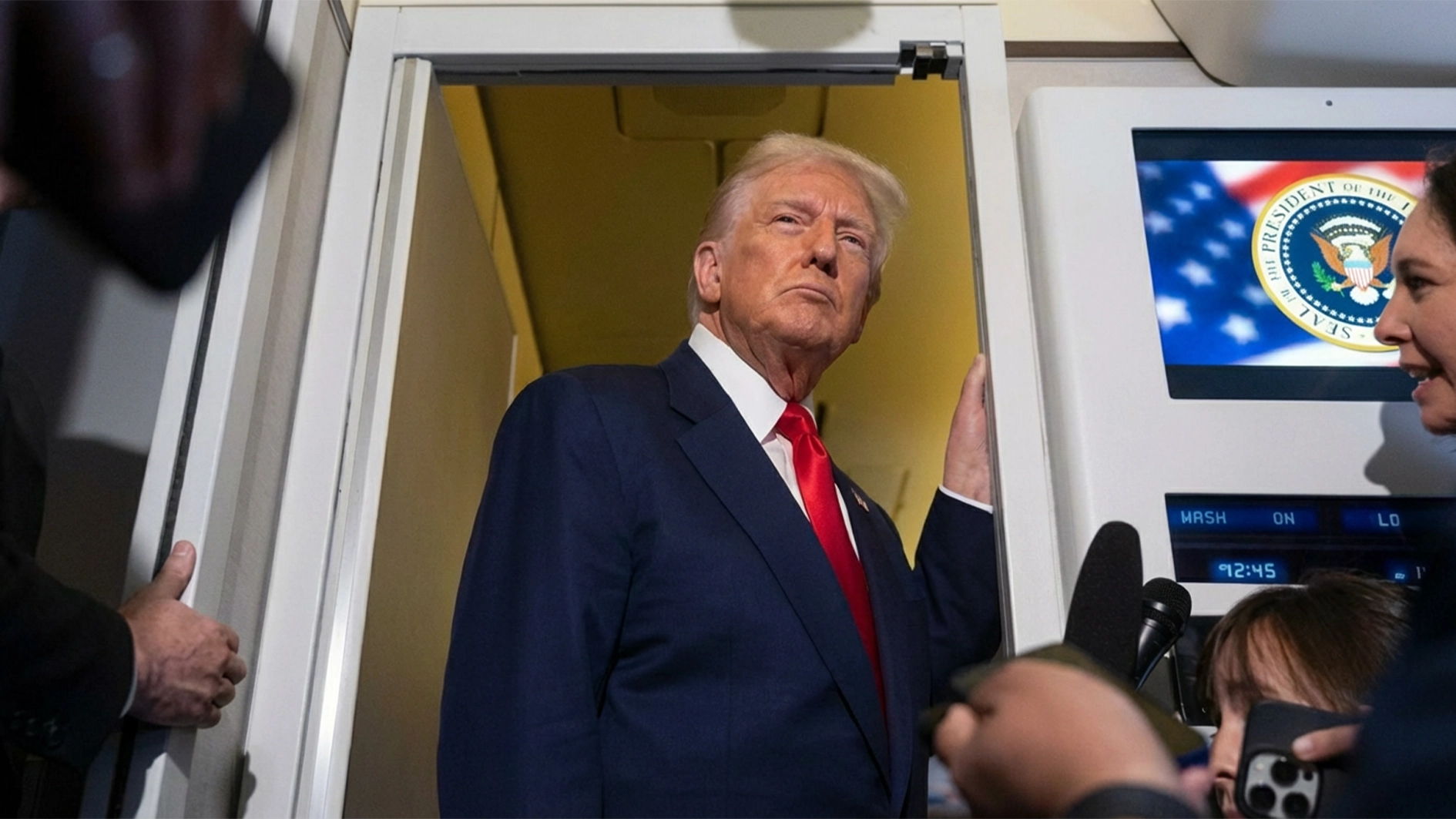
THE reservation trailing United States President Donald Trump’s unveiling of what he grandly calls a “Board of Peace,” is not misplaced. As an initiative, the idea seems wrapped in lofty rhetoric but burdened by controversy from its first public outing. Countries seeking a permanent seat on the board, according to Mr Trump, must pay an astonishing $1 billion—an entry fee that alone raises troubling questions about motive and legitimacy.
In theory, the board is meant to help resolve the Gaza conflict or oversee the implementation of a U.S.-backed ceasefire in the territory. In practice, however, its charter points in a far more ambitious—and unsettling—direction. The document presents the board not as a temporary mechanism for Gaza, but as a permanent global body tasked with promoting peace and good governance worldwide, implicitly positioning itself as a rival to, or even a replacement for, the United Nations.
The board is composed largely of Palestinian officials expected to oversee the enforcement of a U.S.-brokered Gaza ceasefire. Several countries—among them Argentina, Albania, Armenia, Azerbaijan, Bahrain, Belarus, Bulgaria, Egypt, Hungary, Indonesia, Jordan, Kazakhstan, Kosovo, Morocco, Mongolia, Pakistan, Qatar, Saudi Arabia, Turkey, the United Arab Emirates, Uzbekistan and Vietnam—signed on during the January 2026 World Economic Forum in Davos. Their names appear on publicly reported membership lists circulated by news outlets and echoed in official statements.
Others have been more sceptical. France, Norway, Sweden, Slovenia, the United Kingdom, China, India, Russia, Germany and Spain reportedly received invitations but declined or withheld commitment, citing concerns that the board undermines the international order. Canada has signalled willingness to participate, but flatly rejected the idea of paying $1 billion for a permanent seat. The United Nations Security Council initially endorsed the board, though it now claims it was misled about the initiative’s true scope.
Fresh from being overlooked for the Nobel Peace Prize, Trump has cast himself as a consummate peacemaker, crediting his leadership with ending or easing conflicts around the world. He launched the board under a charter signed in Davos, installing himself as chairman. The charter describes the board as an international organisation that seeks to “promote stability, restore dependable and lawful governance, and secure enduring peace in areas affected or threatened by conflict.” In a thinly veiled swipe at existing institutions, it declares a willingness to “depart from approaches and institutions that have too often failed.”
Members, under the charter, may serve a maximum of three years—unless their governments pay the $1 billion required for permanent membership.
There are arguments in favour of such a body. Its chief appeal is speed. Unlike the United Nations, often immobilised by bureaucracy and veto politics, a small, centralised board with direct access to the U.S. presidency could act decisively in moments of crisis. It could elevate emerging conflicts before they explode and push for ceasefires without months of procedural delay.
For Africa in particular, this promise of speed and attention is tempting. The continent suffers not from a lack of early warning, but from a chronic shortage of early action. A nimble advisory body that flags crises early and promotes preventive diplomacy could fill a gap that international institutions have long struggled to close.

Nigeria, as West Africa’s largest economy and de facto regional stabiliser, could also benefit. Abuja shoulders security burdens far beyond its borders. A peace board that supports ECOWAS-led diplomacy, discourages unconstitutional seizures of power and links peace to economic incentives—investment guarantees, infrastructure protection and post-conflict reconstruction—could reinforce Nigeria’s regional leadership and help address the economic roots of insurgency and banditry.
Trump’s deal-driven worldview further adds to the board’s appeal. His preference for negotiation backed by leverage—sanctions, aid, trade and investment—rather than prolonged military engagement could, in theory, encourage settlements and reconstruction in fragile states where conflict has devastated livelihoods.
Yet these potential advantages are overshadowed by profound flaws.
Foremost is the absence of guiding principles. Unlike the UN Charter of 1945—born from the ashes of World War II and anchored in sovereign equality, collective security and respect for international law—the Board of Peace charter rests on no comparable ethical or legal foundation. Peace without principles risks becoming arbitrary, selective and transactional.
Equally disturbing is the extreme concentration of power. The chairman—Trump himself—is ‘omnipotent’. Named more than 30 times in the charter, he alone appoints and dismisses members, sets agendas, convenes meetings and issues resolutions unilaterally. Other members serve at his pleasure, their tenure insecure and their influence marginal. Multilateralism, in this design, gives way to personal rule.
The $1 billion price tag for permanence only deepens scepticism. It makes the board look less like a peace mechanism and more like a cash-for-access club. Two months after its unveiling, the initiative is already defined as much by what it omits as by what it proclaims. Strikingly, the charter circulated to national capitals makes no explicit mention of Gaza—one of the world’s most volatile flashpoints—despite being the conflict most often cited to justify the board’s creation.
The language of “charter” itself invites comparison with the UN Charter, and the comparison is unflattering. Where the 1945 document reads as a covenant of nations, forged from shared trauma and hard lessons, this new charter resembles little more than a set of club rules—grand in ambition, thin in substance.
There is also the matter of perception. Many African states may see a Trump-style peace board as fundamentally transactional, advancing U.S. strategic interests more than African stability. If that view hardens, cooperation will be shallow, selective and ultimately ineffective.
More broadly, the board poses a direct challenge to the international system. By creating parallel structures for conflict zones such as Gaza and hinting at the displacement of UN agencies, it risks weakening institutions that, for all their flaws, possess global legitimacy and decades of experience. Replacing them with ad hoc, profit-driven ventures could erode humanitarian norms and accountability.
Reports that countries declining to join may face punitive tariffs raise an even darker spectre: coercion. Participation may be less voluntary than advertised, binding states into a system of loyalty rather than law.
The verdict, then, is mixed but leaning grim. A Board of Peace could serve Africa and Nigeria if it complements existing institutions, respects sovereignty, and prioritises prevention over spectacle. Without these safeguards, it risks becoming another flashy initiative with little impact on the ground.
Africa hardly needs a new saviour. It needs credible partners who understand local realities and invest patiently in peace. Trump’s Board of Peace sits at a crossroads between innovation and hubris. Its promise lies in decisiveness; its peril in ego, money and unilateralism. History suggests that peace imposed by power and personality may be swift—but it is rarely enduring.

