 Follow Us on Google News


 Follow Us on Google Discover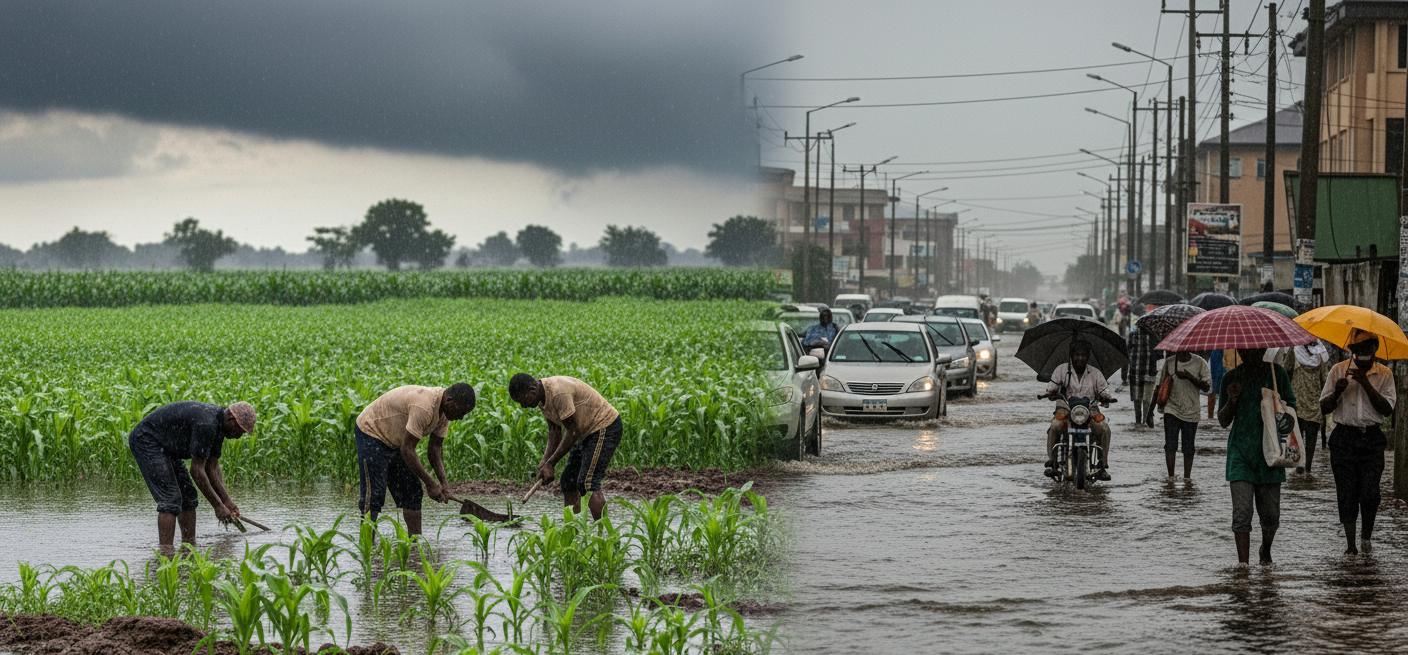
Southwest Nigeria has historically depended on distinct wet and dry seasons, as well as predictable rainfall, to support agriculture, urban planning, and socio-economic activities. Traditionally, the wet season extends from April to October, while the dry season occurs from November to March. In recent years, these patterns have changed significantly. Rainfall now arrives later and often in short, intense bursts. Additionally, temperatures remain elevated for longer periods. These shifts are creating challenges for both farmers and urban residents, who are struggling to adapt. These shifts have raised an important question: are these random changes, or clear signs of a changing climate?
A recent study analysed weather patterns in Ondo State using data from the Nigerian Meteorological Agency (NiMet) for Akure and other areas between 2010 and 2020. The study looked at rainfall trends and variability using statistical analysis and anomaly indices. According to Mr. Taiwo Ayeni, one of the researchers, “Our results show that rainfall in Ondo State is becoming less predictable, significantly affecting agricultural practices and influencing how rural and urban communities plan for the future.”
The study found significant year-to-year variation in both monthly and annual rainfall totals. When a linear trend line is applied, the data shows a clear upward trend. Standardised anomalies reveal frequent deviations from the long-term average, indicating instability rather than predictable cycles. According to Mr. Ayeni, this pattern suggests that rainfall is becoming more intense, with heavy precipitation occurring over shorter periods. “Even when the annual rainfall total appears close to normal, the distribution is not,” he explained. For example, in some years, rainfall totals were very high, while in others, they were very low; however, within those years, the rainfall came in highly irregular bursts. “We are seeing more flash floods and drainage challenges because the rain is coming in intense bursts.”
While the seasonal pattern remains broadly unchanged, with April to October as the wet season and November to March as the dry season. However, rainfall timing, distribution, and intensity have become less predictable. Mr. Ayeni said, “Farmers can no longer depend on fixed calendars” as heavy rains are now happening later in the season, while early rains are uncertain. These changes have made it harder for farmers to plan when to plant and pose significant risks to crop management and yields.
To address these challenges, Mr. Ayeni offered several recommendations for farmers and others in the rural areas. For farmers, he highlighted the importance of forecast-based agriculture, encouraging farmers to use climate-smart planting calendars that rely on probabilistic predictions rather than fixed dates. Additionally, he stressed the need to provide smallholder farmers with timely rainfall advisories via radio and SMS to help them make informed decisions about planting and harvesting, and recommended guidance on staggered planting and the use of flood-tolerant crop varieties. “Farmers need timely information to adapt,” Mr. Ayeni said. “Flood-tolerant crop varieties and staggered planting methods can help reduce losses.”
In urban areas, Mr. Ayeni emphasized the need to update stormwater management systems to reflect recent rainfall patterns instead of relying on historical averages. He stated, “Our current systems are designed for past conditions, but rainfall intensities have increased. We need to adapt to protect our communities.”. He recommended retrofitting flood-prone areas with measures such as permeable pavements, detention ponds, and well-maintained drainage channels. According to Mr. Ayeni, “These improvements should be completed before the peak rainfall months of September and October to reduce the risk of flooding.”

The research highlighted the importance of improving data-driven decision-making, with Mr. Ayeni recommending that local governments use monthly dashboards showing rainfall and temperature anomalies. “These dashboards should use simple red and blue maps to signal when advisory actions are needed,” he said. He also emphasised establishing formal data-sharing agreements between NiMet, state ministries, and universities to ensure climate models remain accurate and accessible.
At a broader level, Mr. Ayeni encouraged the use of validated statistical models, such as ARIMA, for local rainfall forecasting. “We can provide three- to six-month projections to support agricultural planning, water management, and infrastructure scheduling,” he explained. He also stressed the value of community-level early warning systems, turning forecasts into practical checklists for residents. “By working with farmers’ associations and local leaders, we can ensure timely information reaches those who need it most,” he added.
Finally, Mr. Ayeni emphasised the importance of early warning systems at the community level. He stated, “Technical forecasts must be translated into simple, practical checklists that residents can act on immediately.” For instance, he explained, “If the probability of heavy rainfall exceeds 70 per cent within three days, people should clear drainage channels, move farm inputs to safe locations, and postpone fertiliser applications.” Mr. Ayeni also recommended collaborating with farmers’ associations and local market leaders to ensure that this information reaches the community promptly.
In conclusion, Mr. Ayeni emphasised that the statistics are clear. He stated, “Ondo State’s climate is becoming more variable, rainfall intensity is increasing, and heat is influencing storm patterns.” He warned that relying on historical averages for planning is no longer sufficient, adding, “The safest approach is to plan for variability.”
Original Headline: Forecasting the Skies: Using Statistics to Understand Climate Change in Southwest Nigeria – Insights from Ondo State’s Changing Rainfall Patterns

