 Follow Us on Google News


 Follow Us on Google Discover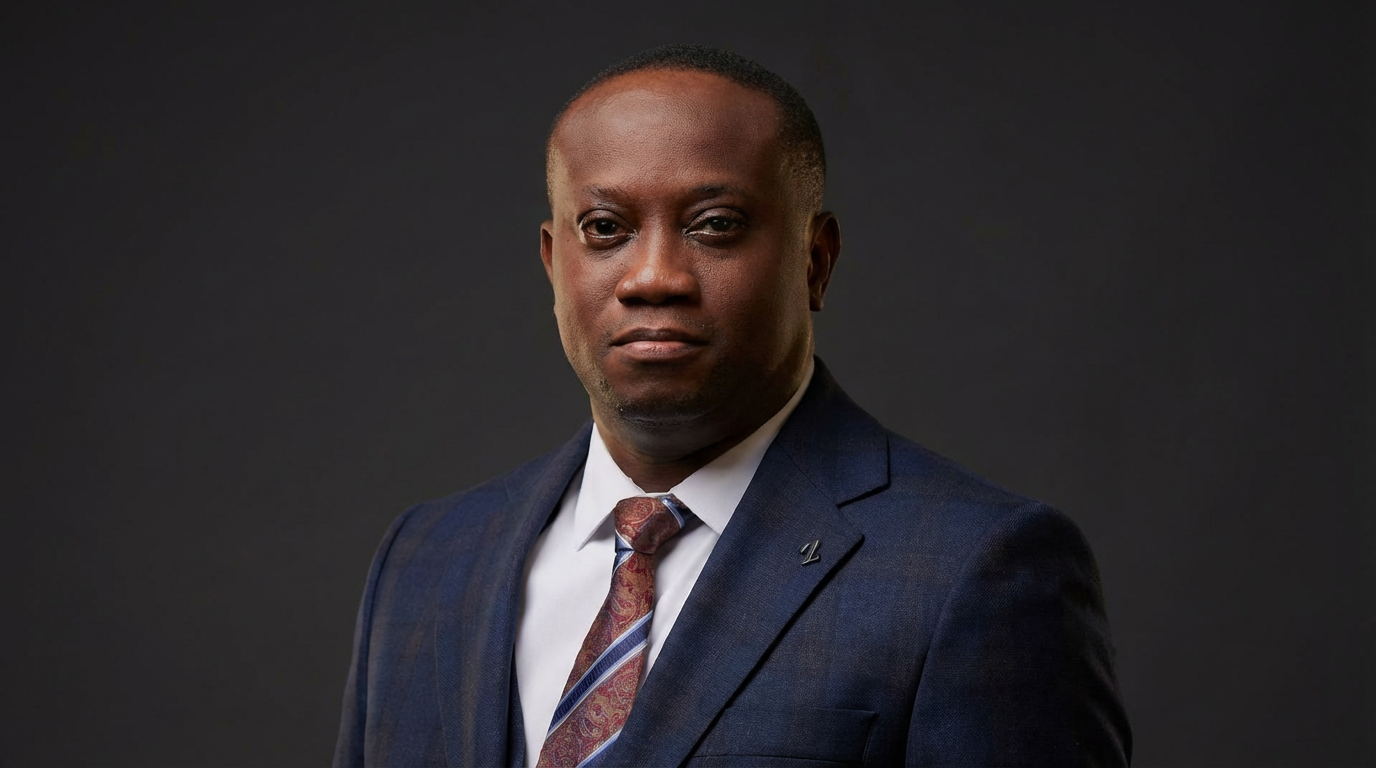
For decades, globalization was held up as a promise of shared prosperity. But for many Nigerians, that promise has felt distant. While Western countries gained economic power and technological dominance, much of Africa—including Nigeria—was left supplying raw materials and importing finished products. For ordinary Nigerians, the benefits of globalization often seemed out of reach.
Today, the world is changing fast. Global supply chains are breaking apart, artificial intelligence (AI) is changing how wealth is created, and new powers are emerging on the world stage. For Nigerians, this is not just a time of uncertainty—it is a chance to help rewrite the rules. If Nigeria seizes the moment, it can play a defining role in the future of globalization.
The Old Globalization: Where Nigeria Stood
Nigeria has long been a part of the global economy, but mostly through oil and gas. These industries brought in foreign money and helped fund the government, but they also created problems. The country became too dependent on oil, struggled to grow its factories and industries, and was left exposed to global price swings.
Nigeria is a country of more than 220 million people, with a huge diaspora and a vibrant entrepreneurial spirit. Yet, despite these strengths, the country has not been able to turn its global connections into real industrial or technological power. Globalization put Nigeria on the map, but did not put it in the driver’s seat.
This was not inevitable. It was the result of a globalization model that rewarded countries with strong institutions, advanced technology, and control over rules—and penalized those without them.

Why the Rules Are Changing
Globalization is now being reshaped by forces that weaken the old hierarchies. AI, data, digital platforms, and automation are shifting value away from sheer physical scale toward intelligence, adaptability, and learning capacity.
In this new environment, advantage flows not only from owning factories or resources, but from:
- Controlling data and analytics
- Embedding intelligence into industries
- Capturing and scaling institutional knowledge
- Innovating faster than competitors
This matters enormously for Nigeria. Unlike past industrial revolutions, this one does not demand a century of capital accumulation. It demands human capital, digital infrastructure, and institutional learning—areas where Nigeria has latent strengths.
Nigeria’s Hidden Advantage: Experience at Scale
People often talk about what Nigeria is missing. But it’s time to recognize what Nigeria has: a wealth of real-world experience and know-how.
From running oil and gas projects to managing life in massive cities, and from financial innovation to connecting millions through mobile phones, Nigerians have built up decades of hands-on expertise. Too often, though, this knowledge stays locked away in people’s heads or in local practices, rather than being shared and scaled up.
In the age of AI, this is a strategic failure—but also a strategic opportunity. When experience is captured through data, digitized through platforms, and embedded in intelligent systems, it becomes exportable value.
Nigeria can move from exporting oil and talent to exporting energy intelligence, infrastructure know-how, fintech platforms, and governance solutions for complex emerging economies.
Nigeria as Africa’s Knowledge Anchor
Africa’s rebalancing within globalization will not happen evenly across all countries. It will be anchored by a few large, influential economies. Nigeria is the most obvious candidate.
Under the African Continental Free Trade Area (AfCFTA), Nigeria can serve as:
- A hub for regional manufacturing and services
- A testing ground for African-built digital platforms
- A center for AI-driven solutions in energy, construction, logistics, and finance
If Nigeria rises to the challenge, it won’t just help itself. It will give Africa a stronger voice in global trade, technology, and climate talks—issues that affect the daily lives of millions across the continent.
A Bridge — or a Bottleneck?
Nigeria stands at an important crossroads, linking Africa and the Western world. Money, technology, and ideas already pass through Nigeria to the rest of the continent. The real question is: will Nigeria just be a middleman, or will it add value and create opportunities for its people?
Without strong policy and institutions, Nigeria risks facilitating a new form of extraction—this time of data, talent, and digital value. With the right strategy, it can localize global technology, adapt it to African realities, and export solutions outward.
A bridge can bring people together, or it can break under pressure. How Nigeria chooses to play this role will shape its future—and the future of Africa.
What Nigeria Must Do — Quickly
For Nigeria to shape the next phase of globalization, five priorities are unavoidable:
First, build a national knowledge infrastructure.
Knowledge must be treated as a strategic asset. Government agencies, major enterprises, and critical sectors need systems that capture institutional memory, operational learning, and data.
Second, align industrial policy with the knowledge economy.
Local content must go beyond physical inputs to include skills, data, software, and intellectual property. Public procurement should reward learning and innovation, not just cost.
Third, assert digital and data sovereignty.
Nigeria must define how its data is generated, stored, and monetized, ensuring that digital globalization does not replicate the extractive patterns of the past.
Fourth, reintegrate the diaspora.
Nigeria’s global talent base is one of its greatest untapped assets. AI-enabled collaboration enables converting brain drain into knowledge circulation.
Finally, institutionalize continuity.
Nigeria’s most persistent weakness is not a lack of ideas, but a loss of memory. Policies must survive political cycles. Institutions must learn faster than governments change.
Why the World Should Care
A Nigeria that succeeds in this transition would not only transform itself. It would:
- Stabilize Africa’s largest population center.
- Create new markets for global collaboration.
- Reduce migration pressure and economic volatility.
- Contribute to a more balanced and resilient global economy.
For countries in the West, helping Nigeria build its capabilities is not just an act of charity—it is in their own interest too.
A Closing Thought
Globalization is not over. But the rules are changing.
In the new era, success won’t go to the cheapest producer, but to those who can build and run the smartest systems. Nigeria has the people, the talent, and the experience to lead—if the country is willing to step up.
The real question isn’t whether Nigeria will catch up with the changing world, but whether it will help shape the world’s future.
Dr. Babajide Ojuola, PhD FNSE. is a senior energy executive and engineering fellow with about two decades of experience delivering complex oil & gas and infrastructure projects across Nigeria. As an Executive Director in charge of Technical Services at International Energy Services Limited (IESL), a Pan-African engineering and energy services company, he has managed large-scale EPC projects, strengthened technical governance, and driven operational excellence particularly within the Nigerian oil and gas sector.
A strong advocate of knowledge-driven performance, he integrates project management, knowledge management, and artificial intelligence / digital systems to improve delivery outcomes. Dr. Ojuola is a distinguished Fellow of the Nigerian Society of Engineers (FNSE) and holds a PhD in Engineering Management from Walden University, USA.
Dr Babajide Ojuola is an official member of the Forbes Technology Council, an invitation-only organization for world-class technology leaders and innovators. He actively contributes to executive and professional leadership communities focused on knowledge management, digital transformation, and the future of intelligent organizations in Africa and beyond.

