 Follow Us on Google News
 Follow Us on Google Discover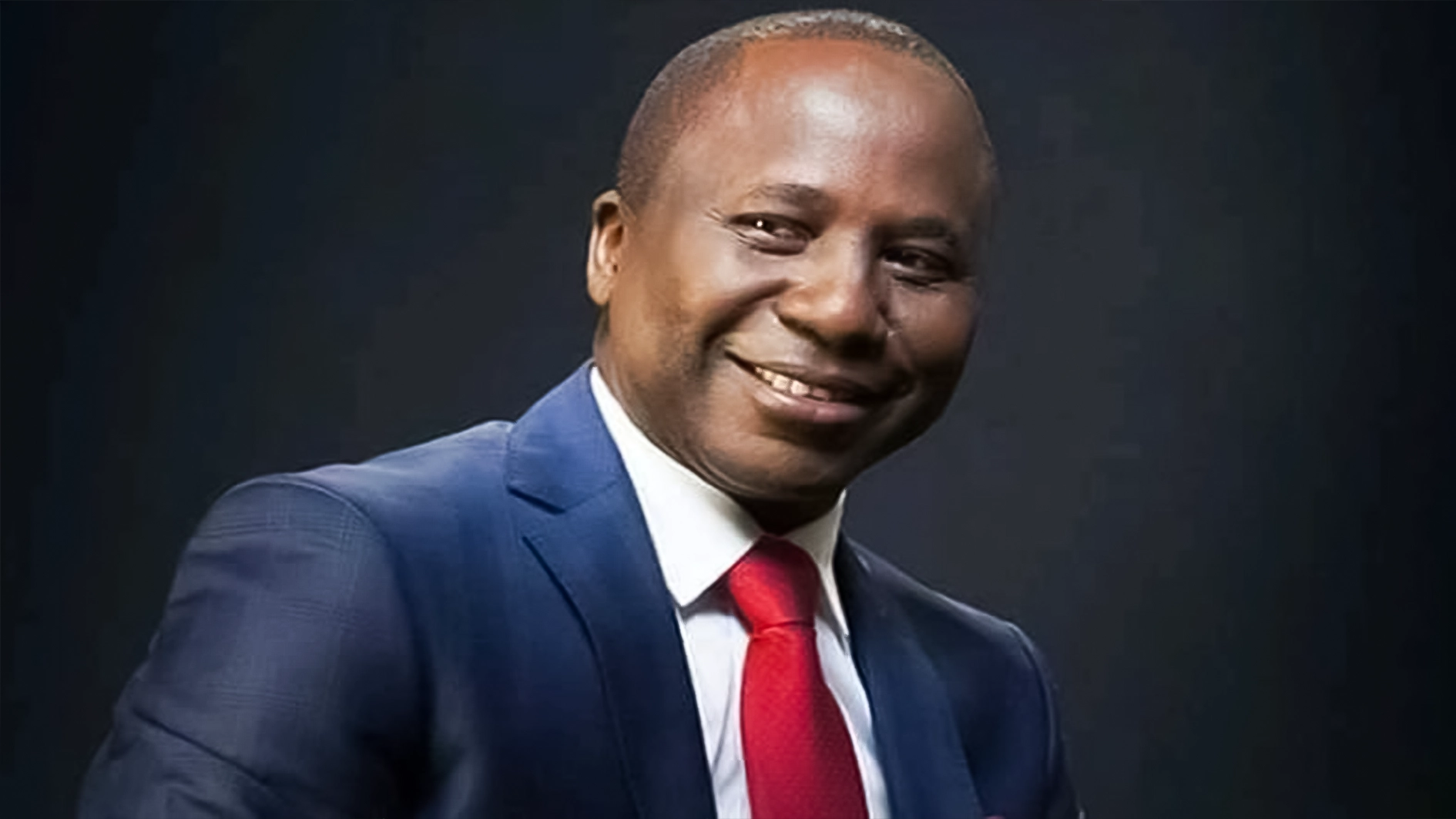
Sir: The intersection of academic brilliance, administrative expertise, and global diplomacy is a rare phenomenon in contemporary subnational governance. In the developing world, where institutional fragmentation often stifles sustainable development, the emergence of a leadership figure who is simultaneously an accomplished scientist, a seasoned technocrat, and an internationally respected diplomat is vital. Professor Stephen Sinikiem Azaiki, OON, represents this rare synthesis.
His formal appointment on May 4, 2026, as the director of the Centre for Polish and African Affairs (CPAA) at the Wyższa Szkoła Komunikacji i Zarządzania (WSKiZ) in Poznań, Poland, serves as a powerful validation of his global standing. This appointment is not merely an academic accolade; it represents a strategic geopolitical bridge linking Eastern Europe’s most dynamic economy with the African continent, and specifically with Nigeria and Bayelsa State.
From the perspective of public administration theory, Professor Azaiki embodies the conceptual framework of the public entrepreneur: an agent who does not merely occupy office but actively crafts public value by synthesising heterogeneous resources, navigating institutional complexities, and mobilising domestic and international networks to address deep-seated societal challenges. As Bayelsa State approaches its next off-cycle gubernatorial election in late 2027, the developmental paradox of the state demands a leader of such polymathic caliber.
Following a brief stint teaching science at Bishop Dimeari Grammar School, Azaiki joined Nigeria’s Federal Ministry of Agriculture and the National Directorate of Employment (NDE) in 1993, rising to state director in Rivers and Oyo states by 2007. In his home state of Bayelsa, Azaiki served in 16 different capacities: notably as the pioneer Commissioner for Agriculture & Natural Resources, and twice as Secretary to the State Government (SSG) under Governor DSP Alamieyeseigha.
He later became Special Adviser to successive federal ministers (Special Duties, FCT, Police Affairs, Youth Development) and served on the Governing Council of Federal University of Technology, Akure. His public sector portfolio also includes chairing university governing councils and visitation panels. In 2017–2020 he was appointed Pro-Chancellor and Chairman of the Governing Council of Niger Delta University, overseeing reforms and development in the premier university of the region.
Azaiki is also a founder and leader of development-oriented NGOs and think tanks. He co-founded the World Environment Foundation for Africa (WEMFA) and the National Think-Tank Nigeria (NTTN), serving as president of each. He chaired numerous policy committees (e.g. for the 2014 National Conference on restructuring) and served as president of the Nigerian Chapter of the Global Organisation of Parliamentarians Against Corruption (GOPAC). His Azaiki Foundation runs a public library, museum, language and tech training centres in Yenagoa, reflecting his commitment to education and empowerment.

In academia, Azaiki has taught in Ukrainian and Nigerian institutions. He is a professor of Agronomy and has lectured on Conflict and Crisis Management & International Relations at the Ukrainian Academy of Personnel Management. He has published books and papers on oil politics, federalism and development (e.g. Inequities of Oil Politics in Nigeria, Oil, Gas and Life in Nigeria, etc.), and frequently appears at conferences.
Poland is one of Europe’s success stories. It is the EU’s 6th-largest economy by nominal GDP and 5th by PPP (Purchasing Power Parity). In 2024 its GDP was about $915 billion (nominal). Notably, Poland’s economy has grown uninterruptedly since 1989 – it is the only EU economy to avoid recession during the 2008 financial crisis. Its per-capita GDP and purchasing-power are similar to small EU countries; GDP per capita has risen 500% since 2000 and Poland became a trillion-dollar economy in 2025.
Trade between Nigeria and Poland is still small but rising. In 2024 Nigeria exported about $322 million to Poland (mostly oil), while Nigeria imported $292 million from Poland (mostly agricultural products and machinery). A 2013 Nigeria–Poland maritime pact anticipated Polish investment in Nigerian ports and training (Bayelsa even planned a Polish-affiliated Maritime Academy at the time).
The appointment of Professor Azaiki, therefore, coincides with a significant revitalisation of bilateral relations between Nigeria and Poland. Through the CPAA, Professor Azaiki can help transfer this agricultural and administrative expertise to Nigeria. Having co-organized the 2017 Polish-Nigeria Trade and Investment Forum in Poznań in partnership with the Nigerian Investment Promotion Commission (NIPC) and the Polish-Nigeria Trade & Investment Forum (PONTIF), the CPAA has a proven track record of facilitating bilateral trade and investment. Under Azaiki’s leadership, the Centre is well-positioned to expand these investment corridors, helping to address foreign investors’ challenges in finding credible local partners.
Also, as the director of the CPAA, Azaiki would act as an institutional conduit for initiatives like the Stefan Banach NAWA Scholarship Programme, which allows Nigerian students receive comprehensive support to pursue Master’s degrees at public Polish universities. Likewise, his leadership of the CPAA and his deep connections to major Polish universities—such as the Poznań University of Life Sciences (PULS), where several Nigerian scholars have successfully completed degrees—Azaiki can help establish structured talent pipelines. By facilitating these educational opportunities, he can help train a new generation of Bayelsan scientists, agronomists, and engineers in Eastern Europe’s most dynamic academic environments, addressing the state’s critical human capital needs.
To successfully transition Bayelsa State from a resource-dependent to a knowledge-driven economy, an administration led by Professor Stephen Sinikiem Azaiki should prioritize several key policy initiatives.
The state should establish a formal Research and Innovation framework to foster collaboration between the state’s higher education institutions, such as Niger Delta University, and private industries. By partnering with global institutions like Poznań’s WSKiZ, the state can establish research centers focused on solving local environmental, agricultural, and technological challenges, creating a sustainable innovation ecosystem.
Using his extensive international networks in Poland, the state can partner with Global North agricultural firms to import modern seed technologies, agro-processing equipment, and post-harvest handling systems. This will significantly increase the productivity of major local crops, reduce post-harvest losses, and modernize the state’s livestock and feedlot operations, laying the foundation for a sustainable agro-industrial economy.
Kenitimi Bikikoro, coordinator S&C Nigeria, International Society of Comparative Education Science & Technology Nigeria ( ISCEST).

