 Follow Us on Google News
 Follow Us on Google Discover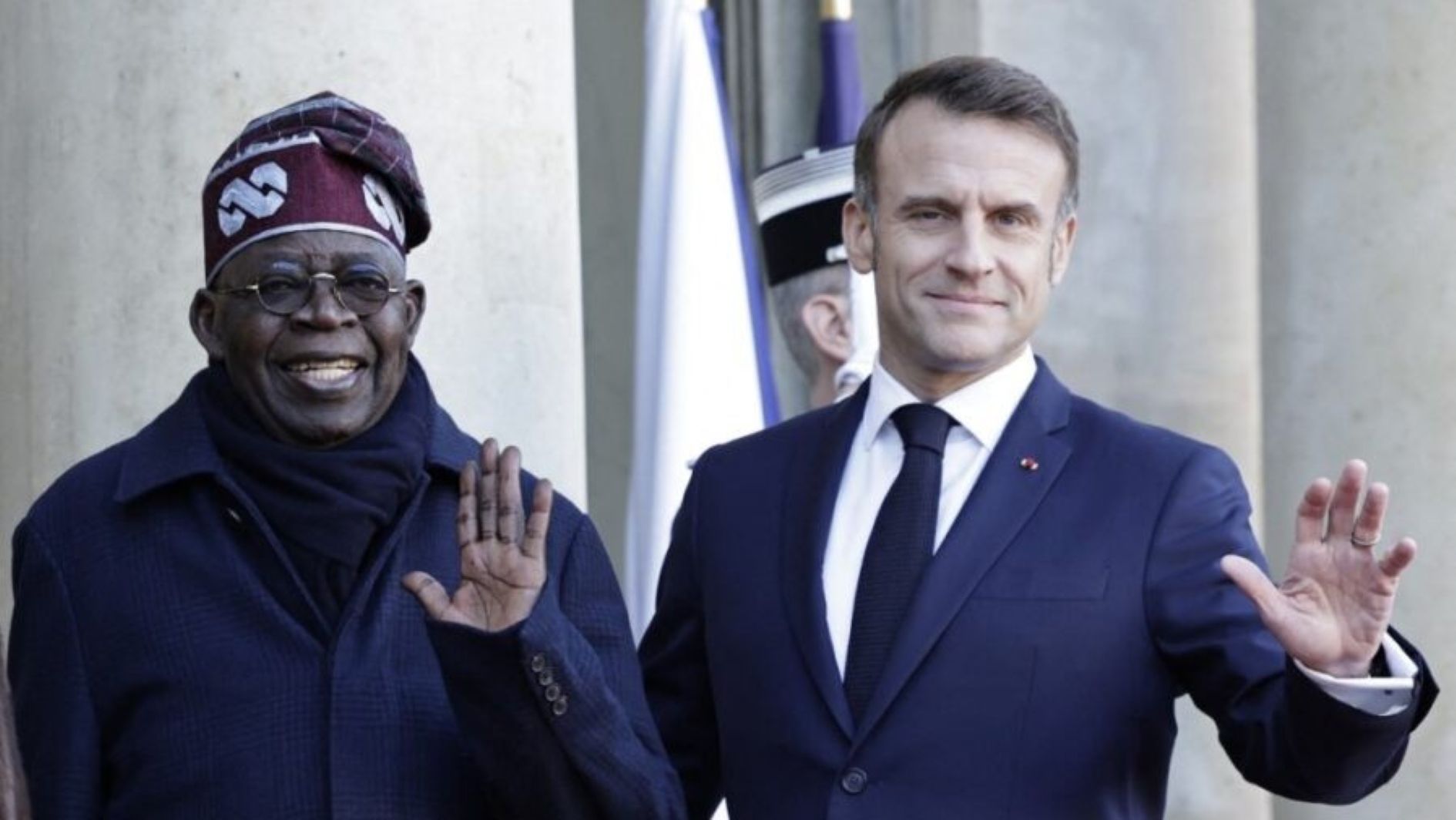
By Adekeye Adebajo
Last month’s “Africa Forward” Franco-African summit in Nairobi was the first ever to be held in a non-francophone country in the 53-year history of these gatherings. The summit was, however, effectively a “talking shop” that brought together over 4,000 government, business, and civil society actors to engage in debates around energy, finance, agriculture, health, industrialisation, and the blue economy. This all occurred amidst empty slogans of “transformative partnerships” and “effective multilateralism,” even as France and other major donors continue massively to slash development assistance, while failing to fulfil promises on the environment, trade, and debt.
The bilateral commercial relationship between France and summit host, Kenya, has grown tremendously over the last decade, with about 150 French companies operating in the country. Kenyan president, William Ruto, played the political ventriloquist, wielding the language of African “sovereignty” and the need to end “European dependency,” while entrenching the very same clientelism he was condemning.
A five-year defence agreement with Kenya has seen 800 French soldiers deploying to Mombasa for “joint training exercises,” controversially granting immunity to Gallic troops for crimes committed while in the country. Kenyan civil society has vociferously protested against these measures, given decades of impunity by British troops in the country who have been accused of rape, murder, and environmental degradation. These French soldiers also join American troops in four long-standing military bases in Mombasa and Manda Bay, from which U.S. drone strikes have been launched against targets in Somalia and Yemen.
Kenya was declared a non-NATO American ally in May 2024. Furthermore, Ruto’s rhetoric could not mask harsher realities at home, involving brutal crackdowns on youth protestors in 2024 and 2025, amidst widespread allegations of graft.
The Nairobi summit also marked the African swansong of French president, Emmanuel Macron, who leaves office next year after a decade in the Elysée, amidst plummeting approval ratings stuck at an abysmal 18 per cent (with 75 per cent disapproving of his performance), and the squandering of his thumping parliamentary majority by 2022. Without any sense of irony – given France’s history of four centuries of brutal slavery and colonialism in Africa – Macron announced in Nairobi, that he and France were the “true Pan-Africanists.”

France – historically one of the main targets of Pan-African campaigners – was thus perversely seeking to rewrite history to portray itself as one of the sacred ideology’s main progenitors. This was an utterly blasphemous statement from the representative of the most exploitative external power in Africa over the last seven decades.
Macron had pledged at the start of his presidency in 2017 that he would end the corrupt network of political, military, economic, and cultural ties with France’s former African colonies known as Françafrique. He earnestly noted: “I am from a generation that does not come and tell Africa what to do.” He has, however, ended up pursuing the very same neo-colonial policies that all of his seven predecessors since Charles de Gaulle have done since 1959. France established military bases across Africa from the 1960s, and, like a pyromaniac fireman, intervened over 50 times with troops to prop up or depose assorted African tyrants.
During his tenure, Macron has continued to treat Africa as a chasse gardée (private hunting-ground), defending the Déby family autocracy in Chad, and meddling in oil-rich Libya in support of rebel warlord, General Khalifa Haftar. He has further supported autocratic and corrupt leaders like Cameroon’s Paul Biya. Under Macron’s watch, Gallic troops have now been humiliatingly expelled from Mali, Burkina Faso, Niger, Senegal, Côte d’Ivoire, and Chad, often amidst fierce anti-French mass protests. The leaders of five former client states – Mali, Chad, Niger, Burkina Faso, and Mauritania – whom Macron had arrogantly summoned to Pau in January 2020 – have also dissolved the French-led Group of Five (G5) Sahel force following military coups in Mali, Burkina Faso, and Niger between 2020 and 2023. A patronising Macron rudely accused these governments of forgetting to say “thank you” to France, a statement that even Chad’s Mahamat Idriss Déby described as “bordering on contempt for Africa and Africans.”
Macron’s hectoring, self-described “Jupiterian” style has gone down badly in Africa. His prejudiced description of Africa’s challenges as “civilisational” in July 2017, and his notorious statement that African women having seven or eight children was “destabilising” the continent, echoed his predecessor Nicolas Sarkozy’s racist speech in Dakar a decade earlier. At the recent summit in Nairobi, the French president crassly asked members of an African audience at a youth forum to keep quiet or leave the venue. Furthermore, at home, Macron’s administration has often criminalised and brutalised African and Arab migrants and citizens. Railing against Islamic “separatism,” he successfully pushed a law to gain more control over Muslim schools and mosques.
Despite Macron’s grandstanding as a global leader, France is clearly no longer a great power. Its seat on the UN Security Council has become an anachronism. It is now the seventh largest economy in the world behind China, Japan, and India. France’s national debt at €3.46 trillion, is equivalent to a staggering 115.6 per cent of its Gross Domestic Product (GDP), and remains one of the highest in the world. French aid has further massively declined to €3.5 billion this year: a staggering 77 per cent reduction from the €15.3 billion in 2022.
The €23 billion pledge that Macron grandiosely announced at last month’s Franco-African summit in Nairobi, therefore unsurprisingly envisaged €14 billion to be delivered by the French private sector, and €9 billion from its African partners. Paris clearly can no longer afford its historical neo-colonialism, and has sought, in recent times, to get the United Nations (UN) and the European Union (EU) to stump up the cash to subsidise its African military adventures. Macron is already a lame duck and deeply unpopular president who has a year left in office. It is highly unlikely that he can bind any successors – particularly Marine Le Pen’s poll-leading racist, far-right National Rally – to such quixotic promises.
The recent Franco-African summit glaringly exposed Macron’s continuing folie de grandeur (delusions of grandeur). Under his presidency, Paris has continued a politique de grandeur (politics of grandeur) in which a country in perpetual decline has pretended to be a great power.
Sensing growing Gallic weakness, before the summit, Macron lashed out at China – its seventh largest trading partner – describing Beijing as an “economic predator” in Africa, while portraying Russian military assistance to its former Gallic pré carré (backyard) in the Sahel, Central African Republic, and Madagascar, as a direct threat to its own interests.
Amidst an ignominious rejection of French tutelage across the continent, the French president has disingenuously sought to sell the necessity of finding new African allies as a foresighted strategy. Macron’s decade in power has, however, clearly accelerated the demise of the discredited Gallic gendarme (policeman) in Africa.
Professor Adebajo is a Senior Research Fellow at the University of Pretoria’s Centre for the Advancement of Scholarship in South Africa.

