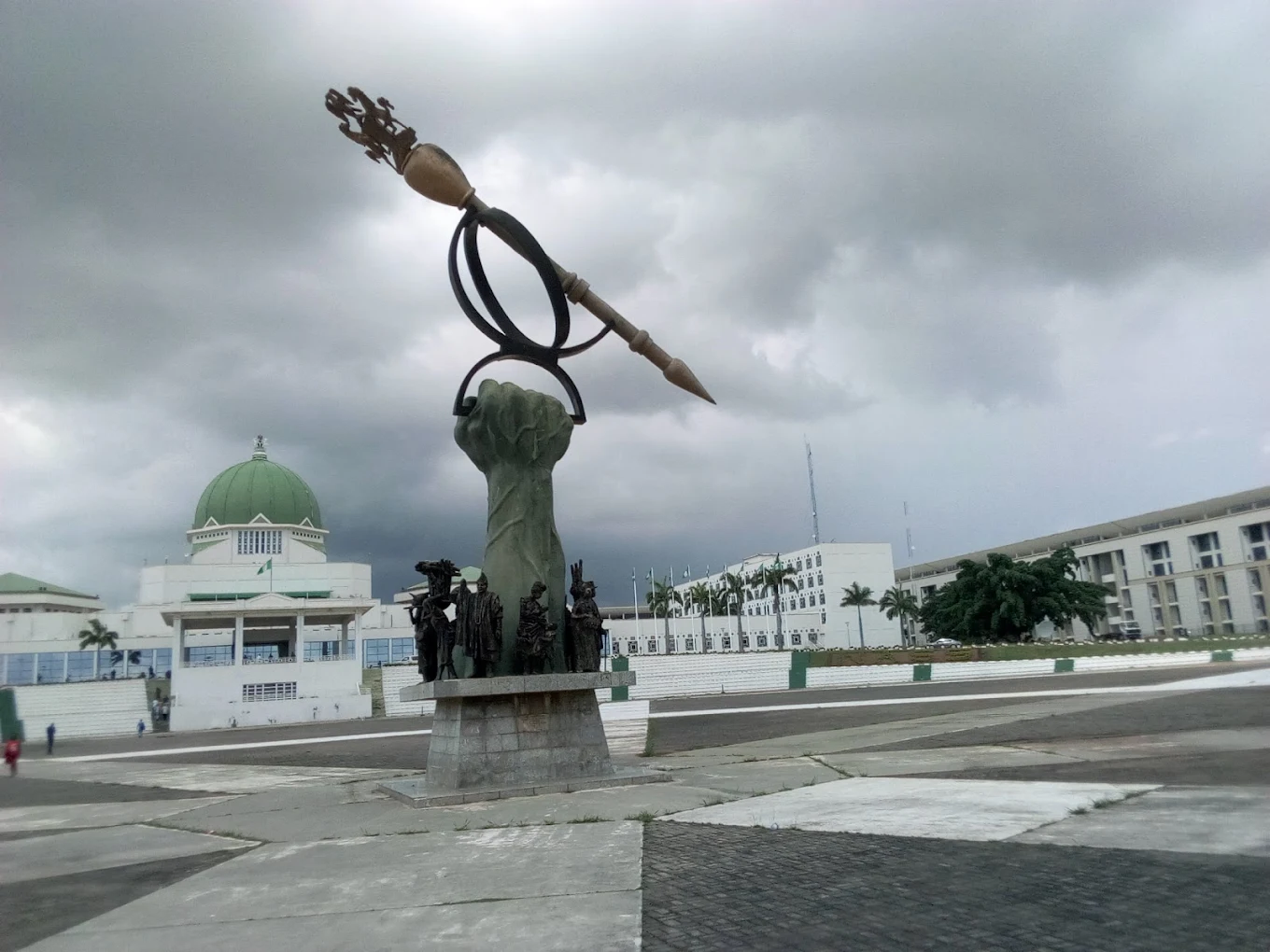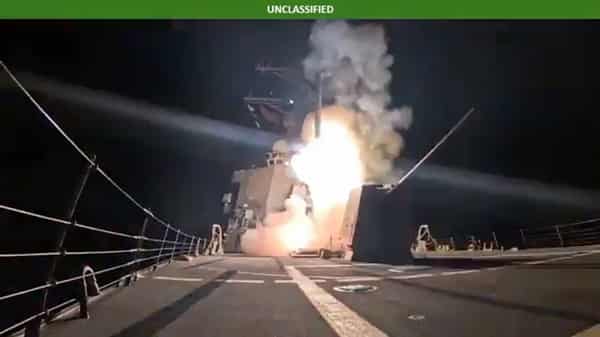
The United States has conducted an airstrike on terrorists in northwestern Nigeria, according to US President Donald Trump, who stated that the militant organisation had “targeted and brutally murdered mostly innocent Christians, at rates not witnessed in many years, and even centuries!” Nigeria’s Foreign Minister, Yusuf Tuggar, also informed multiple media outlets that the US operation was coordinated with the Nigerian government.
However, the U.S. airstrikes have sparked debates, disagreements in viewpoints, and questions, especially among certain Northern political and religious leaders regarding the rationale behind targeting Northwest Nigeria, which is relatively stable compared to the Northeast, which has been known as a terrorist stronghold since 2009.
It is essential to clearly state that cooperation between two friendly nations in intelligence sharing and military operations against terrorism should not be problematic, unless there are serious national security issues in that cooperation. The broad analysis of the U.S. air strike on terrorists within Nigeria can be classified into two main categories: international and domestic factors.
Regarding international factors, we can identify elements such as power projection and sovereignty, whereas domestic factors include the political and economic dimensions that underlie the U.S. air strikes on Nigerian territory.
Power projection refers to a country’s capability to deploy and maintain military forces and other forms of national power (political, economic, informational) far beyond its borders to achieve designated aims, serving as a diplomatic instrument, deterrent, or a method to shape global events.
Following President Trump’s threats, the U.S. has conducted surveillance flights over Nigeria. Additionally, the U.S. has been performing intelligence-gathering operations across significant areas of Nigeria since late November, indicating an increase in security collaboration between the two nations, as revealed by flight tracking data and officials cited by Reuters.
This exemplifies power projection and aligns with the concept of power in International Relations, considering Nigeria cannot conduct similar flights over any part of U.S. territory in return.
Some Nigerians are pleased with the U.S. strikes against terrorist locations, while others express skepticism about the asymmetrical power dynamics that permitted the Nigerian government to authorise U.S. actions on its territory.
The U.S. power projection raises concerns about sovereignty. Many Nigerians question the nature of U.S. intelligence operations in Nigeria and resent feeling vulnerable while witnessing the U.S. boast about its strikes. It is crucial to mention that this segment of the Nigerian populace desires the defeat of terrorists but resents the notion of not being a fully sovereign nation.
It should be noted that concerns over U.S. disregard for Nigerian sovereignty can be alleviated, as the Nigerian government has publicly affirmed through various media that it collaborates with the U.S. in sharing intelligence and executing strikes against terrorist targets in Nigeria.
Domestic factors include political and economic components. The political aspect stems from President Trump’s aim to please his MAGA supporters, particularly among Christian groups, by showcasing military strength and capability against Islamic extremist terrorist factions responsible for violence against innocent Christians in Nigeria.
Notably, a recent terrorist attack resulted in five fatalities and around 35 injuries at the Al-Adum Juma’at Mosque in Gamboru market in Maiduguri, where Muslim worshippers had gathered for evening prayers around 6:00 PM. This underlines that terrorist assaults affect individuals of all faiths.
Nevertheless, President Trump’s actions align with Johan Galtung’s perspectives, who is regarded as the father of peace. Focusing solely on terrorist attacks against all religions in Nigeria may suppress the voice of Christians, hence it’s reasonable to allow Christians and adherents of any other beleaguered religions to express their concerns.
Domestic factors regarding Nigeria indicate that the presidential election is set for 2027, and the political campaign atmosphere has been active since roughly a month following the last election. It would be disadvantageous for the current Nigerian administration not to collaborate with the United States in light of President Trump’s assertion concerning genocide against Christians in Nigeria. Despite the U.S. conducting strikes on terrorist locations, the Muslim-Muslim ticket that propelled the current president into office faces risks in the coming election.
Economically, the U.S. and Nigeria continue to engage in trade and cooperation due to domestic circumstances within Nigeria. This is driven by the Nigerian government’s need for ongoing U.S. aid and the desire to lift certain restrictions imposed on Nigeria by the U.S.
On the U.S. side, there is a necessity to uphold its global dominance as China’s presence in Nigeria is rapidly increasing, along with the fact that the U.S. lacks a strong foothold in West Africa, especially since it was required to vacate the largest drone base in Mali as well as in other West African nations.
It is worth noting that there is no inherent issue with two nations collaborating on counter-terrorism efforts. Nevertheless, conducting airstrikes without a strategy involving ground troops may force terrorists to shift to previously secure areas, moving from rural forests into populated zones and subsequently altering their terror tactics to kidnapping and banditry.
Abiodun Ramon Oseni, a Fellow of the Institute of Security Nigeria, a former U.S. police officer, and U.S. Army veteran, who specialises in International Security at Harvard University, and American Military University, wrote via [email protected]