 Follow Us on Google News
 Follow Us on Google Discover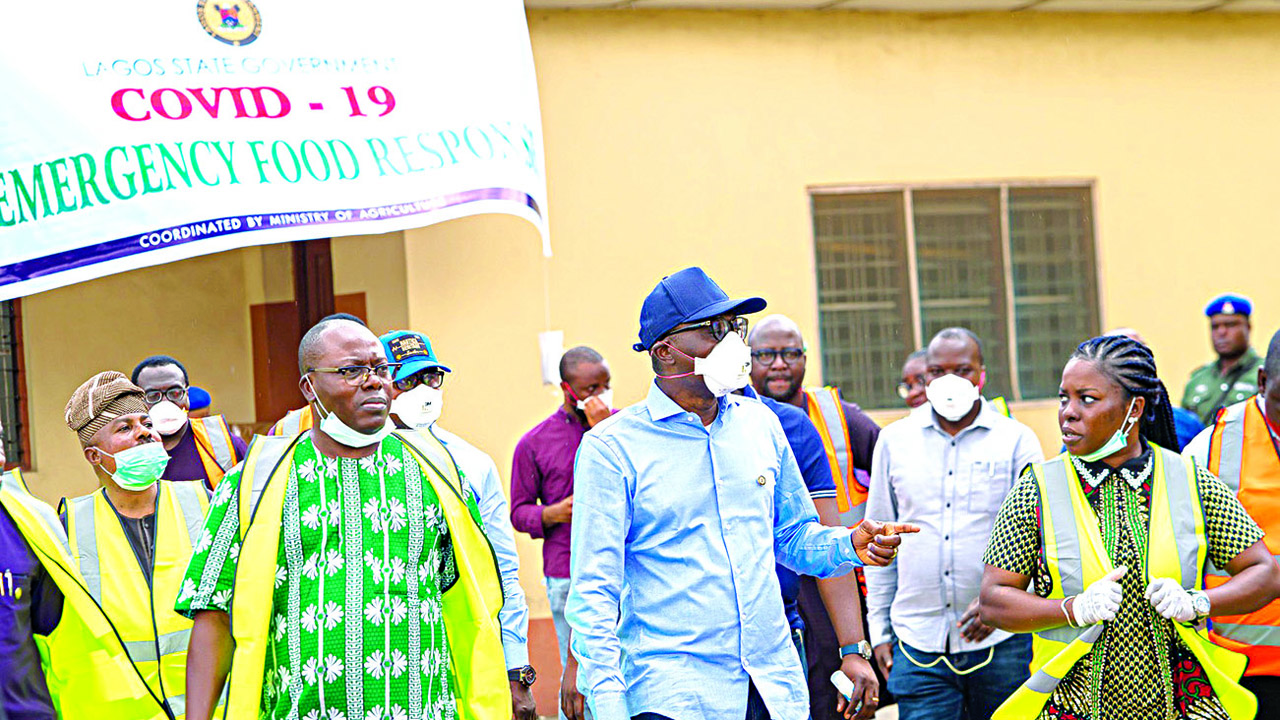

With a population in excess of 22 million, Lagos understandably has a peculiar food security challenge.
[ad]
Consequently, in the last three years, the Mr. Babajide Olusola Sanwo-Olu administration has put in place cogent strategies to stimulate food security in the State. Part of the plan is to treat agriculture as a business venture by concentrating on value chains where the state has comparative advantage. In addition, the government has developed strategic partnerships that would stimulate investment in the sector.
The main goal is to deliberately develop an Agro-economy that would serve the twin purposes of producing sufficient food for the growing population, as well as developing a smooth-running Agric sector that would truly transform the state into 21st century financial hub.
The 5-year food security road map inaugurated in April 2021 by Governor Babajide Sanwo-Olu is one of the audacious agricultural growth plans that will enhance food sufficiency in the state.
The road map will see a sustained public and private sectors’ investment in agricultural value chains to give Lagos comparative advantages in the sector and enhance the state’s self-sufficiency potential in food production from the current 18 per cent up to 40 per cent.

According to Governor Sanwo-Olu, the adverse impact of COVID-19 on food security necessitated an immediate action towards ensuring food security for residents of the state. Lagos, the smallest state in Nigeria in terms of land size, relies on massive food importation and mutual collaboration on production with other states to ensure food sustenance for its 22 million population.
The Governor noted that the state could no longer rely exclusively on production alliances with other states, stressing that it was time for Lagos to unlock its agricultural potential by implementing the five-year road map.
[ad]
Part of the strategies to achieve the plan is to focus on leveraging technology to grow agric’s upstream sector through interventions capable of lowering the cost of production in identified value chains such as fisheries, poultry, piggery, rice, vegetables and .
There would also be deliberate actions to grow the mid-stream and downstream sectors to enhance value chain in processing, handling, storage, cold chain, packaging, utilisation and commercialisation.
As part of the 5-Year agricultural and food system development roadmap, the 2021 Agricultural Value Chains Enterprise Activation Programme was launched.
The Governor, on that occasion, deployed massive agricultural investment that empowered 3,000 urban and rural farmers in key sectoral value chains. The beneficiaries included women, youths and peasant farmers, who were selected for the scheme through a merit-based system anchored by independent associations of farmers across the state.
The support was majorly for ‘Agripreneurs’ (Agriculture Entrepreneurs) in poultry, piggery and artisanal fishery, which are the three sub-sectors largely affected by the disruption of COVID-19. In the scheme, 300 youths trained in Aquaculture and Poultry Production at the Lagos ‘Agripreneurship’ Programme (LAP) were empowered with agricultural inputs valued at N245 million, which represented 46.7 percent of the programme’s total investment.
Other beneficiaries include 400 pig farmers that participated in the Agricultural Youth Empowerment Scheme (Agric-YES), 680 fishermen, 190 fish cage culture artisans, 300 eggs marketers, 500 fish processors, 200 rice farmers and 370 crop farmers.
They received variety of modern tools, such as tractors, ploughs, fishing boats and gear, harvesters, threshers, destoning machines, defeathering machines, herbicides, fish juveniles, pig growers, smoking kilns, crates of eggs, and inputs, which are to be utilised in farming communities across Lagos agricultural zones of Badagry, Epe and Ikorodu.
[ad]
Presently, the Sanwo-Olu administration is speedily working towards completing the Integrated Rice Mill at Imota, in Ikorodu, which will become operational this year.
The 32 metric tonnes per hour rice mill, when completed, is expected to produce 2.4million bags of 50kg rice per annum, as well as provide 267,580 jobs at different stages of the value chain. This will also reduce the cost of rice locally; enhance self-sufficiency and revenue generation in the state and the country at large.
The government has already trained, built capacity and empowered 800 farmers across the state, as part of the preparation for the take-off of the mill, which is expected to generate 250,000 jobs.
To further drive home the salient message of its commitment to food security and farmers’ productivity, the government has stepped up activities in the Agro-Processing, Productivity Enhancement and Livelihood Improvement Support (APPEALS) Project. Thus far, 879 farmers and Small and Medium Scale Enterprises (SMEs) have benefited from the Lagos APPEALS Project.
This is a Federal Government -World Bank Assisted programme. It is aimed at enhancing the productivity of small-scale farmers in the three identified value-chains of poultry, aquaculture and rice through capacity building, provision of infrastructure, and empowerment.
[ad]
The project is also targeted at service providers, transporters, input manufacturers and suppliers within the system whose services are required for the successful implementation of the project.
Recently, the government collaborated with the Republic of the Netherlands on mechanized farming. Globally, Netherlands is renowned for self-sufficiency in food production. This is one of the Agric-partnership policies of the state government, which is meant to create gainful employment for the populace and increase food security.
The Government has also empowered 190 youths and women in fish cage culture, while 20 clusters of Ofada rice farmers were supported with modern technology and necessary support through the APPEALS.
Similarly, the Sanwo-Olu administration has initiated a-500 hectares rice farm technology intervention project. This is part of the efforts to boost rice production. It has also trained 97 Senior Secondary School Agricultural Science students as well as Agricultural Science teachers and Education Desk Officers under the 2021 Agricultural Summer School Programme.
In addition, rehabilitation work has begun on the state’s coconut belt in collaboration with the Food and Agriculture Organisation (FAO). This is to create over 500,000 job opportunities and wealth, through training, capacity building and empowerment of the youths and women in the coconut value chain.
In order to boost Agric related enterprise in the state, in 2020, the maiden edition of the Eko-City Farmers’ Market was held with a total transaction of N7.9million, while the state provided needed support in the production of about 335,000 loaves of bread under the Eko Coconut Bread initiative.
These and many more are parts of the initiatives of the administration of Governor Babajide Sanwo-Olu in the past three years. The goal is to ensure that the state not only achieve food security, but also provides jobs for its teeming population.
A major component of social and economic justice is adequate food production. If a nation cannot send astronauts to the space, it should be able to feed its population. It is only in doing this that any nation could a place of prominence in the community of nations.
Nigeria is a country richly blessed with abundant natural and human resources that if properly harnessed can feed its people and export the surpluses to other nations.
That is what Lagos, under Governor Sanwo-Olu, is working to tirelessly and creatively to achieve. With the support of all stakeholders, in the coming years, concrete dividends of the efforts would become very evident for all to see.
Egbewunmi is of the Features Unit, Ministry of Information & Strategy, Alausa, Ikeja.
[ad unit=2]

