 Follow Us on Google News
 Follow Us on Google Discover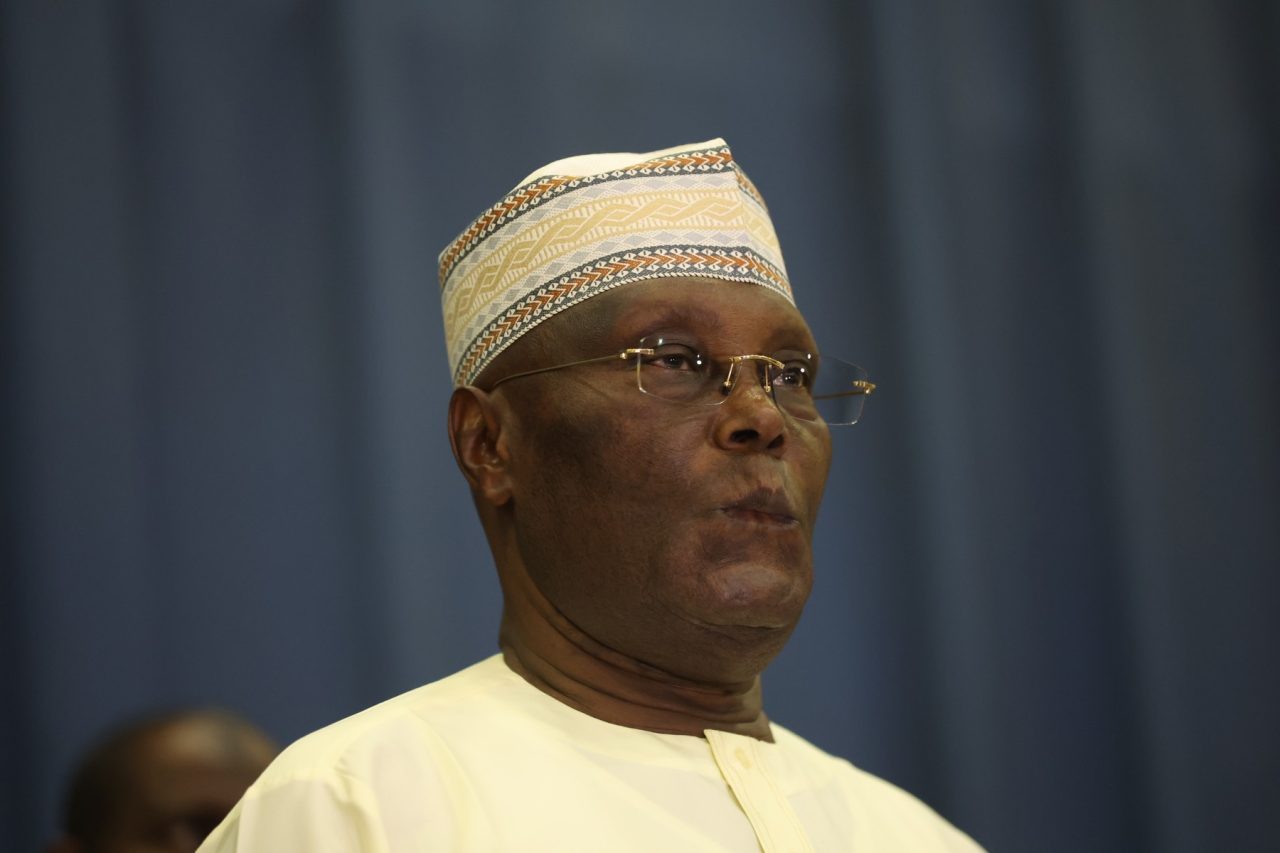
It is rumoured that former vice president and presidential candidate of the Peoples Democratic Party (PDP) in 2023, Atiku Abubakar, also wants to abandon the PDP. Beyond the rumour, former governor of Delta State and Atiku’s running mate, Ifeanyi Okowa, after defecting to the All Progressives Congress (APC), suggested in a television chat last week, that he communicated Atiku before he defected.
As a matter fact, Okowa claimed Atiku was also heading out of the party. He said: “And I also know that he (Atiku) is already heading out of the PDP from the communications he passed on to me, and that Nigerians know already.”
Atiku had defected before and could do so again. On Okowa’s defection, he expressed the view that freedom to associate is one of the pillars of democracy, without which democracy would be meaningless. Meaning what? That Okowa did well? There was no sense of loss at a time one expected Atiku to be alarmed and furious. And that left one wondering whether there is not more to this than meets the eye.
Weighing the far-reaching implications Atiku’s defection could have on an already weakened PDP, on the opposition and on Atiku’s remarkable political career, one thought it needful to fact-check with one of his reliable media advisers. The first attempt did not yield response after the message was delivered and read. That was unusual. This particular media adviser is noted for prompt clarifications. But he now seemed to hesitate, leaving one to contemplate what could be his handicap. After two days, one had to try again, and response was a definite: “No, he is not leaving the PDP.”
That being said, the polity remains rowdy and fluid at the moment, such that a lot could happen in 24 hours. This is the season for politicalmovements and realignments. Every politician wants to reappraise the next move to avoid mistakes that hurt. In this clime, to waste four years of a political career outside a ruling party is equivalent to four years of a farmer’s life without rain.
It’s a soulless, winner-takes-all scenario and politicians lack the discipline and character to persevere. They can’t survive outside government. They defect routinely as soon as they lose elections and the political parties bear the liability. The PDP is perhaps, the most prostituted and it is sheer luck it has not expired.

The former vice president was seen in the company of a coalition of opposition politicians that visited former President Muhammadu Buhari in April, strengthening coalition rumours. Former governor of Kaduna State, Nasir el- Rufai, former governor of Sokoto State and now senator, Aminu Tambuwal, former minister of Communications, Isa Pantami, former Imo State governor, Achike Udenwa, former governor of Benue State, Gabriel Suswam and former governor of Adamawa State, Jibrilla Bindow, among others, were among the pilgrims to Buhari’s home in Kaduna.
el-Rufai, who had earlier decamped from the All Progressives Congress (APC), and now a member of the Social Democratic Party (SDP), is shopping for allies. Anyone seen in Rufai’s company could be deemed to be of the same mission, which is to form a coalition to bring down the Tinubu government, come 2027. That’s legit.
Both Atiku and el-Rufai have not hidden the fact that a coalition is what is needed to even scores with Tinubu. Doing it separately as was done in 2023 would not give the opposition a good chance to make an impact. They would dissipate individual energies instead of combining strength. Presidency minders are aware of the immense capacity in a coalition but are gloat to point at the preliminary loopholes. Fair game.
For political watchers, that Kaduna visit recalled to memory the once upon a time exodus of PDP stalwarts into the APC during Goodluck Jonathan’s Presidency. At formation, the prospects for APC were bright. PDP bigwigs, including Atiku, Tambuwal, Abubakar Bukola Saraki, Rotimi Amaechi among others, had to abandon their party for the new coalition. They formed the New PDP (nPDP) wing, which they used to generate crisis to justify their exit.
Their grouse was that Jonathan had used up the term (six years) he was allotted by the goodwill of the party, from 2010 to 2015, yet he seemed bent on misemploying executive powers to conscript himself as the sole candidate of the party for the 2015 election, which he did. That was a major disaster for the PDP and the defectors, from which they have not fully recovered. Hopefully, these stalwarts are reflecting and purging themselves in the realisation of how unkind they’ve been to the party that offered them privileges and fortune.
Before that episode of 2015, in 2010, the North had some years left of the Umar Yar’Adua presidency, which Jonathan, then vice president had to fortuitously use up. When it was time for another election circle in 2011, some members felt it was time for the North to complete the Yar’Adua years, and to fulfill the principle of rotational presidency, which the PDP championed.
Despite the popular sentiment among members to allow Jonathan fly the PDP ticket, being an incumbent and as a form of reciprocity for South-south’s age-long political affinity with the North; and also, because the South-south was virtually the supplier of the wealth of the country and had been shut out of political power for decades, Atiku could not be persuaded to leave the ring. Jonathan won the primary with the help of governors and Atiku sulked.
Yet in 2007, after the long-drawn powerplay in the Presidency beginning from 2003, when president Obasanjo was high-handed and grounded Atiku’s chances in the PDP, the former vice president had to seek alliance with Bola Ahmed Tinubu’s Action Congress Alliance (AC), after he left the PDP. It was unprecedented, as Atiku, who was vice president in a PDP government had opportunity to run for the office of president in another party. The Supreme Court ruled in his favour after an initial disqualification by the electoral umpire.
Clearly, despite not being president yet, Atiku is arguably the star player of the Fourth Republic politics. There is yet to be an equivalent, in the manner he was appointed as Vice President after winning the governorship election in Adamawa State in 1999.
As Vice President, Atiku took charge of the economy and made a mark in the liberalisation and privatisation of assets under Obasanjo. He was the go-to person compared to his principal who was politically illiterate at the time he was conscripted into politics from prison. And Atiku did fix many problems for the party when the levers were available to him.
In a dispassionate chronicle of the story of the PDP, Atiku will take more space than any other party man, for good or bad. For that reason, one hopes that he finishes well without adding another negative as he rounds off.
When governors of the PDP met in Ibadan and said they were not going into any alliance with Atiku, that was a slight on the leading opposition party. That suggested the party was in disarray and could not speak with one voice. There is a leadership vacuum in the party and this is the time for Atiku to step up. Apart from being the last presidential candidate, Atiku is the natural leader of the party, given his wealth of experience as vice president and careerist politician.
In the absence of leadership that does not descend into the arena, the PDP will be unable to weather the storm that is gathering against it. Selfless leadership provides a moral high ground for one to adjudicate and earn respect from younger elements who are instigated or have the tendency to be unruly. These elements think they have nothing to lose because they have amassed enough fortune. They yield themselves to be hired for traitorous assignments. They need a firm but just leadership to rein them in. Some of them were teenagers at the time the PDP was formed.
Nigeria is a natural habitat for multi-party politicking, even before independence. The colonialists realised that the different protectorates could not be forced to run on one style of government, because of the rich diversities in climate and tribes. It is therefore incongruous with history for one ruler to assume he could foist a one-party system on Nigeria.
This is a challenge to the opposition, to wake up and put up a good fight. It will be cowardly for the PDP to surrender now, to whatever form of subtle intimidation and misuse of federal might. It will also be a matter ofdisappointment for Nigerians not to have alternative platforms to articulate friendlier economic policies that have human face, different from what the APC has served them for close to ten years.
The cost of living is unbearable for families. It is getting out of hand. Nigerians tasted healthier and richer years under PDP, despite their corrupt ways. The World Bank has projected a gloomy future for the country, with poverty expected to rise by 3.6 percentage points by 2027. Unfortunately for Nigerians, the political class is not disconcerted by this sad news. They are plotting 2027 state capture, having not delivered good governance.
For a relatable experience, a bag of cement sells for more than N10,000. Other inputs to achieve quality construction are damn costly. The implication is that houses under construction that will mature in 2027 will not be affordable to citizens, especially young Nigerians who are just starting up in life.
Some Nigerians say Atiku is the major obstacle against resolving the crisis in the PDP. Perhaps not entirely so. They’re just asking him to show uncommon leadership. Nigerians are not unaware that there are sworn trouble makers who do not want the party to have peace. They are not oblivious that moles are planted to destabilise the party. They are not ignorant that some judges and officials of INEC twist the Constitution and refuse to declare the seats of defectors vacant. Yet, having benefited so much from PDP, this is not the time for Atiku to quit. Let him fix the party.

