 Follow Us on Google News
 Follow Us on Google Discover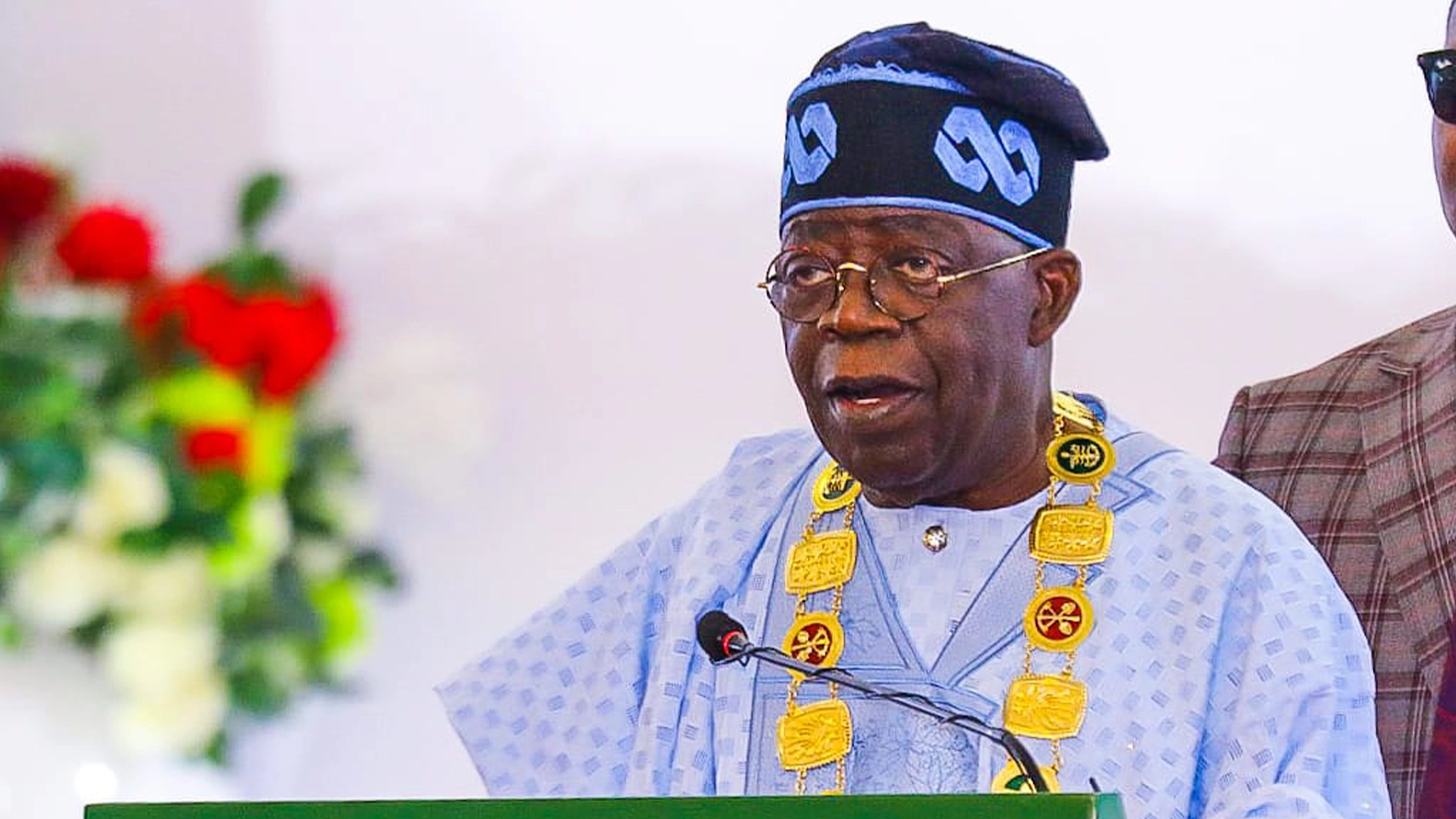
Three critical issues are set to shape proceedings as the ruling All Progressives Congress (APC) holds its 2026 National Convention this weekend. Chief among these are the zoning arrangement, the body language of President Bola Tinubu, and the interests of state governors, ADAMU ABUH reports.
As the All Progressives Congress (APC) inches toward its 2026 national convention, what ordinarily should pass as a routine exercise in party administration is fast assuming the character of a defining political moment, one that could shape the ruling party’s internal cohesion and electoral trajectory ahead of the 2027 general elections.
At the heart of the unfolding contest lies a delicate web of competing interests, regional calculations, and power negotiations, with zoning emerging as the most contentious variable.
For a party that has long relied on informal power rotation to manage diversity and ambition, any perceived disruption to the existing arrangement could reopen old fault lines and trigger resistance from entrenched blocs.
Beneath this is a deeper struggle over who controls the party’s soul, its structure, direction, and ultimately, its ticket.
Closely tied to this is the battle over the composition of the National Working Committee (NWC), the party’s engine room. The stakes are high: whoever emerges in key leadership positions will not only manage party affairs but also wield significant influence over candidate selection and dispute resolution ahead of 2027.
Unsurprisingly, the contest is drawing intense interest from power brokers, particularly governors, whose dominance of the party’s internal machinery places them at the centre of delegate mobilisation and consensus building.

Indeed, the convention’s outcome may be largely determined long before delegates converge, given the critical role of ward, local government, and state congresses in shaping the delegate list. Control at these foundational levels often translates to decisive advantage at the national stage, reinforcing concerns about the balance between internal democracy and elite-driven consensus.
Compounding the complexity are underlying tensions over whether the party should prioritise continuity or embrace leadership renewal. While some argue that stability is essential for consolidating gains, others see the convention as an opportunity to recalibrate the party’s direction in response to shifting political realities.
Ultimately, beyond the formal agenda, the convention represents a strategic alignment exercise, one that will test the APC’s ability to manage internal contradictions, maintain unity, and position itself as a cohesive force heading into a potentially turbulent electoral cycle.
At the centre of this unfolding political drama is President Bola Ahmed Tinubu, whose perceived preferences have already begun shaping alignments within the ruling party. Tinubu’s endorsement of Prof. Nentawe Yilwatda as national chairman has effectively set the tone for other key NWC positions, signalling continuity and a leadership trajectory closely aligned with the presidency’s strategic objectives.
Beyond presidential support, a powerful bloc of APC governors, particularly those who recently defected from opposition parties, has emerged as a co-determinant of the party’s internal arrangements. Their financial capacity, control over state party structures, and ability to mobilise delegates have made them critical players in deciding who occupies the top administrative positions within the party.
Within APC circles, there is little doubt that President Tinubu’s influence is pivotal. His backing of Yilwatda has created momentum for retaining the current leadership at the national secretariat, with supporters arguing that continuity will enable the party to consolidate
its reforms and electoral strategy.
Reinforcing this momentum, the Prince Simon Ali Support Organisation has purchased nomination and expression of interest forms on behalf of the incumbent national chairman. The group’s Director-General, Dominic Alancha, described the move as a vote of confidence in the chairman’s capacity to lead the party to future electoral victories, emphasising that the decision was collective and not personal.
However, beyond presidential endorsement, APC governors have asserted their influence over candidate selection, acting both individually and collectively to ensure loyalists and trusted allies occupy strategic NWC offices. This dual power structure, anchored in the presidency and the governors, has intensified negotiations within the party as aspirants scramble for endorsements from state executives who control the party machinery at the grassroots.
Governors’ involvement has become particularly decisive in influencing delegate alignments, which could determine outcomes even in contests that appear open on paper but are increasingly shaped by consensus arrangements.
Amid these calculations, uncertainty still lingers over the fate of some incumbent officials, including the current National Secretary, Surajudeen Ajibola Basiru. While he is believed to enjoy the confidence of the presidency, it remains unclear whether he will retain his position as the party reconfigures ahead of 2027. This uncertainty has fueled speculation and heightened competition, particularly for positions considered critical to party operations.
The race for the APC National Women Leader seat has also intensified, highlighting the interplay of regional and factional dynamics. Mrs Mary Alile‑Idele of Edo State, backed by a section of women stakeholders championing continuity and stability, citing her track record in women’s mobilisation and grassroots engagement.
In contrast, party stakeholders from Cross River State argue that the seat previously occupied by Dr Betta Edu should be ceded back to them for the sake of equity and balance.
The contest underscores the broader challenge of balancing continuity with inclusivity, reflecting the APC’s efforts to integrate regional representation within its national leadership.
Adding another layer to the contest is the growing influence of recently defected governors, many of whom are seeking to secure NWC slots for their loyalists. Their push for inclusion has triggered resentment among long-standing party members, who argue that foundational figures in the APC are being sidelined in favour of political newcomers.
This tension underscores a broader challenge: balancing inclusivity for new entrants while preserving fairness for those who contributed to building the party over the years.
Tensions have crystallised in states such as Delta, Enugu, Zamfara, and Adamawa, which have become flashpoints in the struggle for influence over NWC representation.
In Delta State, Governor Sheriff Oborevwori and former Governor Ifeanyi Okowa are perceived as part of the emerging power bloc, leveraging executive and political influence to shape delegate lists and sway aspirants.
Meanwhile, founding APC figures such as Ovie Omo-Agege and Festus Keyamo represent entrenched interests, seeking to protect the legacy and grassroots networks they helped establish.
In Enugu State, Governor Peter Mbah is consolidating support for newer entrants but faces pushback from loyalists like Uche Nnaji and Osita Okechukwu, who insist on fair representation for foundational members in national leadership roles.
The scenario in Zamfara State reflects a microcosm of the APC’s internal contradictions. The state has a history of intra-party rivalries, which have resurfaced as competing blocs jostle for influence over NWC representation. Former Governor Abdulaziz Yari remains a dominant power broker, leveraging deep grassroots networks, while Governor Dauda Lawal and former Governor Bello Matawalle, who joined the APC after elections, have built their own political followings.
The rivalry among these three figures underscores the broader tension between legacy party structures and newer entrants wielding executive authority.
In Adamawa State, foundational APC figures, including Aishatu Dahiru Ahmed and former Governor Jibrilla Bindow, have mobilised to resist perceived encroachment by Governor Ahmadu Umaru Fintiri and his loyalists. The contest here reflects a pattern seen across multiple states: tension between political newcomers controlling governance machinery and long-standing members claiming entitlement based on party-building contributions.
Amid these competing interests, the APC leadership has retained its zoning formula for allocating NWC positions across Nigeria’s six geopolitical zones, aiming to prevent regional domination and promote national cohesion.
However, while zoning remains the official principle, its implementation has been contested. Critics argue that strict adherence to zoning limits merit-based competition and narrows the field for aspirants.
To address perceived inequities, calls for rotation of positions among states within each zone have intensified. Proponents assert that zoning addresses regional balance but does not guarantee fairness at the state level, where historical dominance by particular states has left others marginalised. Despite these measures, allegations of exclusion have surfaced.
Ambassador Fubara Dagogo accused party officials of deliberately blocking his bid for the National Vice Chairman (South-South) position, despite fulfilling all financial requirements, describing the situation as a “conspiracy” to favour certain aspirants.
Similarly, Dr Oyiborume Paul Yovwe alleged he was denied access to nomination forms for National Secretary, being told the position had already been assigned to an incumbent. These claims have heightened perceptions that the NWC selection process may not be entirely open, creating tension among aspirants and raising questions about internal democracy.
For the APC, the challenge lies in managing these pressures without fracturing the party. The convention represents a critical test of the party’s ability to reconcile divergent interests while maintaining cohesion.
Consultations are expected to intensify in the days leading up to the convention, with party leaders, governors, and aspirants negotiating consensus around the final list of candidates.
Success will largely depend on the willingness of key stakeholders, including President Tinubu, NWC members, and governors, to accommodate competing viewpoints.
Failure to achieve a balance could deepen divisions and weaken grassroots mobilisation ahead of the 2027 elections. Conversely, a process perceived as fair, inclusive, and transparent could strengthen the APC’s internal cohesion and public credibility.
The composition of the NWC has far-reaching implications for the APC’s electoral prospects. A leadership structure perceived as representative and inclusive could solidify unity, enhance organisational effectiveness, and boost chances at the polls.
Conversely, perceptions of exclusion and manipulation could exacerbate factionalism, alienate foundational members, and undermine the party’s ability to present a united front to voters.
Moreover, how zoning and rotation debates are resolved will signal the party’s commitment to internal democracy.
Ultimately, the APC faces the delicate task of balancing unity and competition. Decisions taken at the convention will not only determine who occupies strategic NWC positions but also set the tone for the party’s cohesion, internal democracy, and political trajectory ahead of 2027.
A convention that successfully accommodates diverse interests could serve as a platform for rebuilding confidence in the party, while one perceived as exclusionary may fuel factionalism and threaten long-term stability.
The APC convention is more than a procedural gathering; it is a test of the party’s ability to manage power, equity, and internal democracy. With President Tinubu’s influence and governors’ backing shaping the process, unresolved tensions over zoning, rotation, and inclusivity remain critical flashpoints.

