 Follow Us on Google News


 Follow Us on Google Discover
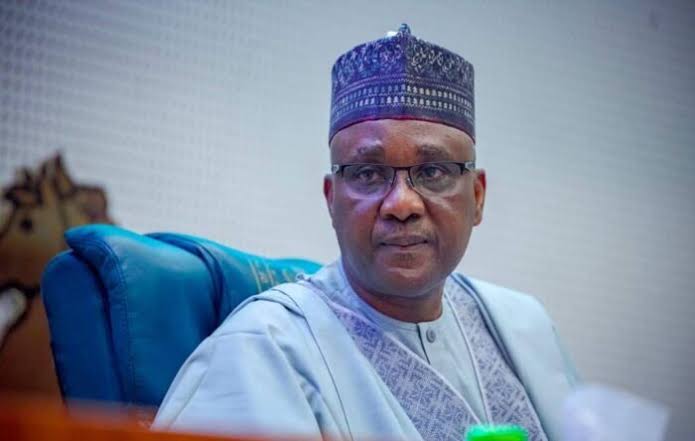
Socio-Economic Rights and Accountability Project (SERAP) has urged Senate President Godswill Akpabio and Speaker of the House of Representatives Tajudeen Abbas to “disclose the exact amount of the monthly running costs currently paid to and received by National Assembly members, and provide spending details for such costs.”
[ad]
SERAP also called on them to “end the alleged practice of the National Assembly fixing its own salaries, allowances, and running costs, in accordance with the Nigerian Constitution 1999 [as amended] and international obligations.”
The organisation further urged them to “stop paying running costs into lawmakers’ personal accounts, and refer any misuse or mismanagement of these funds to anti-corruption agencies for investigation and prosecution where admissible evidence exists.”
In a letter dated August 17, 2024, and signed by SERAP Deputy Director Kolawole Oluwadare, the organisation expressed concern over lawmakers fixing their salaries, allowances, and running costs and the opacity surrounding the spending of millions of naira in running costs.
“The constitutional oath of office requires lawmakers to ensure transparency and accountability in the amounts of salaries, allowances, and running costs they receive,” SERAP noted.
The letter read in part: “Paragraph N, section 32(d) of the Third Schedule to the Nigerian Constitution clearly makes it unlawful for the National Assembly to fix its own salaries, allowances, and running costs.”
[ad]
“The alleged practice of lawmakers setting their own salaries, allowances, and running costs contradicts the constitutional oath of office and the objectives of the UN Convention against Corruption, to which Nigeria is a state party.”
SERAP urged prompt action: “If we do not receive a response within seven days, SERAP will pursue legal action to compel you and other National Assembly members to comply with our request in the public interest.”

“Accounting for and returning any misused or mismanaged running costs would build trust in democratic institutions and strengthen the rule of law,” SERAP argued.
They emphasised that Nigeria’s international obligations under the UN Convention against Corruption require public officials, including lawmakers, to discharge their duties with integrity, honesty, and responsibility.
“Nigerians have a right to scrutinise how their lawmakers spend public funds and to expect honesty and faithful performance from them.”
[ad]
“The allegations that lawmakers are fixing their salaries, allowances, and running costs suggest they are exploiting their positions of trust. Ending this practice would enhance public confidence in the National Assembly’s integrity and demonstrate its commitment to serving the public interest.”
SERAP further stressed that lawmakers must avoid improper acts that breach public trust, including setting their own salaries, allowances, and running costs.
“The National Assembly must tackle abuses within its own spending if it is to effectively perform its oversight functions and hold the government accountable,” SERAP stated.
They concluded by stressing that the legislative body must demonstrate accountability in its management of public resources to maintain public trust.
“Rule 713 of the Federal Government Financial Regulations prohibits the payment of personal money into a government bank account or the payment of public funds into private accounts,” SERAP reminded lawmakers.
In the Seventh Schedule of the Nigerian Constitution, lawmakers commit to upholding the Fundamental Objectives and Directive Principles of State Policy and to performing their duties honestly and faithfully, in the interest of Nigeria’s well-being and prosperity.
“Public office is meant to serve the public interest, not private self-interest. Reports that lawmakers are fixing their own salaries and running costs amount to self-dealing and are detrimental to the public interest,” SERAP warned.
[ad]
SERAP also highlighted Section 15(5) of the Nigerian Constitution, which mandates public institutions to abolish corrupt practices and abuses of power, and Section 16(2), which requires the material resources of the nation to be harnessed for the common good.
“According to our information, National Assembly members currently fix their own salaries, allowances, and running costs, which are paid directly into their personal accounts,” SERAP stated.
Senator Kawu Sumaila, representing Kano South Senatorial District, recently disclosed that each senator earns at least N21 million monthly in running costs, salaries, and allowances, confirming that “my monthly salary is less than N1 million, and after deductions, it comes down to just over N600,000. However, each senator receives N21 million monthly in running costs.”
Reports also indicate that former President Olusegun Obasanjo recently alleged that lawmakers set their own salaries and allowances, contrary to the recommendations of the Revenue Mobilisation Allocation and Fiscal Commission (RMAFC).
[ad]

