 Follow Us on Google News
 Follow Us on Google Discover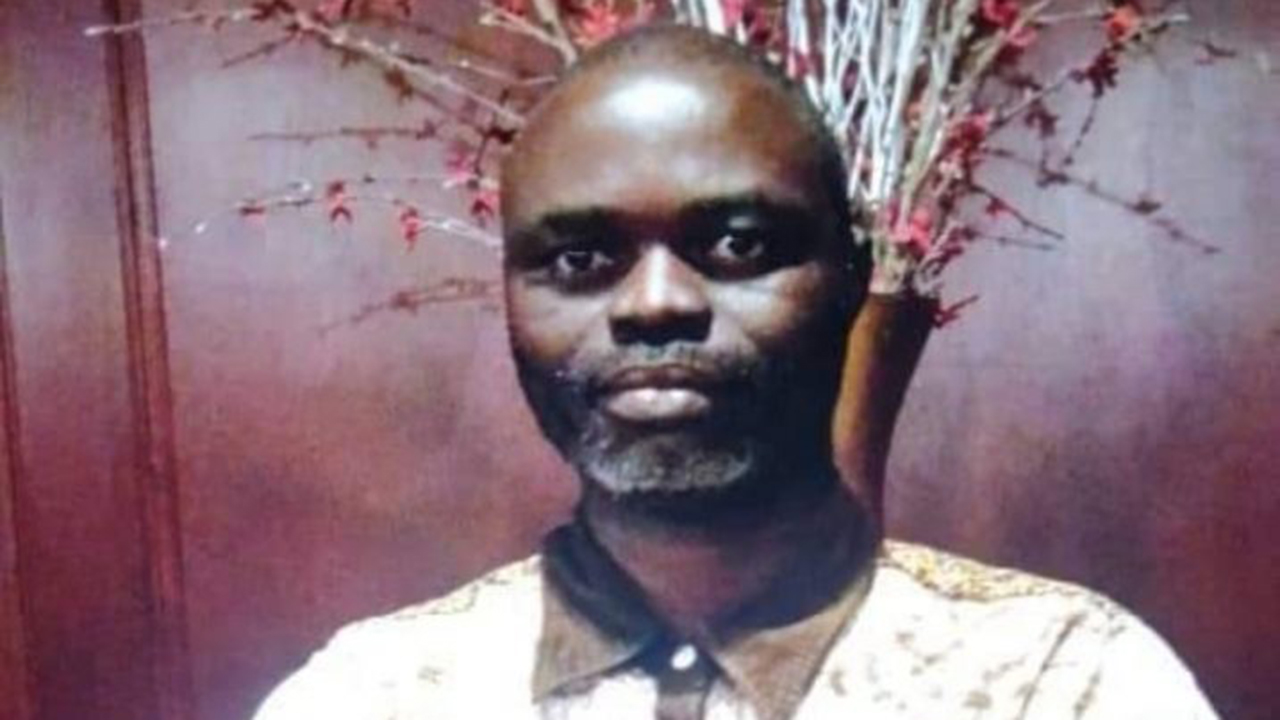

The Director of the TETfund Centre of Excellence for Diaspora Studies at the Institute of African Studies, University of Ibadan (UI), Prof. Senayon Olaoluwa, in this interview with MUYIWA ADEYEMI, among others, blamed the lack of ingenuity and adoption of foreign economic policies as the root cause of challenges facing Nigeria.
As a scholar in Diaspora study, don’t you think harsh economic policies of the government is the major reason Nigerians, especially the youths are leaving the country?
The first thing I would like us to establish is the fact that right from the inception of human society, social systems have always been organised in duality to the extent that it is not possible for everybody that constitutes a society, community, village, town, or city to be 100 per cent at home.
[ad]
There must be a portion, a particular percentage that must be away from home. Those that are not at home are those described as being in the Diaspora. Now, how do we establish that further? If you take a look at various folktales across Africa, Europe, America, you are going to discover that those folktales that vestiges of earliest forms of conceptualisation of phenomena make it clear in certain strands that not everybody in a homeland is situated in that homeland, or not everybody that is of a particular homeland is always at home.
So, Diaspora in itself, because it’s like a buzzword since the turn of the 21st century, it’s always been there. The initial attempt was to restrict it to the description of, say, the Jewish and the Armenian experiences, but no. It’s always been in every culture.
Even the smallest village will have some members outside that village. The other thing you will note is that we have always associated not being at home with abundance. It is always an assumption that people who live outside the homeland are more prosperous. So, while growing up, there was a way we would always think that our uncles in Lagos were better off than our parents in the village, which might not be necessarily so, and whenever they came around, there was a way we welcomed them.
There is a theory I am working on right now that I call, ‘Diaspora of the everyday.’ When we are done with the analysis of that concept, and we ask, do we really live at home or in the diaspora? You are going to discover that everybody lives more in the diaspora than at home.
What do you mean?
In summary, as a father and husband, you are expected to go out every day to work. Imagine that you are not on vacation, you are not ill, and you stay back at home, choosing to stop working. What do you think will be the next response in your family? Everybody will see it as abnormal. Even your neighbours will ask you questions. So, you participate in the diaspora of the everyday because of what? Because we have associated abundance with it.
But now, what we are experiencing is unprecedented in that negative sense because it has now come with a certain tincture of desperation. Desperation to the extent that people, who are doing well here without knowing it will end up going out there. And the way japa has been conceived and practiced is such that it is no longer a journey.
When we talk of japa, it actually means escape, meaning homeland has now been considered to be a dangerous place. When you escape from such dangers, you don’t want to return. So, japa is now a journey of escape without any immediate thought for return.
[ad]
And that is what makes it particularly concerning. Now, you have said, could we link it up with the economic policy of the Nigerian State and hardship?
The answer is absolute yes, because political governance is like parenthood in a normal context. The father and mother are expected to cater for their children. When they refuse to do that, home becomes unbearable for the children.
Recently some children were interviewed. They were into scavenging. Little children between eight and 12 years. They were already talking like adults. One of them said, ‘I was living with my uncle, he never took care of me. So, I just took off one day and this is what I’m doing.’ Another one said, ‘my dad got married to another woman and they didn’t bother to take care of me. I would love to go to school. I dropped out of school, but this is what I’m doing now.’
So, the moment we begin to look at political governance from that angle, then we discover that the political class has failed Nigerians and that is the whole nuance of japa. It means escape and you can only escape from what you consider to be dangerous, harmful, and potentially murderous. And that is what we’re experiencing.
Will you say Nigeria has strong foreign policies to protect her citizens in foreign lands because experiences of many of them even in other African countries are appalling?
That is, to treat them with dignity. I like using the words, protection and dignity. It then takes me back to the theory I am working on, the theory of the Diaspora of the everyday. In that theory, let’s say the father is expected to cater to the needs of the children, by participating in the diaspora of the everyday, when he refuses to do that, when he refuses to live up to his expectations, it brings on him a cloth of indignity.
But it doesn’t end there. That indignity extends to his family. You don’t abandon your children and then expect those children will be well-treated on the streets. Who are those children trying to eat in the dust bin? Who are those children trying to enter our compound unauthorised? Who’s their father? How will we chase them out of here? Then they tell you, that lazy man who doesn’t do anything, or that man who has all the money but cannot take care of his children.
This is the case of Nigeria. That man who has all the money, but doesn’t take care of the children. Who will respect the children? Nobody. And that is the challenge we are in right now. Somebody has told me of a Ph.D holder, working in the federal ministry and already a deputy director japa to the UK and now a cleaner.
So tell me, can you imagine how she will be treated over there? So, are you saying there are no policies to protect her? The policies are there in principle, but nobody respects the children of a rich man who doesn’t take care of his children. That is the metaphoric illustration of what is happening to us in Nigeria. In that sense, we cannot completely blame those countries that banished Nigerians.
[ad]
Consider what is happening to our people in Libya, especially before we had slave trade scandal in Libya, when Libya could see that maybe out of every 1,000 foreigners from Africa entering that country, about 500 would be Nigerians. Why would they respect us? Why won’t they maltreat those citizens, knowing that they didn’t even come by air? They trekked through the Sahara desert, and at some point, some of them would drink their own urine to survive. Who will respect those citizens and their country? Don’t forget, they are actually escaping from a dangerous zone because their own father, Nigeria, cannot protect them.
Look at the statistics and see how bad things are in a country where an American dollar is exchanged for almost N2,000. How do you respect citizens from that country where a professor doesn’t even earn up $300 per month, where the minimum wage is N70,000, less than $35. So, that is what is happening to us.
Until the government improves the well-being of its citizens, no foreign countries will respect your people. Until the government, for instance, stops being a yes man to the World Bank and International Monetary Fund (IMF). Now, over 120 million have dropped into the poverty circle, and the government keeps on telling you that, ‘oh, we are doing very well’. ‘We are removing subsidies’. Now the question is, how do you build your economy on one source of income? If we didn’t have oil in Nigeria, would we not survive? That’s the question we should be asking ourselves.
The World Bank and IMF are supporting the economic policies of Nigeria. They even advised that it should continue for the next 15 years. Don’t you think we should blame our experts in Nigeria for not domesticating some of these foreign policies before implementing them?
A colleague of mine, Dr Qudus Adebayo, and I were on a journey when he initiated a conversation around political governance and authenticity. Our political governance in Nigeria lacks authenticity. Every system of political governance should have its own unique identity. There must be something in our economy that must be authentic, we should not always wait for America or World Bank or IMF to tell us what to do. Anything the World Bank tells President Tinubu, he does, then they are happy with themselves. How can you be a father or husband and you wait for people to tell you how you treat your wife or children.
If that is happening, it means those advising you have realised that there is no authenticity to your parenthood, so they offer you various solutions. I have developed a model for raising Nigeria, I am not going to use another person’s model, but that is what Nigeria is doing.
America tells you to take off the subsidy, invest heavy subsidy in their agricultural sector to the extent that food is so cheap. The government has not scrutinised that. Our government will say, we must buy fuel at the exact amount they are buying it in the U.S., but now petroleum is now more expensive in Nigeria than in the U.S.
[ad]
It is a policy in America that there must be heavy subsidies on agriculture, what is the policy on agriculture here? People in the South-West are now saying that, ebi npawa meaning, ‘we are hungry, famished’ and that is what you hear every day on the streets. Can you imagine this happening in the South-West just because America has asked our President to remove the subsidy?
The question is that is it the only petrol that is produced from crude oil? What are the prices of all the other products? There is a theory that we can even have the petrol free in Nigeria because of other products from which we can make our money.
Libya is in a mess, yet fuel is still less than N100 per litre. We are talking of a country in a political turmoil. Then you ask yourself how that country is surviving, there is no authenticity to the political governance, which is why we are in this mess.
If you meet President Tinubu now, how will you advise him?
I will basically ask him to push back and ask, are there no authentic Nigerian ways to consider the economic situation in the country? You see, there is nothing like global economic policies being dictated by the World Bank and IMF; every country is supposed to be adopted in a contest. You must domesticate it and ask if the policies reflect our realities, if not you drop it.
Will you say our Professors of Economics and others are actually working to domesticate some of these policies to suit our realities?
I don’t think there is any problem with domestication of policies, the challenge we have is that of governance. Those involved in governance are the ones putting us in this mess. Let me illustrate this with the challenge ASUU has had with the government. There have been various negotiations with ASUU and other unions in the university, the negotiation panels made very good recommendations but those in the panel are not the ones to implement them, the President will do that, but what has happened. What a Professor earns today in Nigeria is not up to what a Master’s student earns in South Africa there. But every year the government will say we expect our universities to be world class, when there is no electricity on campus, when they are not providing funds for books, when professors and researchers apply for foreign grants Nigeria cannot provide and get the funds and the government says let the funds go to the TSA. Then for one whole year, you can’t assess the money you applied for, which the Nigerian government cannot give you. What are we talking about, there is no authenticity to governance. The government is not sincere and ready to move this country forward. That is just the challenge we have.
[ad]

