 Follow Us on Google News
 Follow Us on Google Discover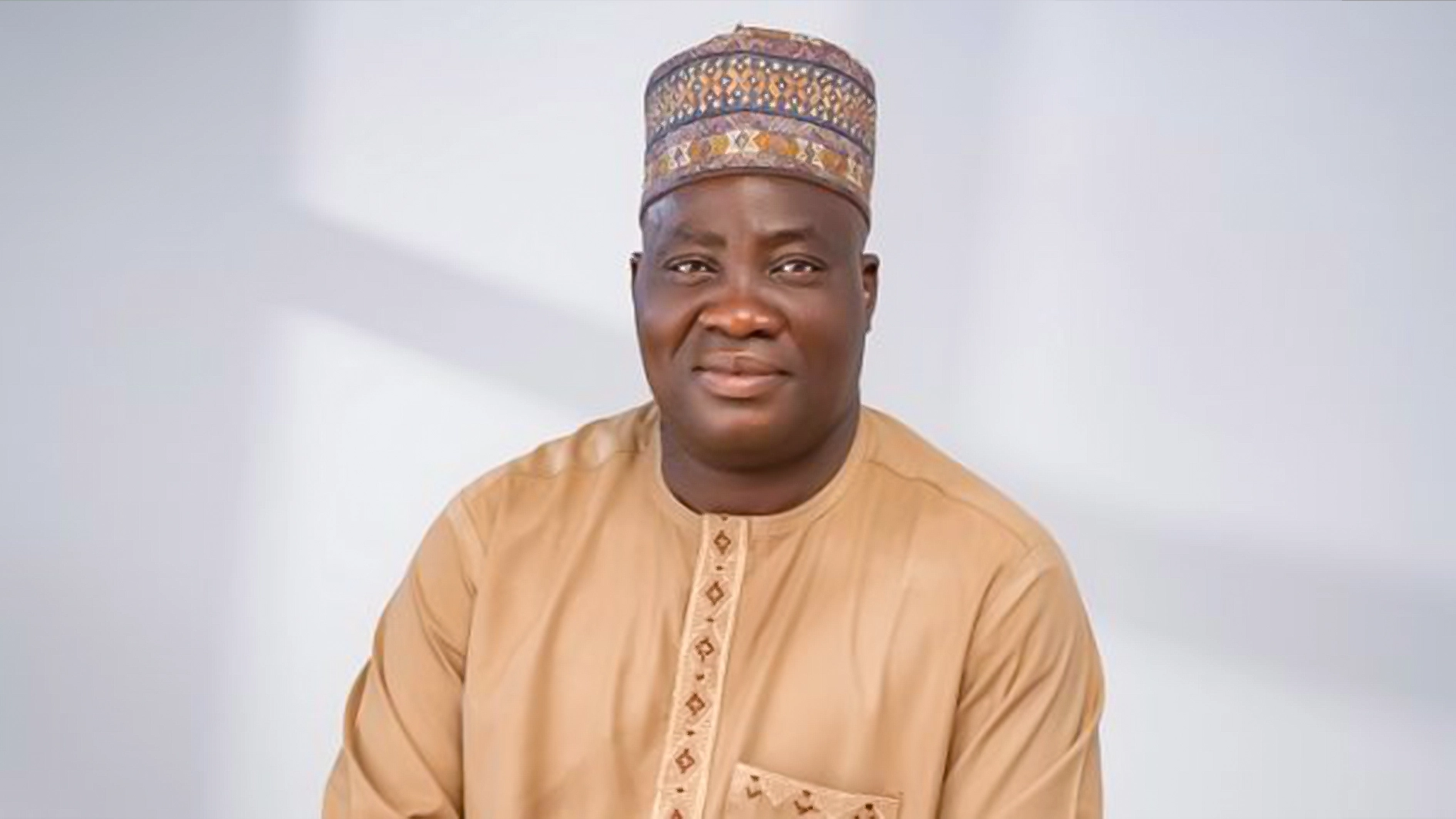
Alhaji Toyin Olosasa is a stalwart of the All Progressives Congress (APC) in Kwara State and Director-General of Kwara Central Senatorial Election in 2011. Until recently, he was a member of the Rural Electrification Board. In this interview with MANSUR ARAMIDE, he speaks on the politics of the state ahead of the 2027 general election and other sundry issues.
You recently stirred the hornet’s nest by saying that the Governor AbdulRaman AbdulRazak’s rating has dropped and that he cannot win any political position again in the state. What informed that position?
As long as I am alive, I will continue to speak truth to power. No amount of pressure or intimidation will silence me. The reality is that the people are tired of the governor. They are not tired of the APC, and they are certainly not tired of President Bola Ahmed Tinubu. However, if care is not taken, the governor’s declining popularity could negatively affect the president politically in Kwara State.
How can you say the governor’s popularity has declined? How did you measure that?
The governor and I are from the same Ilorin West Local Council. I challenge him to test his popularity today. Let him contest a councillorship position in Adewole Ward against someone like Yinka Otukoko of the PDP or even Comrade Musbau Eshinrogunjo, who is in prison as we speak. Let the people decide. The truth may be bitter, but it remains the truth. The Governor’s rating is at its lowest ebb across Kwara State. It has become so bad that some people are beginning to call for the return of the Saraki political structure. That is how serious the situation is.
But the APC is still widely regarded as a popular party in the state…
Yes, and there is a clear distinction between the party and the person. The APC remains popular because it is home to several credible and widely accepted stakeholders. I won’t begin to mention names, but Kwarans know those who command genuine respect and followership. Additionally, Asiwaju Bola Ahmed Tinubu still enjoys significant goodwill among the average voter in Kwara State. Unfortunately, the same cannot be said of the governor. I believe even he and his close associates are aware of this reality. I would also be surprised if President Tinubu is not aware.

What, in your view, accounts for this alleged decline in the governor’s political standing?
Consider his relationships across key segments of the state. What is his relationship with traditional rulers, religious leaders, and community stakeholders, particularly in Ilorin Emirate? What is his standing among the political elite in Kwara State? What is his relationship with the youth of Kwara State, especially in Ilorin Emirate?
We all know Alhaji Uthman Jagunma is the president of youth groups in Ilorin Emirate. If you ask him about the governor now, he may not have any good thing to say. This is an undeniable truth. Prof. Aisha Gobir is the president of Women Association; go and ask for a review of the person and administration of Governor Abdulrahman and the story is the same. What about the Kwara elites, especially his own kinsmen in Ilorin Emirate? These are very important segments of Kwara society. And this is not to talk about communities in the North and South that have been sacked completely. They all believe they are suffering as a direct result of bad governance at the state level.
Are these enough reasons to say the governor’s political standing has declined?
They’re not enough? You must be joking. Even within his own party, the APC, his relationships have been deeply strained. He has been in prolonged political battles with prominent figures. He is locked in a fierce rivalry with the Saraki political structure. That seems like a generational fight between the AbdulRazak and the Saraki families. He has also fallen out with every single major stakeholder in the APC. These are individuals who could have been strong allies today, but those relationships have been damaged beyond repairs. In politics, relationships are everything. When you alienate too many stakeholders, the consequences are inevitable.
People believe your critical stance against the governor is the reason party stakeholders are clamouring that you be suspended from the party. What is your response?
I, Toyin Olosasa, remain a bona fide member of the APC. Who exactly are those claiming that I should be suspended? What positions do they hold within the party? What do the party’s constitution and the laws of Nigeria say about suspending a member? And what real authority do these individuals even possess within the party structure? What offence have I committed against the APC? The same advice and truth I offered the governor—now being twisted as justification for my purported suspension—are gradually becoming evident to them and the general public.
I have done absolutely nothing to warrant any form of disciplinary action, and I have not received any official communication indicating that I have been suspended. What I have heard are mere rumours circulating among some individuals in my ward, Oju-Ekun Sarumi. For the record, I am not just a resident of Oju-Ekun Sarumi; I was born and raised there. I am a true son of the soil. No one has suspended me from the party, and I have never, at any point, abused the governor, contrary to the claims being peddled.
The governor is rumoured to have endorsed his protégé, Yakubu Danladi, as his successor in 2027. How far do you think he can go?
It is no longer a rumour; it is real. The governor has not only endorsed him, he is actively mobilising both people and resources towards that ambition. Everything we are seeing in the public space today—from rallies to endorsements—is being funded and coordinated by him. He is only being cautious and staying in the background for now because he understands the contradiction in him publicly denying building a political dynasty while, at the same time, promoting and backing a preferred successor.
There is also a reason he settled on Danladi. He desires a godfather–godson relationship that guarantees him a third term in disguise in office even after leaving office. Among the aspirants, Danladi is seen as the one that is capable of such servitude.
Why don’t you see zoning as a good way to balance the power equation in favour of Kwara North, which many believe has suffered neglect?
I wish the current agitation for zoning was genuinely about equity and fairness; but it is not. If it were, the current governor would not even be in office today. If he truly believed in giving Kwara North a fair chance, he had the perfect opportunity to support that cause in 2019 during the APC primaries. At that time, a majority of party stakeholders supported zoning the governorship to the North, and there was a strong and credible aspirant in Alhaji Shuaibu Yahman. But what happened? He ignored those calls completely because it did not serve his personal ambition, because he was also interested in the ticket.
Now that his own interest has been satisfied, he suddenly remembers that Kwara North deserves power. Why now? Why not when it mattered most? Why not when it was most convenient for him?
That is why many people describe this current push as a third-term agenda—or what is now widely referred to as the “Danladi Agenda.” If this was truly about Kwara North, the governor would allow a free and fair contest among all aspirants from the region. He would encourage them to come together and produce a consensus candidate on their own terms, without interference.
Instead, what we are seeing is an attempt to impose a preferred candidate on the entire region. Other aspirants are being undermined and discredited to create an unfair advantage for the anointed candidate. He has spoken against virtually every other aspirant except his anointed candidate. He has particularly de-marketed those from Kwara Central in a bid to advance his preferred choice. We are aware of the narratives being pushed to the President and fellow governors about his brothers from Central. The details of those engagements, and the unprintable remarks said about them, are well known—but those are matters for another day.
Does that mean the governor wants to become the new political godfather in the state?
Yes, without a doubt. He wants to position himself as the new Saraki in Kwara politics. There has long been a generational rivalry between the Saraki and AbdulRazaq families. It dates back to the times of their fathers—between the late strongman of Kwara politics, Dr. Olusola Saraki, and Alhaji AGF Abdulrazak, the AbdulRazaq patriarch. That rivalry has since been inherited by their children and continues to shape the political landscape of the state to this day.
The AbdulRazaqs have always believed they could match, if not surpass, the influence and achievements of the Sarakis. That mindset is evident in the governor’s political approach. You can see a deliberate pattern of attempting to replicate key legacies associated with the Saraki dynasty.
When Saraki built infrastructure like bridges, AbdulRazaq followed suit. When Saraki established a university, AbdulRazaq did the same. Saraki rose to become Chairman of the Nigeria Governors’ Forum, AbdulRazaq also pursued and attained that position.
Now, the ambition appears to be extending further. There are clear indications that the governor is positioning himself for a senatorial seat in Kwara Central, with an ultimate goal of rising to the position of Senate President—just as Saraki once did. Even the issue of zoning is a continuation of that long-standing rivalry. For example, Dr. Bukola Saraki set a precedent by zoning the governorship to Kwara South, which was an unprecedented move at the time. It was done against all odds, and even against his own biological father and sister. Today, AbdulRazaq appears to be attempting a similar political calculation by pushing power towards Kwara North. So, beyond the fact that his preferred candidate is from the North, the move also aligns with his broader objective of matching—and possibly outdoing—the Sarakis in political strategy and legacy. In essence, this is more than governance; it is a continuation of a long-standing power contest between the two prominent families, now playing out through succession planning and political positioning in Kwara State.
But how would you rate the performance of the governor in the last seven years?
To be honest, he has tried his best, but his best is simply not good enough for the state. There are several areas where Kwara has regressed in terms of development indices, with security being the most alarming. Under Gov. Abdulrahman AbdulRazaq, Kwara has gone from being regarded as one of the most peaceful states in the country to the most terrorised. That, in itself, is a major indictment. So yes, he has done what he can within his capacity, but the reality is that the results are not sufficient. At this point, he should allow for a transition that gives the state a chance to recover and move forward under a new leadership. It is also fair to expect that the Presidency pays closer attention to the situation in Kwara, given the current concerns, so that the state can be steered away from the difficulties it presently faces. Ultimately, the governor has not performed at a level that would justify the privilege of determining his successor.

