 Follow Us on Google News
 Follow Us on Google Discover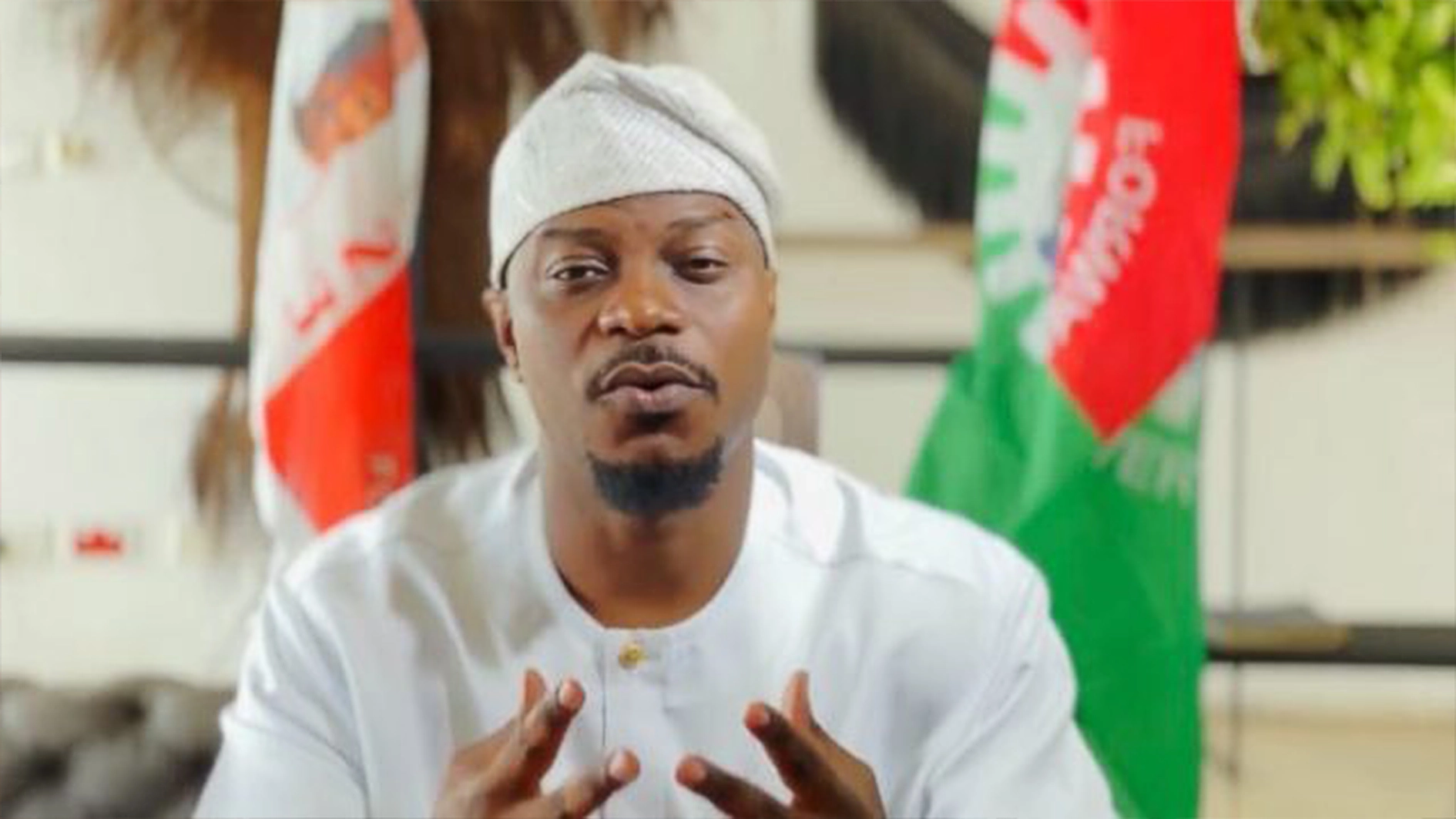
Gbadebo Rhodes-Vivour’s decision to remain in the African Democratic Congress after the 2023 Labour Party presidential candidate, Peter Obi, led the Obidient Movement into the Nigeria Democratic Congress (NDC), has introduced fresh calculations into the Lagos governorship race and the Lagos4Lagos agitation. Having parted ways with the alliance that fueled his 2023 momentum, questions now arise over how far GRV can go in the difficult quest to wrestle power from the ruling All Progressives Congress, KEHINDE OLATUNJI reports.
The sudden defection of the leader of the Obidient Movement, Peter Obi, from the African Democratic Congress (ADC) to the Nigeria Democratic Congress (NDC) came as a shock to many opposition politicians.
Moreover, in Lagos State, Gbadebo Rhodes-Vivour’s surprise decision to abandon the Obidient bandwagon and its leader on their voyage to the NDC jolted many watchers of the state’s high-wired politics.
In the buildup to the 2023 general election, the opposition narrative in Lagos centred on the Lagos4Lagos agitation championed by Abdul-Azeez Adediran (JANDOR).
While the Lagos4Lagos Movement sought to dethrone the All Progressives Congress (APC) and take control of the Lagos House, Marina, the struggle for the Peoples Democratic Party (PDP) governorship ticket pitched GRV against JANDOR.
In a bid to resolve the impasse, PDP stakeholders explored pairing both contenders on the gubernatorial ticket, but JANDOR rejected the idea, prompting GRV’s defection to the Labour Party (LP), which had by then received Obi and handed him its presidential ticket.

Having found a new platform, GRV began to make waves as a serious contender, powered by the Obidient wave and the mass of non-indigenous voters in the state. Propelled by the youth demographic that constituted the bulk of the Obidients, GRV also relied on his marriage outside the Yoruba ethnic group to attract votes from residents.
It was this combination of factors that helped the then LP gubernatorial contender post impressive figures in the election, finishing as the first runner-up.
Against that background, therefore, when GRV elected to sever the political umbilical cord that tied him to Obi and the Obidients by remaining in the ADC for a repeat contest against the APC, analysts wondered whether he had made a calculated blunder or a strategic move to carve out an independent political identity.
He must have weighed the pros and cons of tagging along with Obi and reaping the ancillary electoral benefits, or shunning the journey to a new platform at the risk of losing the continued loyalty of his supporters.
But the inescapable question on the lips of many Lagosians, especially those who observed the keenly contested 2023 Lagos governorship poll after Rhodes-Vivour announced his decision to remain in the ADC, is: can GRV survive without the movement that made him?
Without doubt, the split between the ADC and NDC has reshaped the opposition landscape, particularly raising questions about whether Rhodes-Vivour can sustain his political influence in Lagos without the unified Obidient movement that previously gave him momentum.
Decisive rupture
THE political relationship between the two former LP flagbearers in the last election, Rhodes-Vivour and Obi, has been significantly ruptured. That development will definitely reshape the outlook for the 2027 polls, especially the Lagos governorship and presidential elections.
What once functioned as a unified political alignment built around the 2023 Obidient movement has now split into two competing opposition platforms, a reality that will inevitably produce consequences. In the event that GRV campaigns for the ADC’s presumptive presidential candidate, Atiku Abubakar, how would Obi’s supporters in the NDC reciprocate during the governorship election?
It is at that juncture that the real impact of Obi’s exit from the ADC and GRV’s refusal to move into the NDC will be felt. Until their formal separation along party lines, the political fortunes of both men were closely intertwined.
There are fears that the unexpected development has fundamentally altered Rhodes-Vivour’s political equation in Lagos, given that his 2023 outing was deeply connected to the local expression of a national movement driven by Obi’s presidential campaign and the attendant Obidient wave.
Youthful vim, vigour
WHEN he emerged as the LP governorship candidate in Lagos, Rhodes-Vivour instantly became the face of a broader protest movement that reshaped voter engagement across the state. Young voters, urban professionals and first-time participants in the electoral process formed the core of that mobilisation.
GRV’s appeal was strengthened by the emotional intensity of the 2023 election cycle, where dissatisfaction with established political structures translated into strong grassroots enthusiasm.
Ethnic dynamics also contributed to his visibility in Lagos politics. Debates around indigeneity, inclusion and representation became part of the electoral conversation, while attempts to question his Lagos roots reinforced his public image among supporters as a candidate resisting identity-based political exclusion.
Although he lost the governorship election to Governor Babajide Sanwo-Olu, his performance positioned him as the most competitive opposition candidate Lagos had seen in years.
After the election, both Obi and Rhodes-Vivour moved into the ADC following internal crises within the LP. That move was widely interpreted as an attempt to preserve the structure of the Obidient movement within a new coalition framework.
However, last Monday, that arrangement collapsed. Obi’s migration to the NDC reconfigured national opposition politics, creating a clear separation between two emerging political blocs. The ADC and NDC now function as distinct centres of opposition influence, with different strategic directions and political identities, thereby reducing the vibrancy and potency of their quest to dislodge the ruling party.
Caught in the middle
ALTHOUGH Rhodes-Vivour’s decision to remain in the ADC places him firmly within one of the two blocs, the choice leaves him outside the political orbit that defined his 2023 rise. As such, he has become a bridge through which both blocs can reach Lagos voters. His public statement confirming this position formalised that separation.
He stated: “We are living through a defining moment. Our politics is turbulent, the unity of the opposition is being tested, and, for some, it has become necessary to forge different paths.
“To those who have made the difficult decision to move on to a new platform, I offer my genuine respect and best wishes. These are hard choices made in hard times, and I do not judge anyone for the path they have chosen. We are all fighting for a better Nigeria, even when our roads diverge.”
While emphasising his resolve to remain in the ADC, GRV said the party “is the platform we have built, the ground we have fought on and the vehicle that can take us to victory.”
“It is not because it is the convenient choice or because the political winds are blowing in our favour, but because of what brought me here and what was paid for me to be here.”
Going down memory lane, Rhodes-Vivour traced his political journey, noting that his transitions across parties were driven by conviction. He stated: “My political journey did not begin in comfort.
“From KOWA, where we built from nothing, to PDP and the Labour Party, every step I have taken has been guided by one thing: conviction. And when those spaces could no longer serve the people honestly, I moved on out of principle.
“Every political decision I have ever made has been rooted in that principle, not in personal gain.”
As if underscoring the impending electoral battle with the APC, the ADC chieftain explained that he has never compromised with the APC in Lagos, whether at a time convenient to the APC or when agreements were put on the table.
“Not when billions were placed before me. I walked away then, and I would walk away again. That is who I am,” he added, while reiterating that political survival requires structure and discipline.
His words: “If you want to protect the people’s mandate, you must have the strength to defend it from the polling unit to the collation centre. Those who want to take what belongs to the people will not do so with arguments. They will do so with force. You must be organised enough, rooted enough and ready enough to meet that.”
According to him, efforts to strengthen opposition structures in Lagos have continued since the 2023 elections, with a focus on ward-level mobilisation and local government coordination.
As political parties prepare to hold primary elections that will produce candidates for various elective offices, observers say the implications of the Obi–Rhodes-Vivour split are already manifesting in Lagos’ evolving opposition landscape.
A significant portion of Rhodes-Vivour’s 2023 momentum was derived from the synergy between his candidacy and Obi’s presidential campaign. That alignment provided emotional energy, national visibility and a unified support base under the Obidient identity.
But with Obi now positioned as a potential NDC flagbearer, that shared political uniqueness has dissolved. Supporters of the movement are now unevenly distributed across competing political platforms, introducing fragmentation into what was previously a unified base.
Nonetheless, Rhodes-Vivour’s continued presence in the ADC places him within a structured opposition coalition actively positioning itself for the 2027 electoral cycle. This offers organisational stability and access to broader coalition politics, but removes the singular emotional anchor that defined his emergence.
Speaking with The Guardian, political analyst Gbenga Sowunmi said Rhodes-Vivour’s 2027 prospects would depend on his ability to build an independent political structure in Lagos.
Sowunmi stated: “The Lagos electorate that responded strongly to the 2023 protest movement is now fragmented across multiple political loyalties, shaped by the ADC–NDC split and evolving national alignments. Rhodes-Vivour’s political trajectory has therefore moved into a new phase defined not by movement amplification, but by structural independence, organisational depth and long-term voter consolidation.”
He further noted that the emotional wave that characterised the 2023 elections has significantly diminished in intensity, making it more difficult for any opposition figure to rely solely on momentum.
“The current political environment,” he argued, “demands sustained grassroots presence, ward-level coordination and durable alliances across Lagos’ diverse electoral blocs. Visibility without structure will not be sufficient in 2027.”
Another analyst, Chike Anobi, while stressing that voter loyalty would now determine outcomes more than party labels, added: “Obidient supporters are no longer a single bloc. They are likely to split between ideological loyalty to Obi and local loyalty to figures like GRV.”
However, Anobi quickly remarked that the period ahead represents a shift “from movement politics to coalition politics,” explaining that sustained organisation would matter more than wave-driven popularity.
Further, he explained that the fragmentation of the ADC and NDC blocs has introduced a new layer of complexity into opposition mobilisation, arguing that “what existed in 2023 as a unified emotional surge has now evolved into competing political identities, each pulling supporters in different directions.”
He maintained that this development would force candidates like Rhodes-Vivour to depend less on national sentiment and more on “deep, locally rooted political structures capable of surviving beyond electoral cycles.”

