 Follow Us on Google News


 Follow Us on Google Discover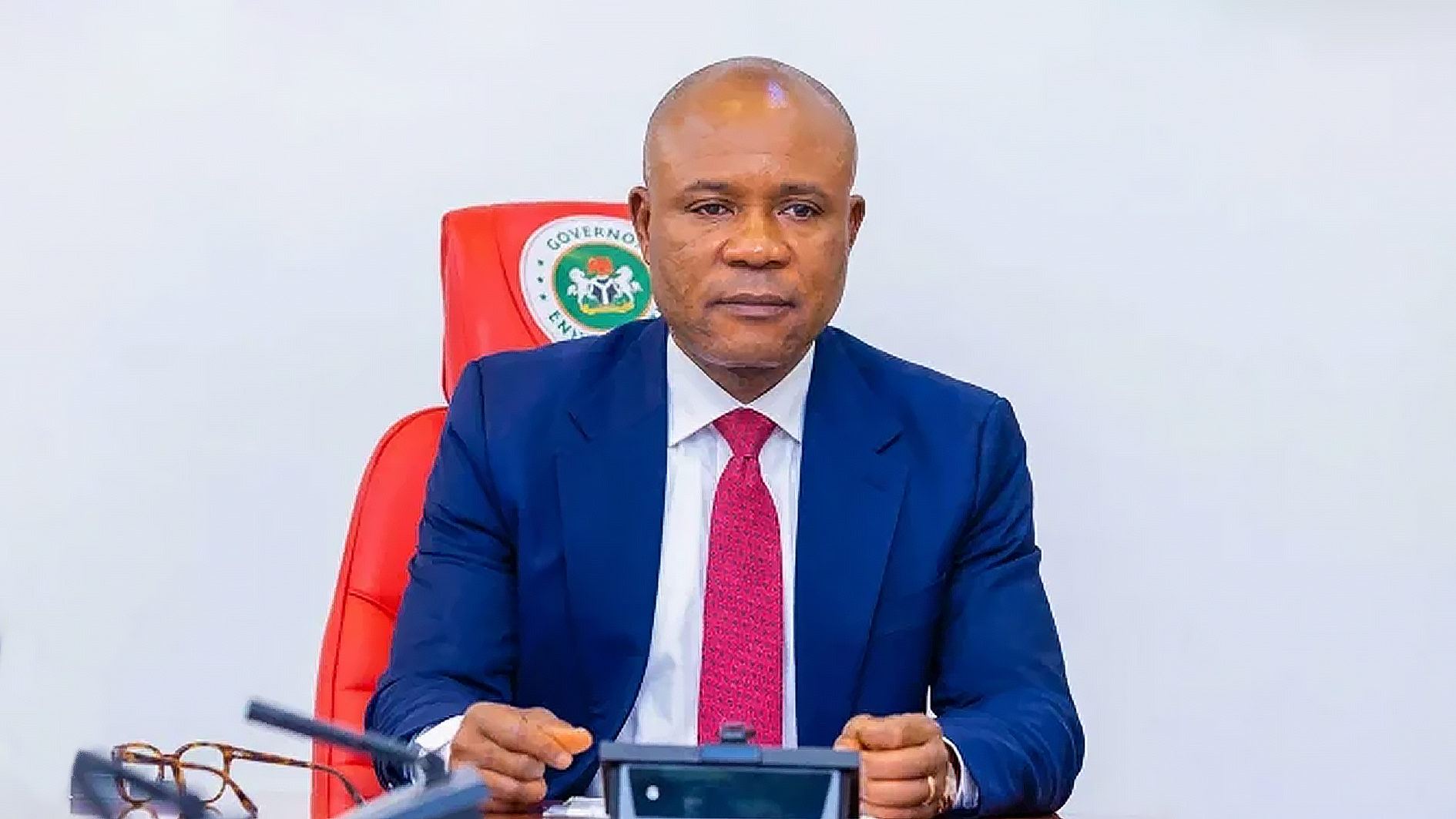
The 2027 Enugu State governorship election is shaping less as a people-driven contest for the 4.5 million residents and more as a fierce power struggle between the governor and a growing opposition bloc led by politicians from his own backyard. LAWRENCE NJOKU reports how this clash is redefining the state’s politics.
Governor Peter Mbah of Enugu State is set to confront not one, but three critical hurdles as he aspires to contest for a second term in 2027.
Foremost among these is the challenge of rebranding and consolidating the All Progressives Congress (APC) in Enugu, following his defection from the Peoples Democratic Party (PDP), the platform on which he secured victory in the 2023 governorship election. The task is particularly delicate in a state where the APC has historically struggled for acceptance and cohesion.
Mbah, who hails from Owo in Nkanu East Local Government Area, must also persuade the electorate that his administration offers a distinct and improved governance trajectory, especially amid the economic strain and policy backlash associated with the reforms of President Bola Tinubu’s APC-led Federal Government since 2023.
However, the most formidable challenge to his re-election may not emanate from opposition parties or entrenched APC interests, but from within his own senatorial district.
Political undercurrents in Enugu East, particularly among stakeholders in the Nsukka axis, are already signalling possible resistance, raising questions about internal consensus and zoning expectations ahead of 2027.

Among those linked to the governorship race from the governor’s own side are former Minister of Innovation, Science and Technology, Uche Nnaji; former FCT Permanent Secretary, Chinyeaka Ohaa; former Senator Gilbert Nnaji; businessman Sampson Nnamani and Professor of International Law and Global Politics, Jehu Onyekwere.
Realising this, Governor Mbah is leaving nothing to chance in his bid to retain office in 2027. Since 2025, after concluding his second year in office, he has adjusted his political approach, focusing more strategically on sustaining power.
When he came into power in 2023, Mbah prioritised governance. Unlike his predecessors, who often spent their early days receiving goodwill visits from individuals, organisations, and communities, he adopted a different approach, avoiding such engagements. He did not spend time visiting political godfathers to pledge loyalty. Instead, he carved a niche by ensuring that only individuals with defined roles attended government functions.
Unlike the past, when political support groups thronged government events with drums and songs of praise, Mbah restricted their presence. Attendance at official functions was tightly controlled; unless a person’s name appeared on the manifest held by security officials, access was denied.
This approach earned him criticism, with some accusing him of lacking magnanimity in victory and distancing himself from the people.
However, ahead of the 2027 general elections, Mbah appears to have turned a new leaf. He has softened his political style and improved his relationship with the public. He now accommodates praise singers and tolerates their interruptions during speeches at official events. These groups, once regarded as nuisances, now freely attend functions without strict invitation protocols.
The opening of the political space has led to the emergence of several support groups campaigning for his re-election and promoting his performance. They now compete for visibility at events he attends, often eulogising him.
Beyond this, Mbah defected to the APC from the PDP towards the end of last year, a move that effectively weakened a growing opposition structure. Before his defection, the APC in Enugu had begun to gain momentum as a viable challenger to the PDP.
The former Minister of Innovation, Science and Technology, Uche Nnaji, had been instrumental in strengthening the party, positioning it to challenge the governor. However, Nnaji’s ambitions were truncated by an alleged certificate scandal that led to his resignation, creating an opening for Mbah to join the party and assume its leadership in the state.
This development was built on Mbah’s earlier political manoeuvres that weakened the Labour Party (LP), which had performed strongly in the 2023 elections. The LP won 14 of the 24 seats in the State House of Assembly, leaving the PDP with 10 seats. It also secured two Senate seats and six out of seven House of Representatives seats.
However, Mbah gradually rebuilt influence, restoring a PDP majority in the Assembly and bringing the LP’s 2023 governorship candidate, Chijioke Edeoga, back into the PDP fold.
The 2023 governorship contest was fiercely contested. The declaration of results was delayed for two days due to disputes between the PDP and LP over results from Nkanu East Local Government Area. Mbah was eventually declared the winner, with the matter later resolved in court.
Since defecting to the APC, Mbah has consolidated his hold on the party. During recent party congresses, he ensured that key positions were occupied by his loyalists, many of whom defected with him from the PDP, across ward, local government, and state levels.
Although there had initially been agreements to accommodate existing APC stakeholders, these arrangements gave way to intense struggles for control, particularly involving his former PDP allies.
Having secured influence at the state level, Mbah extended his reach regionally by supporting his ally, Dr Ben Nwoye, to emerge as a southern party leader. Nwoye, a former state chairman of the APC, had long supported Mbah and was instrumental in advocating his defection to the party.
His closeness to Mbah previously led to his suspension by the state APC executive for alleged anti-party activities. He was later reinstated and appointed Caretaker Committee Chairman, overseeing the congresses that produced the current party leadership in the state.
When the opportunity arose for Enugu to retain leadership of the APC in the South, Mbah backed Nwoye, rallying support against Emma Enukwu, another Enugu man who had sought to retain the position.
With that phase settled, attention has shifted to grassroots mobilisation, where various groups are now endorsing his second-term aspiration. Mega rallies have been organised by the Awkunanaw Clan, spanning communities in Enugu South and Enugu North Local Government Areas, where they unanimously urged potential aspirants from the area to shelve their ambitions until power rotates back to the senatorial zone, insisting that Mbah has performed creditably.
Enugu West Senatorial Zone followed with a similar endorsement, even pledging to purchase his nomination form with N100 million. A leader of the zone, Charles Egumgbe, praised his administration’s “depth, planning, and developmental impact.”
Enugu North Senatorial Zone has also aligned with him and held an endorsement rally for him last weekend, during which they doled out N102 million for his nomination form. The grand endorsement rally by Enugu East (his zone) is in the works.
Despite these endorsements and consolidation, Mbah appears unsettled and unsure about his second term, even as concern persists over the number of governorship aspirants emerging from Mbah’s own Enugu East Senatorial Zone.
For instance, soon after the Enugu West endorsement rally, he gathered elders, leaders, and stakeholders of Enugu State for a visit to President Bola Tinubu in Abuja to convince him that the state’s leaders support his second-term bid. The endorsement rallies, which now include Tinubu, are being seen as part of a scheme to secure the presidency’s support and acceptance, among other things.
Those who have viewed the situation, as well as his body language, especially his speeches during these endorsement rallies, allege he is not settled about the coming elections.
Meanwhile, a prominent stakeholder from Enugu East, Amobi Edeani, has urged politicians from the area to support Mbah, warning that early contestation could weaken the zone’s unity.
He noted: “The temptation for multiple aspirants from the same locality to begin early political positioning must be carefully managed, as it risks portraying Nkanu as fragmented.”
Uche Nnaji is reportedly receiving support among aggrieved APC members and leveraging structures built during his tenure. He contested the 2023 election, finishing fourth. He said recently that he would do one term in office and return power to another zone.
Ohaa, also an aspirant in 2023, did not participate in the primary election held at Nnamdi Azikiwe Stadium, where Mbah secured the PDP ticket. He was later appointed Chairman of the Governing Council of Enugu State University of Science and Technology (ESUT).
He resigned from the position on February 23 without stating reasons, expressing appreciation to the governor for the opportunity to serve. Since resigning his appointment, Ohaa has aligned with the African Democratic Congress (ADC) and recently emerged as a national delegate to the party’s convention.
Similarly, Gilbert Nnaji, who stepped down for Mbah in the 2023 primary, is now part of the ADC and ready to displace anyone in the quest for the number one office.
Sampson Nnamani, a businessman and political newcomer, has criticised the governor’s performance, insisting he does not deserve a second term. His campaign posters are already visible across the state, while Jehu Nnaji, who was an aspirant in 2023, has returned with a strong bang.
Whether these aspirations will translate into strong electoral contests remains uncertain. While the permutations continue, Mbah has taken further steps to address public concerns, including reducing land-related charges and suspending daily levies imposed on petty traders. These have been among the low points of his administration over the last three years.
To further shape the political landscape, his administration recently introduced a mandatory N150 million advertising permit fee for political parties and candidates ahead of the 2026 local government and 2027 general elections, a move opponents criticised as exclusionary.
A lawyer, Ben Okolo, has already challenged the policy in court, suing the Enugu State Structures for Signage and Advertisement Agency (ENSSAA) over its constitutionality.
As it stands, the political landscape is gradually becoming more competitive, with increasing interest from opposition figures and groups. Last week, Uche Nnaji had his planned medical outreach in Udenu Local Government Area, as part of efforts to shore up support, but the state government cancelled it, insisting he must obtain clearance. The recent court pronouncements on the PDP and ADC appear to be enabling the opposition against him.
What once appeared to be a relatively settled political environment is now witnessing renewed alignments, including concerns from some stakeholders within his broader support base, particularly in Enugu East Senatorial District.
The Zonal Chairman of the PDP in the South-East, Ray Nnaji, a lawyer, insists that the governorship election must be contested by political parties next year as a “test case for performance and acceptability”. Nnaji stated that the outcome of the elections would indicate whether the people have truly endorsed continuity or yearned for change.
Mbah’s administration has emphasised infrastructure development and economic reforms as key pillars of governance. However, some observers note that certain areas still require greater attention, especially rural road connectivity, access to healthcare in remote communities, and broader job-creation efforts.
There are also concerns in some quarters about the need for wider political consultation and inclusiveness in decision-making.
Among residents, sentiments appear mixed. While there is recognition of ongoing projects, some citizens continue to feel the strain of economic pressures and have yet to fully experience the direct impact of government initiatives. This has contributed to a cautious political mood, where expectations remain high and public opinion is likely to play a significant role in shaping the dynamics ahead of the 2027 governorship election.
As it stands, Mbah appears determined to deploy every available political and administrative tool to secure his re-election.
Among residents, sentiments appear mixed. While there is recognition of ongoing projects, some citizens continue to feel the strain of economic pressures and have yet to fully experience the direct impact of government initiatives. This has contributed to a cautious political mood, where expectations remain high and public opinion is likely to play a significant role in shaping the dynamics ahead of the 2027 governorship election.

