 Follow Us on Google News


 Follow Us on Google Discover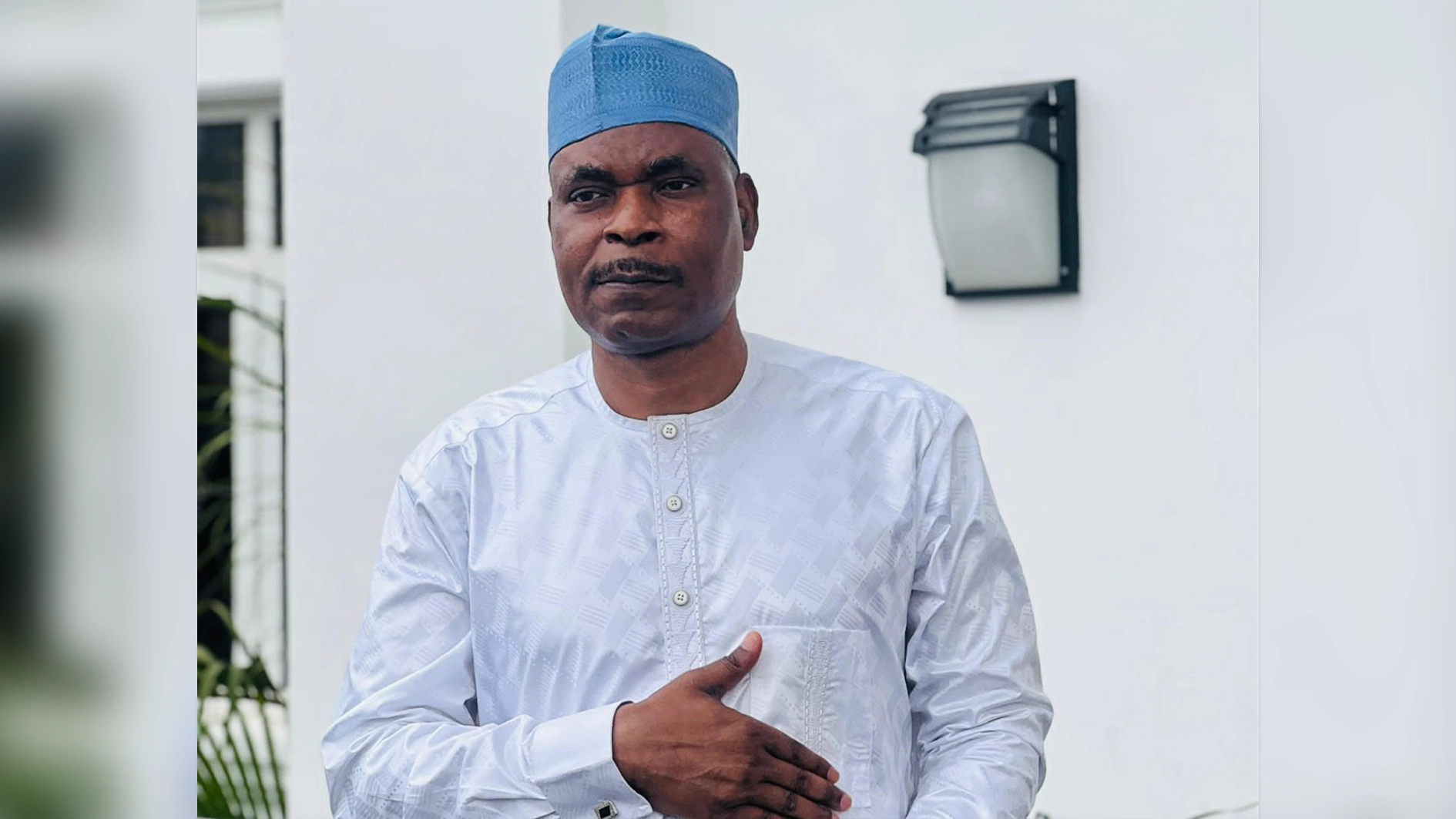
Former Inspector-General of Police, Mohammed Abubakar Adamu, in an interaction with the media, spoke on his ambition to contest the Nasarawa State governorship race, citing the widening gaps he uncovered from his tour of 147 wards in the state. Adamu also broached on the pending issues of insecurity, state police, and the President Tinubu-led administration. SEYE OLUMIDE was there.
There is an ongoing debate over establishing state police, with concerns about potential abuse by governors. What is your position?
The Constitution provides for a single police force. However, in practice, we already have multiple forms of policing across the country. At both national and state levels, various organisations perform functions similar to those of the police. We have the Neighbourhood Watch groups, vigilantes, and regional outfits like Amotekun Corps, all carrying out policing duties.
In reality, we already have state policing structures, albeit under different names. The key issue is not whether to create them but how to strengthen and regulate them effectively. Those who oppose state police often fear that governors may misuse them.
However, governors already utilise existing local security structures. The focus should therefore be on establishing proper frameworks, accountability, and oversight mechanisms.
What is your stance on local government autonomy?
In any functional democracy, the three tiers of government must be respected. In Nigeria, the local government system is the most disadvantaged tier. Local governments operate largely at the mercy of state governments. If the law provides for their autonomy, it should be fully implemented.
When local governments have control over their resources, they can be held accountable for their performance. Without such autonomy, meaningful evaluation becomes difficult. I strongly support local government autonomy and will ensure its full implementation if elected.

Do you believe President Bola Tinubu should be re-elected in the 2027 election?
No government receives universal praise. However, when the fuel subsidy was removed, the resulting funds were redistributed to the states. Governors across the country will tell you that their allocations have increased, and they are using those funds for development.
If it were another administration, the subsidy might have been removed without any tangible benefit reaching the states. At least now, governors acknowledge improved revenue inflows.
Why are you in the Nasarawa governorship race?
My coming out is because I have what it takes to add value to the state’s development. My coming out is really to see how we can improve on what we have on the ground and also to harness the resources we have for the unity, peace, and prosperity of the state. In doing so, I am concerned about certain developmental issues in the state, which are motivating me to come out and see how I can participate in and improve these areas, for example, in security.
We know that across the country, and in the North-Central in particular, we have been experiencing insecurity, not only in Nasarawa State but also in neighbouring states like Benue, Kogi, Taraba, Plateau, and Niger.
These are challenges in which what affects one state affects the others. I feel that, given my background in the security sector and my understanding of the challenges, if we were advising and implementing government decisions to tackle insecurity, I believe I should be in the driving seat at this time. Knowing fully well how some of these security issues can be solved, if there is political will, I believe that having that political will is key. So, if I am in that position, I will be able to utilise it to solve security problems, not only in Nasarawa State but also in neighbouring states.
In terms of the economy, Nasarawa State is agrarian. We thank God for the abundant mineral deposits, and harnessing and investing in them can help the state and its people in their development. During my consultations for this governorship race, I visited all 147 wards in the state and saw the multitude of youths and women who need help and attention. The youths need job training, and the women need training in different fields that will give them the skills to help themselves. I have seen that these things are not adequately available, and those are the areas I should be able to address when I get into office.
Addressing the issues of youth and women can help reduce some of the state’s security challenges.
For example, the state lacks power and electricity. If you go to the capital, you can hardly have 24 hours of electricity, even though we have substations nearby. Small-scale businesses rely on electricity to survive. For instance, a woman who has a fridge and sells iced water to train her children at school cannot achieve this aim due to a lack of electricity. As a result of my interactions, I have seen that there are still low-income groups that we need to focus on.
Also, the infrastructure needed to support farmers during cultivation is lacking. You see major roads passing through the capital, but when you go to the villages, the rural roads are missing. These are where farmers bring their agricultural produce. They need easy access to the city to sell their goods, but those roads are not available. These are issues that one should come in and help the state address. Furthermore, the water supply in Nasarawa State is a problem.
What have you done in Nasarawa that the people can point to?
Regarding the issue of Abuja-based politicians, I was born in Lafia, grew up there, and built my home there. My family, my wife and my children live in Lafia. I am truly from Lafia.
As for my contributions, I served as Inspector General of Police and implemented security strategies across the country, including Nasarawa State. I supported governors by advising them and deploying resources to combat crime.
I facilitated nationwide police recruitment, from which Nasarawa State benefited. I also established a Police Mobile Training School in Nasarawa due to security challenges in places like Gwoza, where training had become unsafe. Additionally, I built police secondary schools, hospitals, and contributed to infrastructure such as roads in the state. Compared to many of the aspirants who have been in politics for years, my record of tangible contributions stands out.
Nasarawa has experienced little development apart from that Makurdi road, where you see a semblance of development. Other parts of Lafia are quite sandy. Past governors also promised to change this narrative. Why should the people of Nasarawa trust that you would be any better?
The current governor has been able to dualise about five kilometres of road that passes through the Government House. Apart from that, there has been little improvement, and the town largely remains as former Governor Al-Makura left it. I am from Lafia town. My priority will be to ensure that the town’s landscape changes, not just for Lafia people but for the entire state. When you get to a state capital, the impression you form of the state is based on what you see there. Apart from changing the capital’s landscape, I also intend to create modern satellite settlements outside the city to give the state a more urbanised appearance.
With your background in security, how do you intend to change this narrative concerning security in Nasarawa?
Everyone of us knows the security problems we face in this country. We have communal clashes, banditry, kidnapping, and terrorism, but these offences can be classified into different regions or zones. In the North-Central, where Nasarawa is located, our major problems are communal clashes and kidnapping.
We tackle this by asking: what are the causes of these problems? The causes are largely poverty. If you do not have a means of livelihood and must survive, you will find a way to do so. There are layers of solutions. The first is to focus on creating jobs so that youths will have opportunities and be less inclined to commit crime.
In the agricultural sector, you can create many jobs for the youth. In the mining sector as well, you can create employment opportunities. These are areas I would focus on to reduce the number of unemployed youths roaming the streets.
The second step, especially in dealing with farmer-herder conflicts, is to bring communities together, bringing farmers and herders to the table to resolve their differences.
The next step is to implement community policing initiatives. Within every community, there is traditional leadership, which can be empowered. Selected youths can be legally empowered to take on limited policing roles to gather intelligence and report suspicious activities. Where local mechanisms fail, conventional policing can then be deployed.
How do you plan to leverage Nasarawa’s proximity to Abuja to drive estate development and maximise the state’s natural resource potential?
Yes, a place like Mararaba is still largely a slum. When the Federal Government decided to move the capital from Lagos to Abuja, construction began in Abuja.
The workers who built Abuja stayed in Nyanya because there was no space available. So, the Shehu Shagari government in 1979 decided to build workers’ quarters in Nyanya, allowing them to commute to work and return there.
However, those settlements were not originally planned as permanent structures but as temporary arrangements, with the expectation that they would be demolished after the completion of Abuja. Over time, those structures remained, and people began to acquire land there. When ministries moved from Lagos to Abuja, staff who could not afford accommodation in Abuja relocated there because it was cheaper. That is why the area has developed the way it has.
However, this does not prevent the re-landscaping of the area to make it comparable to what we see in Abuja. It also does not stop us from creating new settlements with proper planning, modern structures, and good infrastructure similar to what exists in Abuja.
If you look at Mararaba, at the back, there is a town called Gurku, which borders Mpape.
We will create an express road so that if you are coming from Kaduna, you do not need to pass through Mararaba. From Gitata-Panda, you can enter Abuja through Mpape. Along that axis, we will develop large estates similar to those in Abuja, while also going back to the slum areas to reshape and upgrade them.
You are from the Southern part of Nasarawa. However, some political leaders speak about zoning. How much support do you enjoy from power brokers, considering that the party’s primary may be either direct or consensus?
Politics is about interests. Anything that you believe will favour you as a politician is what you pursue. In Nasarawa State, there has never been anything like zoning. Zoning has never really taken place.
In 1999, when democracy returned, the state needed a civilian governor with political experience, so Abdullahi Adamu was brought in under the Peoples Democratic Party (PDP). When he completed his tenure, they searched within the PDP for a successor but could not find a suitable candidate. They then turned to the All Nigeria Peoples Party (ANPP) and picked Aliyu Akwe, a contemporary of Abdullahi Adamu, who defected to the PDP. That was not because of zoning, as PDP did not practise zoning at the time.
Tanko Al-Makura later emerged from a different party, the Congress for Progressive Change (CPC), and defeated Aliyu Akwe. Neither CPC nor PDP campaigned on zoning. When Tanko Al-Makura was leaving office, he supported the current governor, Abdullahi Sule.
Now that Sule is preparing to leave, Abdullahi Adamu wants the governorship to return to his zone, which is his right to advocate. However, my zone, Nasarawa South, believes that any competent individual in the state should be allowed to contest, regardless of zone.
The governor, in his wisdom, has indicated support for someone from Nasarawa West, but that does not prevent others from contesting. He has also stated publicly that the state will adopt direct primaries, which is acceptable to everyone. We support direct primaries and will remain vigilant to ensure that the process is free and fair.
How would you confront a governor who already has a succession plan going into the primary?
The governor has chosen to support someone from a different zone, the Keffi zone, while I am from the Lafia zone. So, I do not expect any political patronage from him.
However, it is not the governor who ultimately gives power; it is the electorate. That is why I decided to go directly to the people. I visited all 147 wards in the state. I met party officials and stakeholders, listened to their concerns, and understood the problems they face. Some even expressed intentions to leave the party. I engaged with them, addressed some of their concerns, and encouraged unity. We are now working together.
The Electoral Act no longer recognises indirect primaries. It is through indirect primaries that manipulation occurs, where a few delegates represent a large number of people. That system has been eliminated. No governor can simply handpick a few individuals to represent an entire local government, hide them, and then present them on election day to vote for a preferred aspirant.
The Electoral Act now allows for consensus and direct primaries. With direct primaries, candidates must engage directly with the electorate, which is exactly what I have done. As for consensus, it cannot work if even one aspirant disagrees. In such cases, the process automatically reverts to direct primaries. Whoever pushed for the removal of indirect primaries must have experienced its disadvantages firsthand.

