 Follow Us on Google News


 Follow Us on Google Discover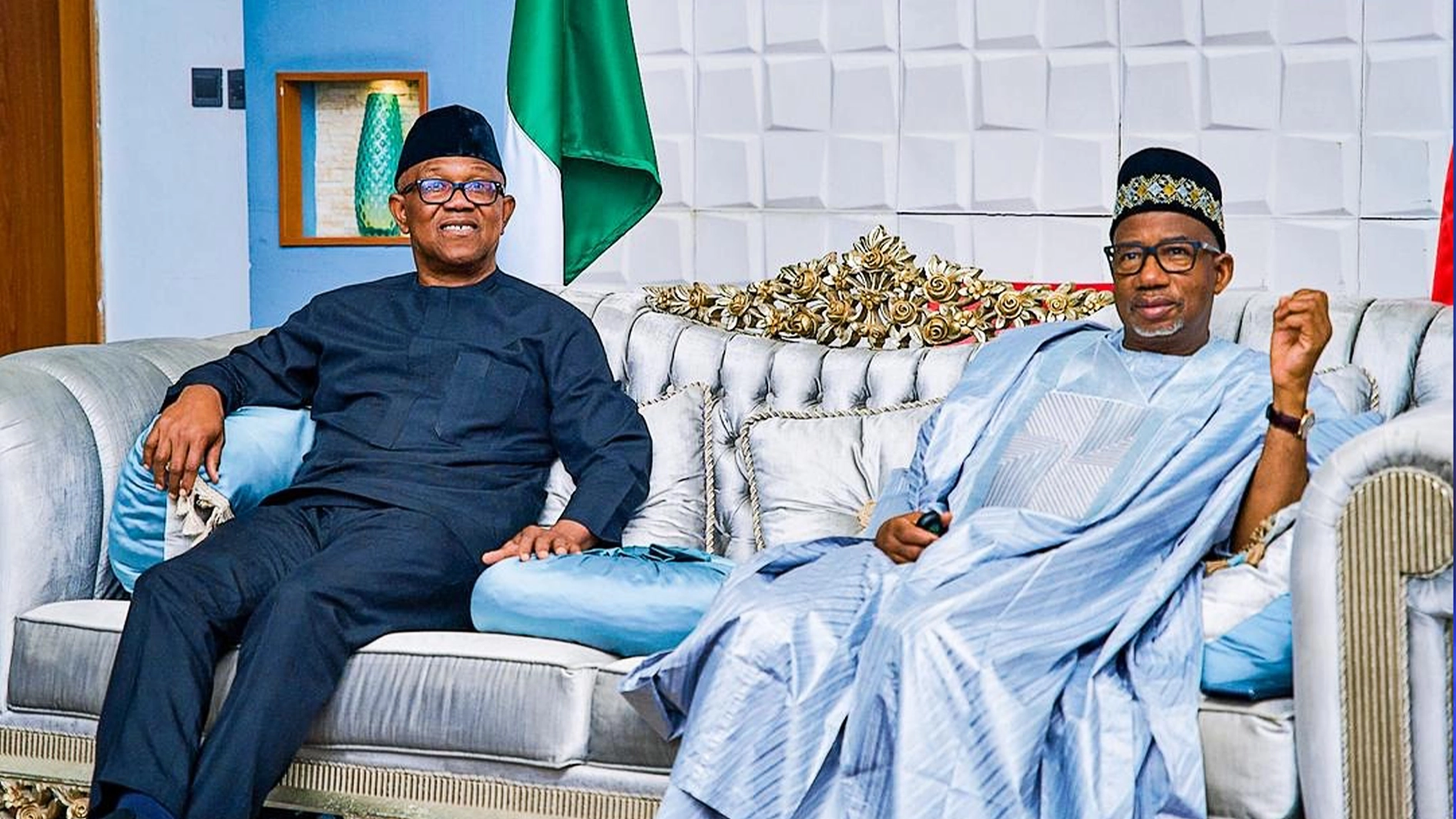
Opposition rebuilding for political showdown with APC, NDC replies Kalu
Peoples Democratic Party (PDP) chieftain, Dan Ulasi, does not see how a credible candidate will emerge from the party as constituted to challenge President Bola Tinubu in 2027; hence, he sets his eyes on former Labour Party (LP) presidential candidate, Peter Obi, as an alternative.
However, as the LP rules out the chances of Obi picking its ticket for the 2027 contest, Bauchi State Governor, Bala Mohammed, and the Anambra ex-governor said that they were working together politically to “develop” the country.
Meanwhile, the Nigeria Democratic Congress (NDC) has rebuked Senator Orji Kalu over his recent remarks on Nigeria’s economy and the strength of opposition parties, insisting that his comments were “politically detached from the realities Nigerians are enduring”.
The party insists that the opposition is rebuilding for a political showdown with the All Progressives Congress (APC).
Ulasi, who spoke yesterday while fielding questions on Arise Television’s ‘Morning Show’, acknowledged that Minister of the Federal Capital Territory (FCT), Nyesom Wike, is the national leader of the party who declared support for President Tinubu.
He said his eye on Obi is because of his interest in finding a good alternative to the present government.

“I told Wike, the last time we met, ‘you cannot be the national leader of PDP and be supporting Tinubu; that is very unconstructive. You cannot be a leader of a national party that has not held its convention. Supposing someone else emerges as the presidential candidate of the PDP, what would he be doing? Would he attend our convention, would he attend our rallies, or would he go to that of the APC? So, that is the problem Wike has to explain.”
The PDP chieftain stated that if the contradictions were not well explained to him, he would not hesitate to leave the party.
Reacting to the Obi-Kwankwaso effect, Ulasi described the effect as part of the gradual process being built up across this country. He explained that Kwankwaso “is not a name anyone will throw out in the North; same with Obi in the South.
In the 2023 general election, Obi came third and gained a massive following.
But speaking during an appearance on Arise Television, the interim caretaker committee chairperson of LP, Nenadi Usman, declared that it would be too late for Obi, who left the party for the African Democratic Congress (ADC), to return.
She insisted the party’s rules and electoral procedures left no room for a late reentry.
Usman said the legal and procedural framework governing the party’s primaries would make such a move impossible.
She said that would take effect once the register of eligible participants is closed and submitted to the Independent National Electoral Commission (INEC).
“It will actually be too late for him to come back. At some point, we close the register, and once we close it 21 days before the primaries and submit the e-register to INEC, you can’t come from behind the door to register for a contest. That would be legally impossible,” she said.
But while firmly shutting down that possibility, Usman acknowledged Obi’s role in elevating the party’s national profile.
“Obi really took the party to great heights in 2023,” she said. “He convinced me to come with him to LP. Not just me, many people joined because we believed in equity and fair play.”
The statement came on the heels of a significant legal victory for the Usman-led LP, after the Court of Appeal dismissed an appeal by Julius Abure challenging earlier rulings linked to the party’s leadership dispute.
According to Usman, the ruling reinforced the legitimacy of the caretaker leadership and cleared the path for rebuilding efforts, while accusing rival interests of weaponising litigation to weaken the party.
In an apparent moveto unite the country, Mohammed and Obi met in a closed-door meeting in Bauchi yesterday at the Presidential wing of the Government House. Briefing the press after the meeting, Obi said he brought stakeholders from the South East region to seek collaboration.
According to him, the purpose of his visit was to solicit the support and cooperation of Mohammed, the stakeholders of Bauchi and the North-East, “in our quest to unite this country.”
Asserting that they were working to have a united country to build the future for the children, Obi said the country could not continue the way it is today.
“We are headed in the wrong direction, and we need to reverse that for everybody. That’s why we are asking for the purpose to seek the support of the stakeholders of Bauchi in building a new Nigeria. That will be for the benefit of all, building that Nigeria that we used to be, where a child of nobody can be somebody without knowing anybody,” Obi stated.
On his part, Mohammed said Obi had come “with a torchlight for us, a torchlight that we really want to hold because he’s talking about unifying the country and building the country. We are building bridges and creating a new tomorrow for this country.”
In a statement issued in Abuja and signed by its Deputy National Publicity Secretary, Abdulmumin Abdulsalam, NDC accused the Abia North senator of attempting to sanitise the country’s economic challenges while dismissing the growing momentum of opposition movements.
The statement followed Kalu’s media briefing at the National Assembly complex, where he reportedly praised the economic direction of the Tinubu administration and suggested that opposition parties lacked the capacity to mount a serious challenge in future elections.
NDC dismissed that claim as “wishful thinking dressed as political analysis,” insisting that opposition forces remain active, coordinated and increasingly organised.
“There is no vacuum in the opposition space. What exists is strategic consolidation, not collapse,” the party stated, adding that political realignments were already underway across the country.
It further alleged that attempts to portray the ruling party as politically unchallenged were part of a broader effort to “manufacture dominance ahead of electoral contests.”

