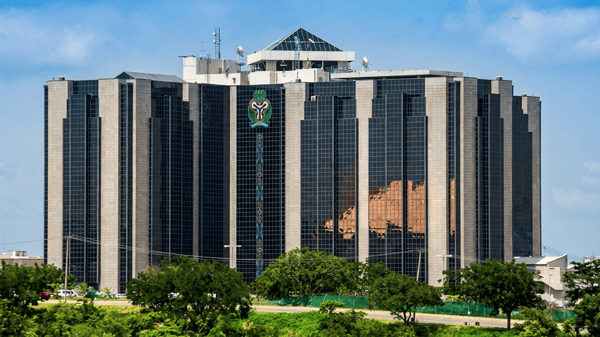
The Public Accounts Committee of the House of Representatives has directed the Central Bank of Nigeria (CBN) to complete a reconciliation exercise with the Ministry of Finance and the Fiscal Responsibility Commission regarding an alleged N5.2 trillion unremitted operating surplus to the Federation Account.
The directive was issued on Tuesday by the Committee Chairman, Mr Bamidele Salam, following a request from CBN Governor, Mr Olayemi Cardoso, for additional time to respond to allegations and appear before a joint committee hearing.
The investigation stems from reports by the Office of the Auditor-General for the Federation, the Fiscal Responsibility Commission, and a special audit conducted by consultants engaged by the National Assembly. The findings allege that between 2015 and 2022, the apex bank failed to remit approximately N5.2 trillion in operating surplus to the Consolidated Revenue Fund, contrary to provisions of the 1999 Constitution (as amended) and the Fiscal Responsibility Act.
Mr Salam highlighted that the audit reports raised significant concerns over fiscal accountability and transparency at the CBN. He noted that the findings also include “alleged outstanding remittances of about N954 million following the transition to the Treasury Single Account, discrepancies of about N11.09 billion, another N2.69 trillion uncovered during the migration of Federal Government balances, as well as N521.7 million in Value Added Tax on remittance transactions.”
According to Salam, the CBN’s letter of December 15, 2025, requested more time due to the volume of documents involved and ongoing reconciliation with the Ministry of Finance and other relevant agencies.
Speaking at the joint committee session, the Minister of Finance and Coordinating Minister of the Economy, Mr Wale Edun, stressed the importance of accurate revenue reporting. “Federal Government revenue is a critical aspect of government operations, budgeting, financing, and investment in public assets. We need clarity and accuracy in both fiscal and monetary management. That is where transparency and accountability are seen, and it is also what rating agencies look at in assessing our financial position,” he said.
Mr Ademorin Kuye, Chairman of the House Committee on Public Assets, emphasised the need for a fixed timeframe for reconciliation. “We are concerned that the 2025 budget is based largely on expected revenues, and we do not want this issue to drag on unnecessarily. The reconciliation should involve the Fiscal Responsibility Commission and the Office of the Auditor-General for the Federation. The CBN and the Ministry of Finance remain the principal parties,” he said.
Representing the Fiscal Responsibility Commission, Mr Charles Abeta acknowledged the historical challenges in compliance but welcomed the current reconciliation effort. “The history of engagement between the Commission and the CBN has not always been smooth, but we are very keen on having a sit-down with the CBN to address any outstanding issues relating to remittances and compliance,” Abeta said. He noted that amendments to the Fiscal Responsibility Act through the Finance Act 2020 have strengthened enforcement mechanisms, providing clearer authority for the Minister of Finance to ensure remittances from source.
The Salam-led Committee concluded the session by fixing January 19, 2026, as the deadline for submission of the reconciliation reports, and January 26, 2026, for the appearance of the CBN Governor before the joint committee.