 Follow Us on Google News


 Follow Us on Google Discover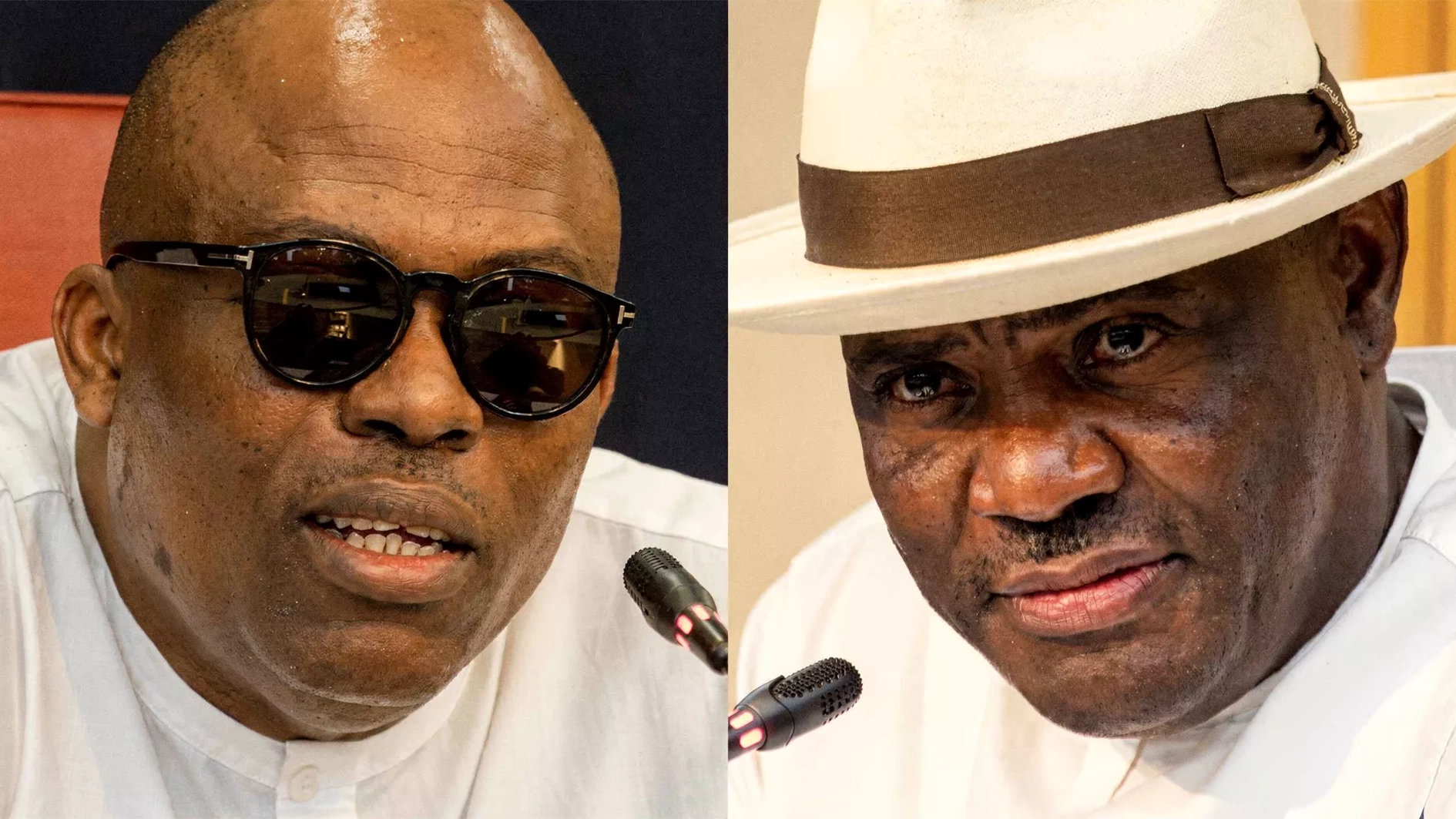
As preparations for the 2027 elections gather momentum in Rivers State, the rift between Governor Siminalayi Fubara and the Minister of the Federal Capital Territory (FCT), Nyesom Wike, smoulders. Adding to the power tussle is the ethnic card that is being played, ANN GODWIN reports
Fresh political signals from the Minister of the Federal Capital Territory, Nyesom Wike, have reignited debate over inclusion, balance and the future of power rotation in Rivers State, placing Governor Siminalayi Fubara at the centre of an increasingly complex 2027 re-election equation.
At the heart of the unfolding contest are three defining forces: deepening ethnic sentiment, unresolved tensions between political godfather and protégé, and the growing weight of external political actors.
A familiar fault line in Rivers politics, ethnic balancing and zoning, has once again come to the fore as the 2027 governorship race begins to take shape.
Since the return to democracy in 1999, the governorship of Rivers State has rotated across a narrow spectrum of political actors and zones, shaping today’s agitation over equity and inclusion.
The state’s first civilian governor in the Fourth Republic, Peter Odili, governed from 1999 to 2007 under the Peoples Democratic Party (PDP). An indigene of Ndoni in Rivers South-East, Odili’s eight-year tenure represented a riverine presence in power.

He was succeeded by Rotimi Amaechi, who held office from 2007 to 2015. Amaechi, from the Ikwerre ethnic group in Rivers East (upland), was elected on the PDP platform but later defected to the All Progressives Congress (APC), also completing eight years in office.
In 2015, Nyesom Wike, also from the Ikwerre axis, assumed power under the PDP and served two terms until 2023, further extending upland dominance to 16 consecutive years.
The emergence of Fubara in 2023, from Opobo-Nkoro in Rivers South-East, marked a return of power to the riverine bloc.
Overall, while riverrine areas have held power for about three years, upland have dominated for 24 years, a disparity now central to debates ahead of 2027.
Agitations are saying that since 1999, power has largely rotated within the Ikwerre ethnic bloc, reinforcing perceptions of upland dominance under leaders such as Odili, Amaechi and Wike.
The emergence of Fubara from the riverine Rivers South-East in 2023 briefly disrupted that pattern, but it has also intensified agitation, particularly in Rivers South-West, where demands for equity, inclusion and sustained riverine representation are growing louder. For many in these areas, 2027 is not just another election cycle, but a referendum on whether the state will institutionalise power rotation beyond informal arrangements.
However, ethnic sentiment alone may not determine the outcome. The more immediate and decisive factor remains the strained but evolving relationship between Wike and Fubara.
Despite public posturing of reconciliation, recent signals suggest lingering distrust. Wike’s reported vow not to repeat the “mistake” of 2023 has reinforced perceptions that loyalty and personal trust, rather than zoning or equity, may ultimately shape the succession battle. This introduces a critical variable: whether Fubara can retain, renegotiate, or withstand the withdrawal of Wike’s political machinery.
Wike’s entrenched influence over grassroots structures, the legislature and key political networks continues to define Rivers’ electoral arithmetic. In a state where control of local structures often outweighs formal incumbency, Fubara’s path to re-election appears contingent on his ability to build an independent base without triggering outright confrontation.
This internal contest is further complicated by the role of external actors. Fubara’s alignment with the federal government-controlled APC and the backing he reportedly enjoys from national figures and governors introduce a new layer of political calculation. Yet, Rivers’ politics has historically been resistant to external imposition, with outcomes largely determined by local alliances and entrenched networks.
Although national support may offer Fubara strategic leverage, it cannot substitute for control of grassroots mobilisation, which the minister currently has and is also deploying appropriately.
If Wike retains his hold across party structures, cutting across both the APC and the major opposition PDP, the election could shift from a conventional inter-party contest to a tightly managed intra-network negotiation.
This dimension is already reshaping political behaviour. Aspirants are increasingly aligning with dominant power blocs, while opposition spaces risk fragmentation or quiet co-option. In such a scenario, electoral competition may persist formally, but with limited ideological differentiation, narrowing voter choice.
Meanwhile, speculation over possible successors has added to the uncertainty. Names such as Boma Iyaye and Okechukwu Chinda have surfaced, reflecting the extent to which the contest is being framed around proximity to the Federal Capital Territory Minister rather than broad-based political appeal.
Although both figures have either denied or remained silent on such claims, the scenario underscores the centrality of elite endorsement in shaping the race.
For riverine communities, Fubara’s potential re-election represents continuity in a long-sought inclusion within the state’s power structure. Conversely, segments of the upland political class may view 2027 as an opportunity to reassert influence, particularly if mobilised through Wike’s network.
Again, federal might and President Bola Tinubu’s 2027 re-election calculus are poised to play a decisive role in shaping the political fate of the two major actors, Wike and Fubara.
Significantly, Rivers, as a politically influential and economically critical oil state, is too important to be left outside the President’s re-election map. Tinubu’s overriding interest will be stability and electoral deliverables, ensuring that whichever bloc controls the state can guarantee votes, suppress internal dissent, and avoid protracted crises that could weaken the APC’s national outlook.
This places Wike in a strong position. However, since the presidential election comes first, the President may be reluctant to upset the balance between Wike and Fubara, preferring to watch how events unfold once his own electoral prospects are secured.
Either of the two, Wike or Fubara, could be compensated with strategic appointments if Tinubu retains power and wins Rivers.
“But as a serving minister in Tinubu’s cabinet and a proven political organiser with deep grassroots control, Wike represents a reliable ally capable of delivering Rivers. Federal backing, through institutional influence, security architecture and party structures, could reinforce his dominance across both APC and PDP networks in the state. If sustained, this may tilt the 2027 governorship process in favour of a candidate aligned with the minister,” a member of the House of Representatives, who did not want his name mentioned, said.
He also explained that Fubara’s survival is not, however, foreclosed. He said: “Fubara’s growing ties with APC power brokers and governors suggest an attempt to plug into the same federal ecosystem. If he successfully repositions as a cooperative actor within Tinubu’s broader political strategy, rather than a rival to Wike, he could secure conditional federal tolerance, if not outright support.”
He said the risk, however, lies in a zero-sum contest. “Should the Wike–Fubara rift deepen, the federal might may not be neutral. Abuja could prioritise predictability over incumbency, especially if Fubara is perceived as weakening established political structures. This could manifest in subtle but consequential ways, control of party machinery, influence over security deployments and leverage in electoral processes.”
He added that Rivers’ politics has an enduring local character. “Even with federal backing, outcomes are often determined by control of grassroots networks and ethnic alignments. If Fubara consolidates riverine support and builds an independent structure, he could offset external pressure.
“Conversely, if Wike retains his grip on local institutions while enjoying federal goodwill, the contest may be largely settled before election day.”
He added that Tinubu’s re-election interest may not directly decide Rivers 2027, but it will shape the environment in which the election is contested, defining alliances, narrowing viable candidates and determining whether the race is an open contest or a managed succession.
The Wike–Fubara rift and APC’s growing interest risk subordinating governance to power struggles, slowing development and heightening tensions. Yet, a competitive 2027 race could benefit Rivers people if it compels candidates to prioritise jobs, infrastructure and security, shifting focus from political control to performance and accountability.
Stakeholders reactions
Speaking in support of zoning, a prominent Niger Delta activist, Ann Kio Briggs, has argued that political power in the state has been unevenly distributed over the years, noting that upland areas have held sway for many years, with the Ikwerre ethnic group accounting for a significant portion of that period. She maintained that this history reinforces the need for fairness and inclusivity in deciding the next governor.
She said while she had supported Wike during his tenure, such support does not preclude her from criticising actions she considers wrong. According to her, Wike’s emergence as governor was backed by a broad coalition of ethnic groups, including Ijaw, Ogoni and Ikwerre, stressing that “it was not only his people that made him governor.”
Briggs therefore contended that the former governor “has no right to single-handedly decide or impose who governs the state,” adding that citizens must assert their democratic rights.
She urged eligible residents to obtain their Permanent Voter Cards (PVCs) and actively participate in the electoral process, emphasising that voter mobilisation remains key to determining leadership outcomes.
“For democracy to work, people must register, collect their voter cards and vote for candidates of their choice, irrespective of political party,” she said.
Offering a contrasting view, political analyst, Olalekan Ige, said Wike, as a prominent political figure with influence across major parties, retains the right to support candidates of his choice.
Ige noted that constitutionally, there is no restriction on where a governor should emerge from within the state, although agitations around equity and rotation have remained part of the political discourse.
He observed that some stakeholders believe Rivers South-West has been marginalised since 1999, but stressed that electoral victory ultimately depends on broad-based support across the state.
“The contest is open,” he said, adding that political actors must go beyond rhetoric to mobilise voters, build alliances and present credible candidates.
He further explained that winning the governorship requires not only a majority of votes but also at least one-quarter of votes in two-thirds of the local government areas, in line with constitutional provisions.
Ige noted that while influential figures may shape political conversations, the final decision rests with the electorate, urging stakeholders to intensify grassroots mobilisation ahead of the polls.
Also, a keen political watcher in Rivers’ politics, Genesis Gideon, said it is only in a truly functional democracy that the will of one individual cannot override that of the people.
He lamented that in political environments where “selection” is mistaken for “election,” powerful actors often impose loyalists to serve narrow personal interests, rather than reflect the genuine choice of the electorate.
“In such situations, so-called individuals appoint stooges and foist them on the populace as preferred candidates,” he said.
Gideon warned that until electoral processes become fully credible and votes genuinely determine outcomes, democratic participation may remain ineffective.
“Until our votes truly count, we may continue to chase shadows,” he added.
A citizen of Rivers, Peter Ijeoma, described parts of Wike’s statements as “politically insensitive,” particularly towards other ethnic groups. He warned that if not carefully managed, such comments “could increase political tension” and may “threaten the existing gentleman’s agreement on power sharing among the state’s ethnic groups ahead of the 2027 elections.”
In a similar reaction, human rights activist Chetam Nwala observed that many political actors appear to be remaining silent because they have aligned themselves with what he described as the Minister’s “style of politics.” He urged citizens to actively participate in selecting the next governor, stressing that such engagement is “key to addressing what he described as neglect by the Minister and his associates.”

