 Follow Us on Google News
 Follow Us on Google Discover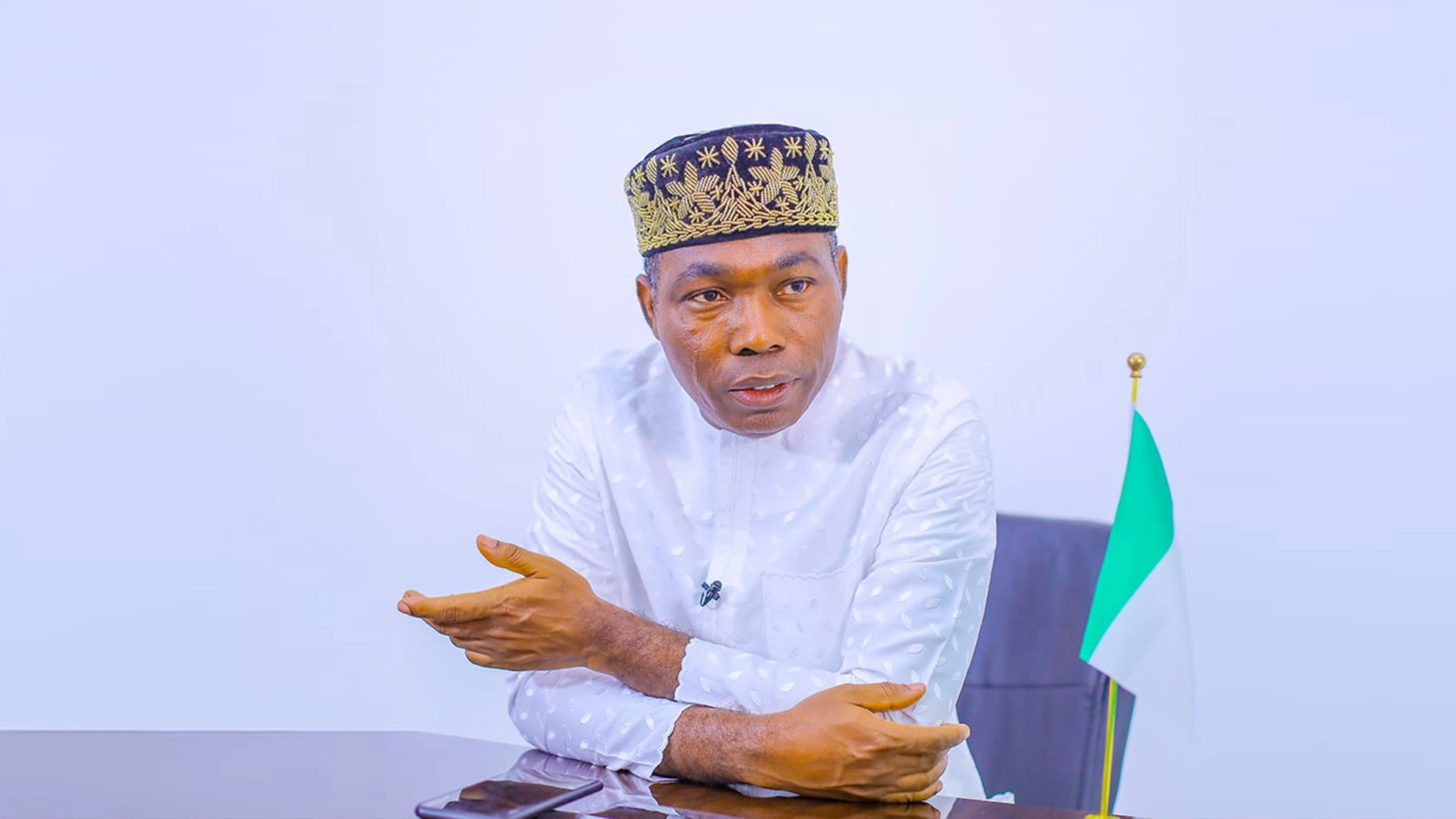
As political realignments quietly gather momentum ahead of the 2027 general election, leader of the Social Democratic Party (SDP), Prince Adewole Adebayo, has disclosed why his party has refused to join the African Democratic Congress (ADC) coalition platform, dismissing the elite-driven alliance as fundamentally flawed. In an interview with select journalists, he noted that the SDP is building what he described as a “people-powered coalition” that aims at not only ousting President Bola Tinubu from power but also enthroning good governance in the country.
Politics is a game of strategic alliance and numbers. It is said that anyone that is not in the coalition is inadvertently supporting the ruling party as it will be difficult to singlehandedly defeat the APC in the 2027 elections. Why is the SDP running a lone man show?
Alliances and coalitions are with the strategic partners in an election. And strategic partners are not necessarily politicians. Strategic partners are the segments of the society. If you have the political class, within us we have certain disagreement, because the ultimate aim of politics is to enter government and govern and if you are talking in terms of accountability, corruption, you will not have credibility if you are aligning yourself with people who don’t believe in that, either by words of mouth, their actions or their questionable character. So you will be inconsistent.
Also, if you look at the people who make elections happen, the majority of them have not been participating.
I ran for president last time and we had 93 million voters and we couldn’t get 80 per cent to show up. If you want to have a coalition or an alliance, you have to find out where the 80 per cent that didn’t show up are; what are the issues that bothered them and why they didn’t show up. Those are the areas the SDP is working with the strategic partners in an election. We have talks with other political parties from time to time; sometimes the talks are not that productive because you find out that somebody who made serious mistakes in government for the past 20 years hasn’t learnt anything new. They are looking for an opportunity to make another mistake for another 20 years and we are not going to enable that.
Some in the coalition want to play roles which they are not suited for, which is purely based on ambition. The real alliance is to make sure that Nigerians who are going to bear the brunt of bad governance and beneficiaries of good governance are participating and what the SDP is doing is bringing more people into the fold.
Your party’s activities appear not to be in the media. Can you brief us on what your party is doing regarding your plans for 2027?

What we do is to try and increase our membership. If you go round the country, you will see physical signs of it. The under reporting of what we are doing is a mixed blessing. We were in Kano where thousands of people joined the SDP; you didn’t report it. On the other hand, we think it doesn’t matter; on the election day you will see the difference. The person we are trying to remove has the security apparatus; he knows what we are doing.
If you are a Nigerian out there and you are expecting a coalition to come and save you, you are making a big mistake. What you need to do is talk to your neighbour who says let’s pray over this problem. Yes, you can pray; but don’t stop there. You need to listen to debate, join a political party that you think is speaking the truth to you and make sure you participate in the election. Don’t join anyone who says hope is lost. You need to come out.
We have religious, civic and professional organisations that think they can profit from rendering services to a bad election system instead of coming to improve on it so that we can overall have a good country. We are also making sure the commitment to supporting us is not just verbal assurance; we have actually taken a step to get people to come and join the party. In the last few months, data shows that in many remote parts of the country, there is no week now that we don’t have close to 100,000 people joining. It used to be 100,000 a month and we are following up so that it’s not just numbers that we are going to post to INEC but quality participation.
You said people are joining your party in thousands but some major defections from your party happened recently. Is this a sign of people losing confidence and faith in your party’s capacity to drive the 2027 agenda?
No, not really. What I see is that if there is a system where 5000 left the SDP, chances are that we probably won’t notice at all because if you are bringing in 50,000, 100,000 every week and 5000 decides to leave, especially if it’s because the defector has beholden to one particular aspirant who is not favoured by zoning and he knows that in the SDP, he might not get the ticket and takes 5000 people with him and has a budget to advertise that. We cannot complain.
You don’t seem concerned that the party is left with one member in the Senate?
Not really, because one person died and we lost one now though he hasn’t officially resigned because we have to be careful according to the law. He hasn’t told us that he has left but we are hearing rumours that he is the favoured candidate of the ring party. We cannot do anything about that. He is trying to be governor of a state. We already have quality people who will be governor. So, it’s natural that he knows that we will not make him the governorship candidate because of the way the formula has worked out and he decided to go and pursue his governorship bid elsewhere. I think we have to respect that. But the party is not about individual ambition like that because for every one of such that advertises departure, there are thousands coming in.
What matters to us is that we would be congratulating ourselves half way if the Nigerian people understand why the SDP is in the race. That we are about the substance of Chapter Two of the Constitution and that we are trying to let people know that governance is not a contest of personality, but a contest of principles. If they understand that and we build that coalition across the country, others will join us. Even some of those who are all over the place now, that is the coalition, will join us once they discover that Nigerian people are getting that message. And that message is important; if we don’t get it now, we will get the transition wrong. I must say this clearly.
The objective of the SDP is deeper than the objectives of some of the people you find in the so-called coalition. They are satisfied 100 per cent if the president is removed; that is their objective. But for us, that is just the beginning. Our objective is achieved only when we remove the president and replace him with a government that will not look like his own but one that will end the bad past experiences of Nigerians and place the country on a sustainable path to good governance and quality leadership. That is what we are looking for, not just ‘let us throw this computer away (touches a computer)’; if you throw it away, what are you replacing it with? That is where our discussion is deeper than theirs.
Do you think the INEC will be able to conduct a credible election come 2027?
I don’t think they are aiming towards that because you have to be sure first before you can say whether they can do it. The person who is not willing to work will not be productive. It is a question of what the rest of us have to do. Remember that the INEC chairman did not appoint himself. He was appointed by the president who I’m not sure a free, fair and credible election is top of his priority. Not only that the president didn’t act alone, there is a Council of State where all the former leaders and experienced people approved the appointment without any question. And it went to the National Assembly, representing all Nigerians, and they approved the appointment without question. It looks to me, therefore, that there was not much uproar against the appointment. Even some of the people who are now campaigning against the INEC chairman, if you go back months you will see the news where they are praising the appointment. But as they got along, they realised they needed to criticise him.
We have blown the opportunity to have a free and fair INEC. If we wanted to do that we would have implemented the Uwais Panel report. The chairman of ADC, for example, was the senate president at the time Justice Uwaise submitted that report during the Yar’Adua administration. When David Mark reviewed the report, he threw it away. A lot of opportunities for free, fair and credible elections had been lost.
It’s like those initial antagonists of sound electoral law have now become the victims?
Yes, because at that time, the rigged elections favoured them and they assumed, like President Tinubu and the APC people are assuming now, that they would be in the saddle forever. Right now, the people left to ensure free, fair and credible elections are the politicians themselves, the media, the voters and the law enforcement. But for INEC, I think that opportunity has been out already.
There is the perception in some quarters that there is a subtle underground attempt to shrink the democratic space and ensure the emergence of Tinubu as the sole candidate for the 2027 presidential election. Where do you stand in this narrative?
What you need to know is that we don’t need to make it sound that we are making something that is very creative. President Bola Ahmed Tinubu is not a democrat. He doesn’t behave like a democrat. He has even stopped pretending to be a democrat.
How can you say that a former member of NADECO, who fought against the Abacha junta, is not a democrat?
Your operating word is former. A thief is a former honest man. A convict is a former innocent person. There are a lot of ‘formers.’ The issue is that what you do now is what matters. You could see that he is not a stakeholder in finding democracy for Nigeria. He is limited to the idea that I am there now; I know how I fought my way there; I wasn’t brought there by democracy; I was brought there by the effectiveness of my own ruthlessness. Now that I am there you have to be more ruthless than me to get me out of there. So, he is not pretending. We had interactions with him in the State House where all the political parties were represented and he told them, ‘listen, I suffered, go and suffer your own.’
You are interpreting that as telling them that they should be ruthless?
He spoke English. And you know his English is always simple. It’s clear. Hear me, it’s my turn. Why should I favour you now?
You are misconstruing the president. What he has always said is that you cannot lay the internal weaknesses of your party at his door step…
I am saying what he spoke with his own mouth. You are talking about what his spokesperson is saying on his behalf. He said when I was in opposition I suffered it; the game is sweet when you are winning. So go and deal with it.
You think the opposition is ready to make the sacrifice?
What is opposition? Opposition is what you do, not just merely what you say. Some of the people in opposition are mercenaries and saboteurs. Some of them are also causing problems for themselves. But the key issue is that if we are to oppose President Tinubu, there are three things we need to do.
One, our action in the running of our political party is not lawlessness. Two, we oppose in principle and mobilise Nigerians that our opposition to this president is to save the country and to ensure good governance. Three, we must create a contrast. You shouldn’t look like Tinubu, if you want Nigerians to help you in defeating his government. You have to bring a sharp contrast that will be like day and night, black and white. Nigerians must see that there is a clear alternative.

