 Follow Us on Google News
 Follow Us on Google Discover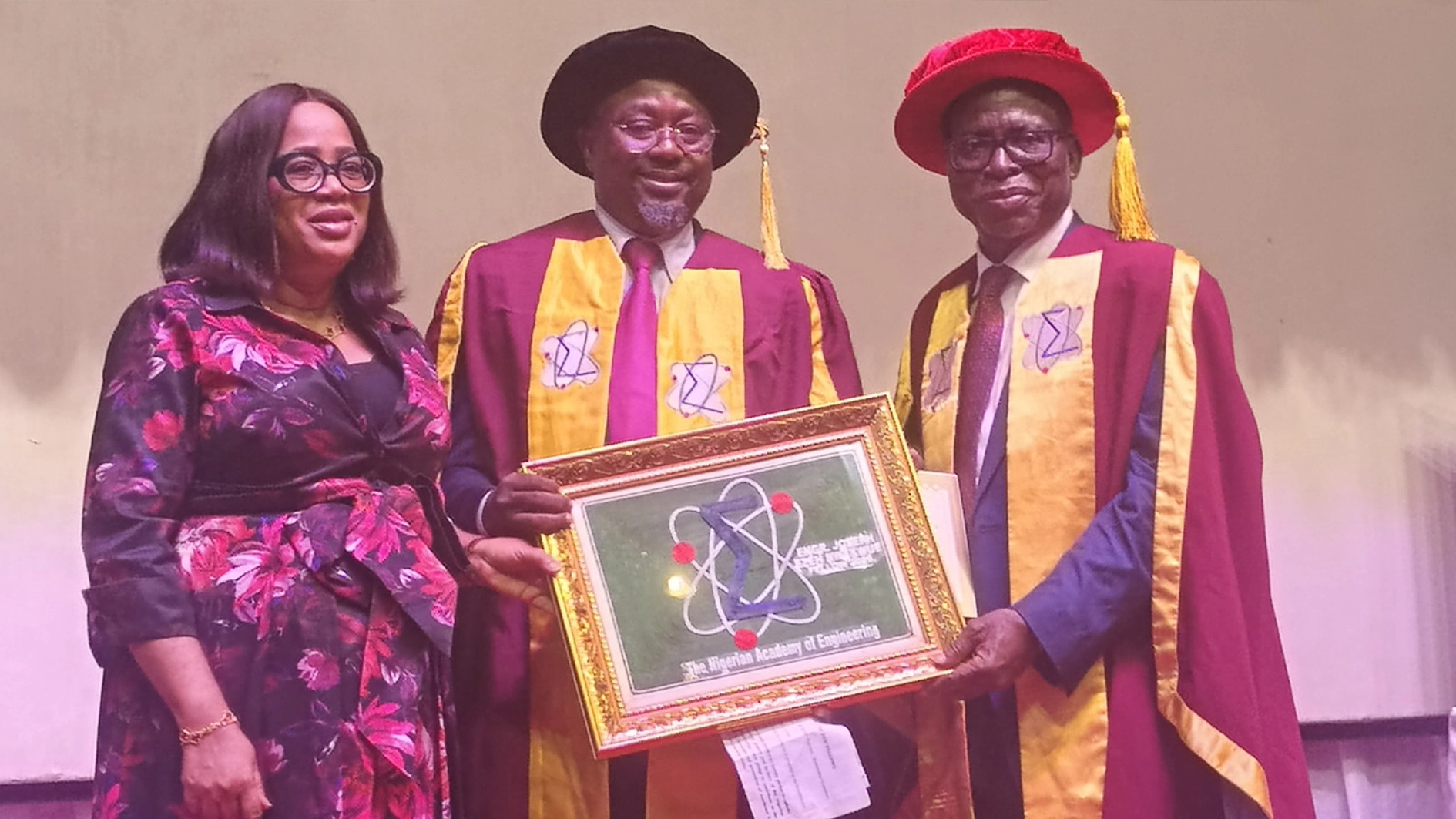
• As Danbatta emerges NAE president
Stakeholders in the engineering sector have called for increased investment in research, innovation and mentorship to strengthen the profession’s contribution to Nigeria’s national development.
The call was made at the annual lecture of the Nigerian Academy of Engineering (NAE), titled “Impactful Engineering Through Innovation and Mentorship,” and the investiture of former Chief Executive Officer of the Nigerian Communications Commission (NCC), Prof. Umar Danbatta, as the 14th President of the Academy.
The event, held in Lagos, also featured the presentation of Lifetime Achievement Awards and the induction of 12 new honorary fellows.
Leading the call, guest speaker and 10th President of NAE, Emeritus Prof. Fola Lasisi, said Nigeria has the human capacity required to achieve engineering excellence globally, but must deliberately invest in innovation, research and indigenous engineering capability.
Lasisi stressed the need for the country to support young engineers and sustain mentorship programmes that preserve knowledge, transfer professional values and prepare future leaders.
He said the future of Nigerian engineering would be shaped by professionals willing to innovate, serve selflessly and mentor the next generation.

“Engineering remains the foundation upon which modern societies are built, powering economies, connecting communities, strengthening industries, safeguarding the environment and improving the quality of life of citizens,” he said.
According to him, while technical competence remains essential, modern engineering requires a combination of innovation, ethical leadership, sustainability and purposeful mentorship.
Lasisi described mentorship as a professional responsibility, noting that its impact extends beyond individuals to institutions, industries and society. “Technologies may become obsolete, but the impact made on people often endures for generations,” he said.
“When an engineer mentors one young professional, the impact extends far beyond that individual. It influences institutions, industries, communities and ultimately the nation itself. Infrastructure may serve for decades. Mentorship can serve for generations.”
Addressing the gathering, Danbatta pledged to uphold the ideals of the Academy in line with it statutes, by-laws and code of conduct.
He said his administration would focus on strengthening engineering education, revitalising technical education, improving infrastructure maintenance strategies, advancing engineering policy and advocacy, promoting industrialisation and manufacturing, and building strategic partnerships.
Danbatta, who previously served as a member of the Council for the Regulation of Engineering in Nigeria (COREN), said the Academy would deepen collaboration across the engineering profession, promote mentorship and capacity building, strengthen academic-industry partnerships and expand engagement with policymakers and the media.
He assured members that his leadership would uphold professionalism, integrity, and innovation while promoting inclusiveness and collaboration to advance the profession.
Immediate past President of NAE, Prof. Rahamon Bello, said the Academy had continued to promote innovation and national development through initiatives focused on engineering and technology.
He highlighted the Academy’s National Innovation Competition, an annual technology challenge now in its third year, which identifies and rewards creative solutions in science, engineering and technology aimed at addressing societal challenges.
Bello said winners of the competition are supported in scaling their innovations through connections with potential investors, while the Academy’s Travel Fellowship Grant provides young academics opportunities for international exposure and professional development.
He said the Lifetime Achievement Awards were recognition of decades of dedication, integrity and excellence by distinguished professionals whose contributions would continue to inspire future generations.
“The Academy remains committed to supporting the nation with independent, objective and forward-looking technological advice,” Bello said.
One of the new inductees and former Chairman, Society of Petroleum Engineers (SPE) Nigeria, Mr Joseph Nwakwue, said innovation and mentorship were critical pillars of engineering development. “Without innovation, there will be stagnation and without mentorship, the profession becomes unsustainable. The lecture is therefore very apt,” he said.
Nwakwue described his induction into the Academy as an honour and a renewed call to professional and national service.
Also speaking on behalf of the new fellows, former Special Adviser on Works and Infrastructure to the Lagos State Governor, Mrs Aramide Adeyoye, said the future of national development lies in applying science, technology, engineering and mathematics to drive knowledge-based growth.
Adeyoye assured that the new fellows would contribute their expertise towards expanding the frontiers of engineering knowledge and excellence.

