 Follow Us on Google News


 Follow Us on Google Discover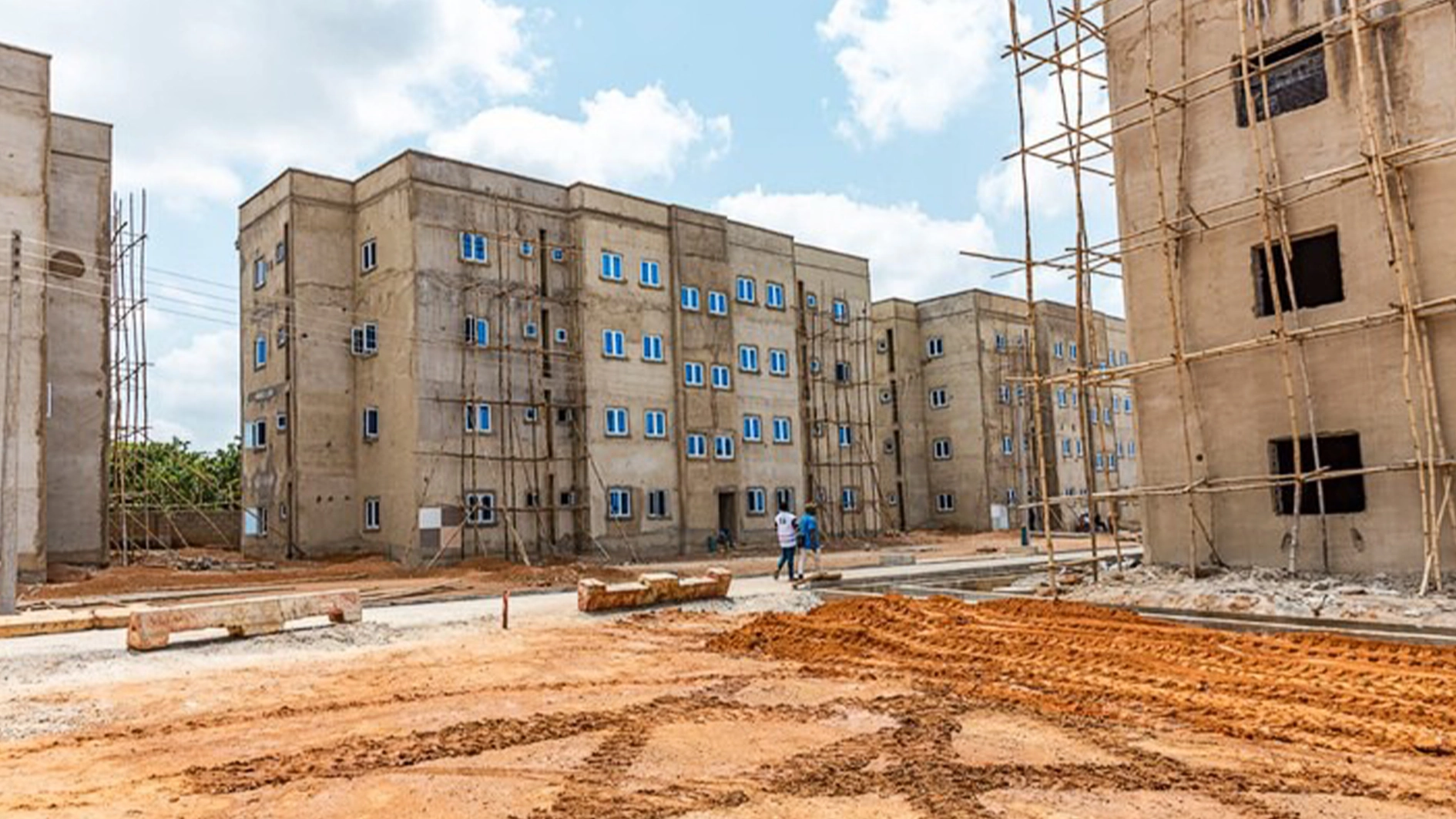
Many Nigerians are looking to political parties for solutions to rapid population growth, urbanisation, rising construction costs and the housing shortage. Ahead of the 2027 elections, parties have outlined proposals on land administration, mortgage and rental housing, as well as measures to address wider urban development challenges, VICTOR GBONEGUN reports.
AS Nigeria heads towards the 2027 general elections, political parties are unfolding their housing and urban development plans amid a deepening affordability crisis and concerns over the ability of successive governments to deliver on past promises.
With Nigeria’s population projected to reach about 440 million by 2050 and the housing deficit estimated at 15 million units, the sector requires programmes that go beyond campaign promises. At least 550,000 new homes are estimated to be needed annually, with about N5.5 trillion required over the next decade to address the shortfall.
Housing delivery, however, remains constrained by high construction costs, limited access to mortgage finance, expensive land, inadequate infrastructure and cumbersome administrative processes.
For millions of Nigerians, particularly urban workers, access to decent housing has become increasingly difficult. Many workers spend more than half of their income on rent, leaving little for other basic needs.
The wider macroeconomic environment has also weakened investment in the sector. Foreign exchange instability, naira depreciation and interest rates above 30 per cent have increased the cost of development and reduced investor appetite.

Prices of essential building materials have risen sharply. A 50kg bag of cement now sells for about N14,500 to N15,000, while a tonne of reinforcement steel costs between N1.2 million and N1.5 million, depending on location. The higher input costs have fed into construction costs, property prices and rents.
A report by Economic Thinktank Centre Limited also indicated that house prices and rents had risen faster than general inflation, while the supply of relatively affordable properties was declining as the market increasingly shifted towards more expensive housing.
Against this backdrop, the 2027 election cycle is putting pressure on political parties to explain not only how many houses they intend to build but how they plan to address the structural factors that make housing unaffordable.
Key issues include land administration and title registration, availability of serviced land, mortgage and housing finance, rent-to-own schemes, housing cooperatives, social and rental housing, and incentives for private developers.
While the parties have presented different approaches, the scale of Nigeria’s housing challenge means that implementation will remain central to any assessment of their programmes.
Beyond targets for the number of houses to be built, the proposals address recurring constraints in the sector, including land costs, access to long-term finance, construction costs, mortgage rates, property registration, rental housing and the participation of private investors.
The central challenge remains how to translate policy commitments into sustained housing delivery. With millions of Nigerians struggling to access affordable accommodation, the effectiveness of any housing programme will depend on its financing structure, land policy, construction capacity, infrastructure provision and ability to reach households across different income groups.
ld. It increasingly centres on the institutional and financial framework required to make decent housing accessible, affordable and sustainable.
The Federal Government is already proposing reforms to the mortgage industry, including a National Housing Finance Authority and wider access to housing finance for workers in the informal sector. The proposals provide an opportunity for political parties to explain whether they intend to retain, modify or replace existing frameworks.
The ruling All Progressives Congress (APC) is continuing with the Renewed Hope Housing Programme, Federal Housing Authority estates and mortgage reforms involving the Ministry of Finance Incorporated (MOFI) and the Federal Mortgage Bank of Nigeria (FMBN), alongside plans to strengthen regulation of the real estate sector.
President Bola Tinubu’s administration had pledged to deliver 100,000 homes nationwide, with 50,000 units planned in the first phase through housing cities of 1,000 units each in the six geopolitical zones and the Federal Capital Territory, as well as estates of up to 500 units in the remaining 30 states.
Works have commenced on more than 3,000 units in Abuja, while the 2,000-unit housing city at Ibeju-Lekki, Lagos, has reached an advanced stage, with sales underway. The government has also said more than 15,000 housing units are currently under construction across the country, although implementation challenges have affected the pace of delivery.
On housing finance, the government said 1,859 families in 25 states had secured mortgages worth N128 billion through the MOFI Real Estate Investment Fund at a fixed interest rate of 9.75 per cent, repayable over 20 years.
It has also highlighted the Family Homes Funds programme, targeted at widows and low-income earners, with a mandate to deliver 500,000 homes and generate about 1.5 million jobs.
The Social Democratic Party (SDP), in its recently unveiled manifesto, Farewell to Poverty and Insecurity, pledged to make housing both a social responsibility and an economic growth strategy. Its presidential candidate, Adewole Adebayo, said housing would become one of the principal drivers of Nigeria’s economic transformation during the party’s first four-year term if elected.
The party proposed a National Affordable Housing and Sustainable Communities Programme, through which it said at least three million affordable housing units would be constructed nationwide within four years. The programme would rely on public investment, public-private partnerships and cooperative housing schemes.
The SDP said housing models would be developed for different income groups, occupations and geographical conditions, including low-income households, middle-income earners, young professionals, civil servants, artisans, farmers and senior citizens.
It also proposed reforms to mortgage financing and institutions, alongside cooperative and employer-assisted housing. Land administration is another major component of its plan. The party said delays in obtaining Certificates of Occupancy, unclear property rights, overlapping institutional responsibilities and cumbersome registration procedures increased housing costs and discouraged investment.
It proposed digital land registries, simplified property registration, transparent land allocation procedures and modern cadastral systems in collaboration with state governments.
According to the SDP, electronic processing would improve certainty over land ownership and reduce opportunities for corruption.
The party proposed funding the housing programme through annual federal budgetary allocations, counterpart funding from participating states, public-private partnerships, housing bonds, pension fund investments, concessional development finance, diaspora investment and private capital.
Implementation, it said, would require collaboration among the Federal Ministry responsible for Housing, FMBN, state housing corporations, urban development authorities, local governments, professional associations, financial institutions, cooperative societies and private developers.
It also proposed annual performance reviews covering housing delivery, mortgage accessibility, construction quality, employment generation, urban renewal and affordability.
The Peoples Democratic Party (PDP) is drawing on housing proposals contained in its 2023 agenda, including a National Social Housing Fund, slum upgrading and a 20-year mortgage at an interest rate of 10 per cent.
The party has also proposed measures to improve access to land and establish transferable property rights by revamping land registries and creating a nationally interoperable system.
Its proposed land reforms are aimed at reducing transaction times for property transfers, improving access to credit and increasing transparency in land transactions. The PDP also pledged to promote the use of local materials for affordable housing and develop more inclusive communities with a mix of income groups.
It proposed a national database containing street names and house numbers, village and urban renewal programmes, greater use of public-private partnerships in housing development and a review of the Land Use Act to reduce the cost of land acquisition.
The party also said it would encourage private operators and state and local governments to develop housing, provide grants for site-and-services schemes, support research into cheaper local building inputs and strengthen mortgage institutions.
The African Action Congress (AAC) has proposed building affordable housing units at an average cost of N2 million each across the country.
It also pledged to provide mortgage financing over 20 years at no more than 10 per cent interest, with estimated annual payments of between N211,000 and N235,000 for the proposed N2 million units, depending on whether a 10 per cent deposit is made.
The party also proposed using government-owned land valued at $3.64 billion as seed investment for construction and to capitalise an investment fund open to Nigerians.
For the African Democratic Congress (ADC), housing policy is contained in its broader plans for infrastructure, transport, human capital and social protection.
The party’s spokesperson, Bolaji Abdullahi, said its five-point housing plan would cover mass social housing, land and finance reform, local production of building materials and rental housing policy.
The ADC said it would shift the emphasis from luxury estates towards affordable housing modelled on the low-cost housing approach associated with the administration of former Lagos State governor Lateef Jakande.
Its proposals include faster processing of land titles, reduction of land costs, provision of serviced land and digitisation of land administration to improve transparency.
The party also proposed mortgage reform, rent-to-own schemes, housing cooperatives and pension-backed financing. On construction costs, it said it would promote local production of cement, steel, roofing materials and tiles, while supporting certified alternative building technologies and measures to reduce energy and transport costs.
The ADC also proposed encouraging institutional investors to participate in rental housing, protecting both tenants and landlords and expanding the supply of decent, affordable rental accommodation.
The National Democratic Congress (NDC) has listed affordable housing and modern towns among its national priorities. A published summary of its 2027 manifesto places housing and urban planning under infrastructure and industrial development, alongside power, roads, rail and ports. The party said it would improve housing and urban planning while using public-private partnerships as part of its broader economic strategy.
Providing further details of the party’s housing approach, its Lagos governorship candidate, Funso Doherty, said the NDC would seek to move beyond the relatively small housing schemes associated with successive Lagos administrations and target tens of thousands of housing units.
The proposed model would include government allocation of suitable land and prioritisation of housing development. Doherty said government guarantees could provide institutional backing to reduce risks for investors and lenders, while secondary mortgage finance could help expand access to housing finance.
Rather than relying solely on government to finance and construct housing, he said private capital should be mobilised through government-backed institutional arrangements.
He argued that large-scale housing construction would also stimulate industrial activity and employment.
The NDC’s approach, he said, would therefore focus on creating the land, financing and institutional framework needed to enable large-scale private-sector housing production.

