 Follow Us on Google News


 Follow Us on Google Discover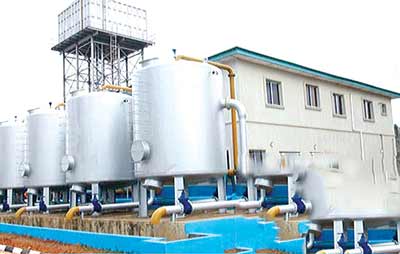

FACED with drinking water from wells and boreholes that are unsuitable for human consumption, communities in Lagos, especially in Orile-ignamu, Igando, Ajegunle, Amukoko and FESTAC have lamented the non- supply of water by the Lagos state water corporation (LSWC) and continued exploitation by water vendors in their domain.
Much as Lagos is surrounded by water, there are some residential areas in the city where access to potable water could be described as a luxury. Indeed Nigeria is one of the few countries yet to meet the millennium development goal, MDG, on water and Lagos is believed to have contributed a large percentage to the country’s inability to attain this goal.
A visit to some areas like Festac Town, Ajegunle, Amukoko, Itire, Lawanson, Aguda, Meiran-Ijaye, Abule-Egba to mention but a few, reveal that residents have little or no access to water. Not even government -owned hospitals are spared the water scarcity. The result is that many water vendors particularly from the northern part of the country, have capitalised on the scarcity to go into trading on water.
The immediate past administration had promised that Lagos government, by 2020, would meet the water demand of the residents of the state. To ensure that the target is realized, it embarked on construction of 14 mini-water works, described as “Micro Mini Water works”, 14 of them.
From available data, Lagos presently produces about 210 million gallons of water per day from its various water plants, which is far below the demand of the residents need.
It was estimated that to meet the water needs of the people, at 540 million gallons would be required daily.
Major public waterworks run by the Lagos State Water Corporation (LSWC) include Adiyan Waterworks targeting about 72 million gallons per day; Iju Waterworks with capacity for 45 million gallons daily and Ishasi Waterworks producing about four million gallons per day.

However, a visit to some of these mini water works presented contrary expectations, with many of them half functioning, while some are not working at all, a situation officials ascribed to lack of constant power supply, on one hand, and vandalism of the Lagos state water corporation (LSWC), the commodity’s provider.
Lagos officials attributed the insufficiency of the product to the population explosion in the metropolis, a situation that is said to have overstretched many social amenities.
Reacting to the issue, the newly appointed Managing director, Lagos Water Corporation, Mr. Muminu Badmus, an engineer, admitted that there are noticeable challenges in water supply, owing to certain constraints, adding that the Corporation will do all the needful to ensure that the commodity is available to the residents.
He said: “However, if there is any location where water is not running, it must be a localized or isolated problem that may be caused by breakdown in connection to some homes that are not reported to the Corporation. If there is report, engineers would have been mobilised to rectify such problems.”
Similarly, he said the 15 micro water works are in good state and functioning very well, but that they sometime incapacitated as a result of inadequate power supply, a situation he said not limited to Lagos state. “But to ensure effective functioning of the micro water works, government is working tirelessly to ensure that they are connected to the independent power project (IPP), being constructed by the government.
On the quality of water in supply, he said the Corporation has the best equipment and personnel that enable it perform to the international best practices in water supply.
“I want to put it on record that this Corporation does not just pump water to the public anyhow. We are very mindful of the fact that water is properly treated, because untreated water poses a lot of danger to people’s health. That is why we have certified professionals in different areas, especially, those with backgrounds in chemistry, water engineering, micro biology, all working to ensure quality and safe water supply to the public”, assured Badmus.
Besides, he said LWC has developed a master plan that will take care of where water is yet to be available. This he said would make people depend less on borehole, or water vendors for their consumption needs. “Having said that, it is the responsibility of regulatory agencies to monitor the source of water being produced by these categories of people”, said LWC managing director.
.

