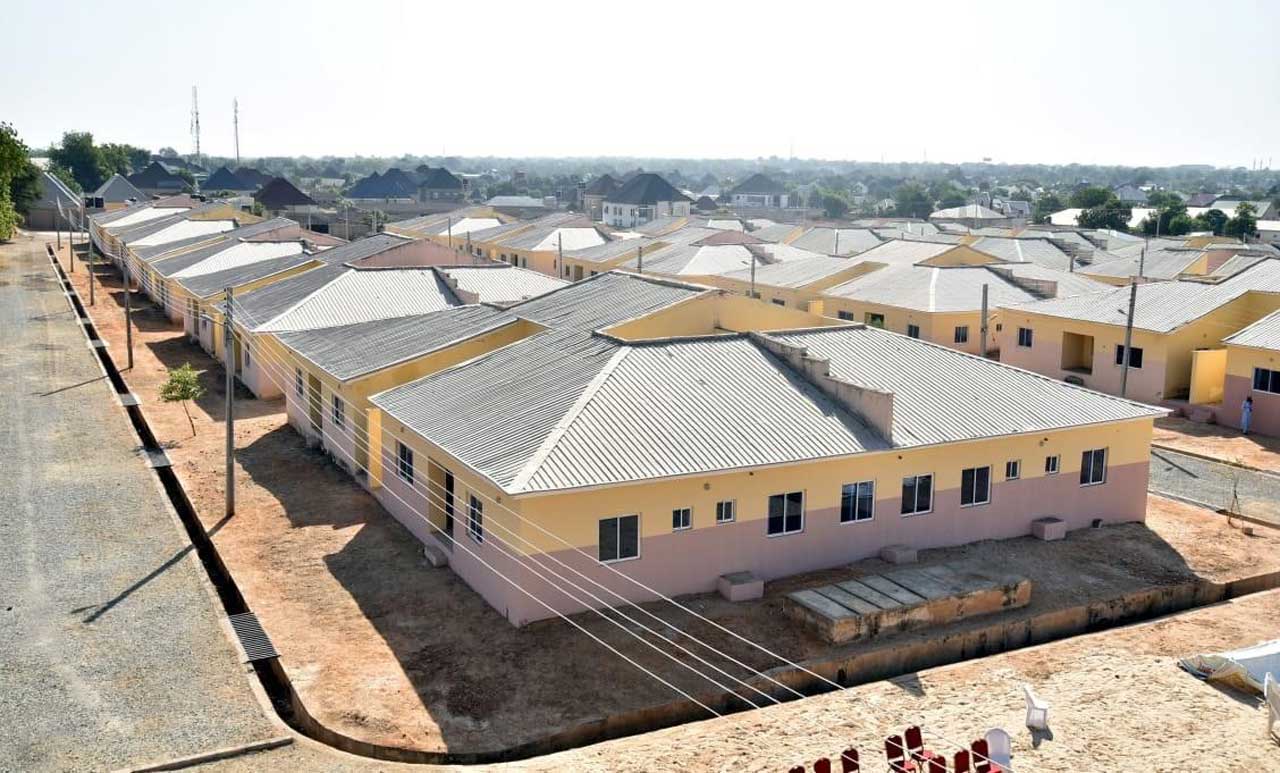
Experts and media practitioners have renewed calls for stronger media capacity to shape public discourse on housing inequality, affordability and inclusive urban development in Nigeria.
At a one-day engagement organised by Heinrich Böll Stiftung (HBS) Abuja, the African Cities Research Consortium (ACRC) and the Centre for Housing and Sustainable Development (CHSD), University of Lagos, participants examined how the media can help drive solutions to the country’s widening housing gap.
The forum also built on the Envisioning Challenge, an urban design competition that reimagined the abandoned Federal Secretariat Complex in Ikoyi as inclusive housing for low-income residents.
Speaking at the event, Professor of Planning and Heritage at the University of Liverpool and Professor of Urban Management and Governance at the University of Lagos, Taibat Lawanson, stressed the need to rethink urban value systems and advance Nigeria’s adequate-housing agenda. She charged the media to intensify public sensitisation on affordability issues.
Law anson noted that Nigeria is now predominantly urban, with 59 per cent of its estimated 117 million urban residents living in cities that are expanding at 3.8 per cent yearly, rising to 4.6 per cent in Abuja. She highlighted a significant youth bulge, with 70 per cent of the population under 30, and in Kano, 45 per cent aged 15 or younger.
She also stressed that urban poverty is deepening, with 133 million Nigerians facing multidimensional deprivation. In cities, 75 per cent of residents live in slum-like conditions without adequate housing and basic services, up to 70 per cent in Lagos.
Every Lagosian, she said, deserves safe and dignified shelter, urging the government to create an enabling environment where lives and property are secured. While calling for affordable pathways to homeownership, she lamented that rising housing costs are forcing many residents into cooperative loans, low-interest credit for construction, co-living arrangements and informal migration.
As part of her recommendations, Lawanson advocated the adoption of smart-city models for sustainable urban living. She warned, however, that Nigeria’s focus on PPP-driven development, new-build projects and exclusive gated communities is fuelling large-scale displacement, gentrification and socio-spatial inequalities, while neglecting opportunities for urban regeneration, in-situ upgrading and alternative housing models.
Presenting a paper on ‘Evaluating PPP Models for Housing’, CHSD PhD candidate Oluwaseun Muraina, said closing the current housing gap requires an estimated N21 trillion ($13.73 billion), about 73 per cent of the approved 2024 national budget.
Despite decades of PPP adoption since the 1960s, she said, affordable housing delivery remains dismal. Nigeria faces a 28-million-unit deficit, while fewer than 50,000 of the 700,000 required units are delivered yearly.
“Access to decent and affordable housing is becoming increasingly difficult. More Lagosians struggle today than years ago,” she said.
Lagos City Manager for ACRC, Dr Temilade Sesan, said the crisis persists largely because “Nigeria is not productive,” noting that development and maintenance costs remain high in a nation grappling with multidimensional poverty. She urged citizens to demand transparency in policy and support practices that promote long-term urban growth.
Co-founder of Rethinking Cities, Deji Akinpelu, explained that the engagement sought to provoke new thinking and challenge entrenched norms around housing delivery.
Speaking on ‘Envisioning Abandoned Public Buildings as Vibrant Community Spaces’, he lamented how public buildings such as 1004 Estate and the Federal Secretariat have become exclusive, despite being built for the public.
“The former Federal Secretariat is not a ruin; it is a hostage. Built in the 1970s to house the dreams of a young nation, it has been vacant since 1991, guarded only by ‘no trespassing’ signs,” he said.
Akinpelu said repurposing such abandoned structures for low-income households, those earning N50,000 to N250,000 monthly, would make Lagos more inclusive.
He also decried the knowledge gap among the public about how the housing sector works, urging the media to strengthen advocacy so that public debates are not driven by emotion alone.
Similarly, ACRC’s official, Mojeed Alabi, called for stronger journalistic commitment to reporting housing affordability, saying low-income residents remain voiceless in public discussions. He criticised the limited media coverage of housing challenges, despite journalists themselves experiencing similar constraints.
Media practitioners at the forum said impediments such as ownership interests, advertiser influence and inadequate funding for investigative reporting often hinder in-depth coverage of affordable housing issues and demolitions.