 Follow Us on Google News


 Follow Us on Google Discover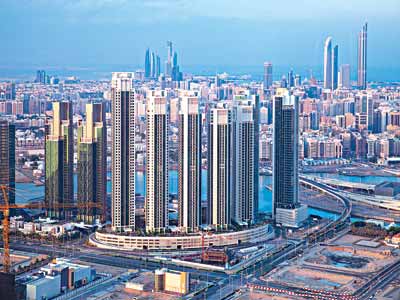

Cluttons latest research also shows that in Abu Dhabi the office market’s recent stagnation is in large part linked to the slowdown in public spending, which has translated into a drop in demand for new office space.
ACCORDING to international real estate consultancy firm Cluttons, with a 54per cent decline in the price of oil during the past 12 months the United Arab Emirates (UAE) real estate market is now beginning to feel the effect with property transaction levels falling across Abu Dhabi, Dubai and Sharjah.
Cluttons’ annual 2015 UAE Property Report reveals that the direct correlation between hydrocarbon revenues and state spending will put pressure on the rate of job creation. A further reduction in is oil prices is also likely once Iran receives the green light to begin oil exports. In turn, this will impact on the rate of office space take up and subsequently, the creation of households and overall residential demand. The impact is expected to be variable across the nation’s three largest emirates. However, the return of an Iranian variable to the national real estate equation could be particularly momentous for the real estate market.
Cluttons Middle East chief executive Steve Morgan says, “We see a number of economic factors at play which will impact the level of transactions in the near term. The decline in oil prices has seen the government take necessary fiscal measures to boost its financial position, including the deregulation of fuel prices and the much talked about future move towards the introduction of VAT and corporation tax. These initiatives will likely cause consumer price inflation levels to increase, resulting in a reluctance of tenants to pay higher end rents and families to purchase homes. However, some of the rises may be off-set by the fall in diesel prices, helping to maintain the UAE’s competitive edge, which is unchallenged in the region.
“With the expected lifting of Iranian trades sanctions, it is our view that Iranian nationals will seize the opportunity to make significant real estate investments in the UAE, particularly Dubai, pushing them back up the buyer nationality league table. In 2010, Iranian nationals accounted for 12per cent of Dubai’s real estate transactions, positioning them in fourth place behind Indian, British and Pakistani nationals. Data from the Dubai Land Department on investment volumes showed investment from Iranian’s had dwindled to a low of just 3per cent during the first quarter of 2015.”
In Abu Dhabi, house prices across the capital slipped by 0.2per cent in the second quarter of 2015, the first contraction since Q3 2012, and leaves the current average house price standing at AED 1,336 psf. Demand remains stable in the top-end luxury market according to the report, and more affordable sub AED 1,000 psf properties. This is driven by affluent Emirati and GCC buyers continuing to home in on schemes based on perceived exclusivity, while the large expat population that is being squeezed out of the rental market due to rampant rental growth, is targeting more affordable properties that are perceived as better value for money.
The Cluttons report points to a 1.5per cent rise in average rents, registered during the second quarter, pushing annual growth in the capital up to 3.9percent. Hydra Village was the strongest performing submarket, with rents for three bedroom for villas surging by almost 32per cent during the first six months of the year to AED 125,000 per annum.

Head of Research at Cluttons commented, Faisal Durrani: “With government spending subsiding, the rate of job creation and residential demand is also expected to stabilise. With this in mind, it is our view that the residential market will see further slight to moderate price falls over the remainder of 2015. Overall, quarterly house price declines of between 0.5% and 1% can be expected in both Q3 and Q4, while rents are expected to remain largely flat during H2.”
In Dubai, the total number of residential real estate transactions has remained fairly stable this year, according to data from Reidin. There has been almost no change in average apartment values during H1 2015, with a 0.6% fall recorded between January and June.
Durrani added: “The villa market continues to bear the brunt of the Federal Mortgage Cap restrictions, which have made affordability a central issue for potential buyers who are now required to hold significant equity to fund upfront costs. Values on average declined by 3.4per cent during Q2, bringing the annual rate of change down to -7per cent. We expect a further 5per cent to 7per cent fall in villa values is expected this year as supply levels rise and affordability issues challenge buyers”.
Cluttons’ report shows that during the second quarter of this year, average rents in Dubai declined by 0.9per cent, taking the overall change in the six months to June to -1.3per cent. Apartments in affordable communities have held steady in 2015, while the villa market has witnessed a 1per cent drop during Q2. Looking further ahead, the rental market is set to be boosted by Expo 2020 moving from being on the medium-term event horizon to the short term, with infrastructure projects moving forward and in turn supporting job creation. The expected population growth to 2.8 million by 2020 will also help to increase demand for space.
Durrani continued: “We expect the sales market to weaken further this year based on a combination of the Federal Mortgage Cap, affordability challenges and a strengthening supply pipeline, which has seen 41,000 new units announced already this year. It is our view that the rental market will continue to perform at a reasonably stable level, with further declines in the region of 1.5% to 2% likely during the second half of the year. The severity of the decline is being hugely offset by the strong rate of job creation and population growth, which remains stable, strong and diverse”

