 Follow Us on Google News


 Follow Us on Google Discover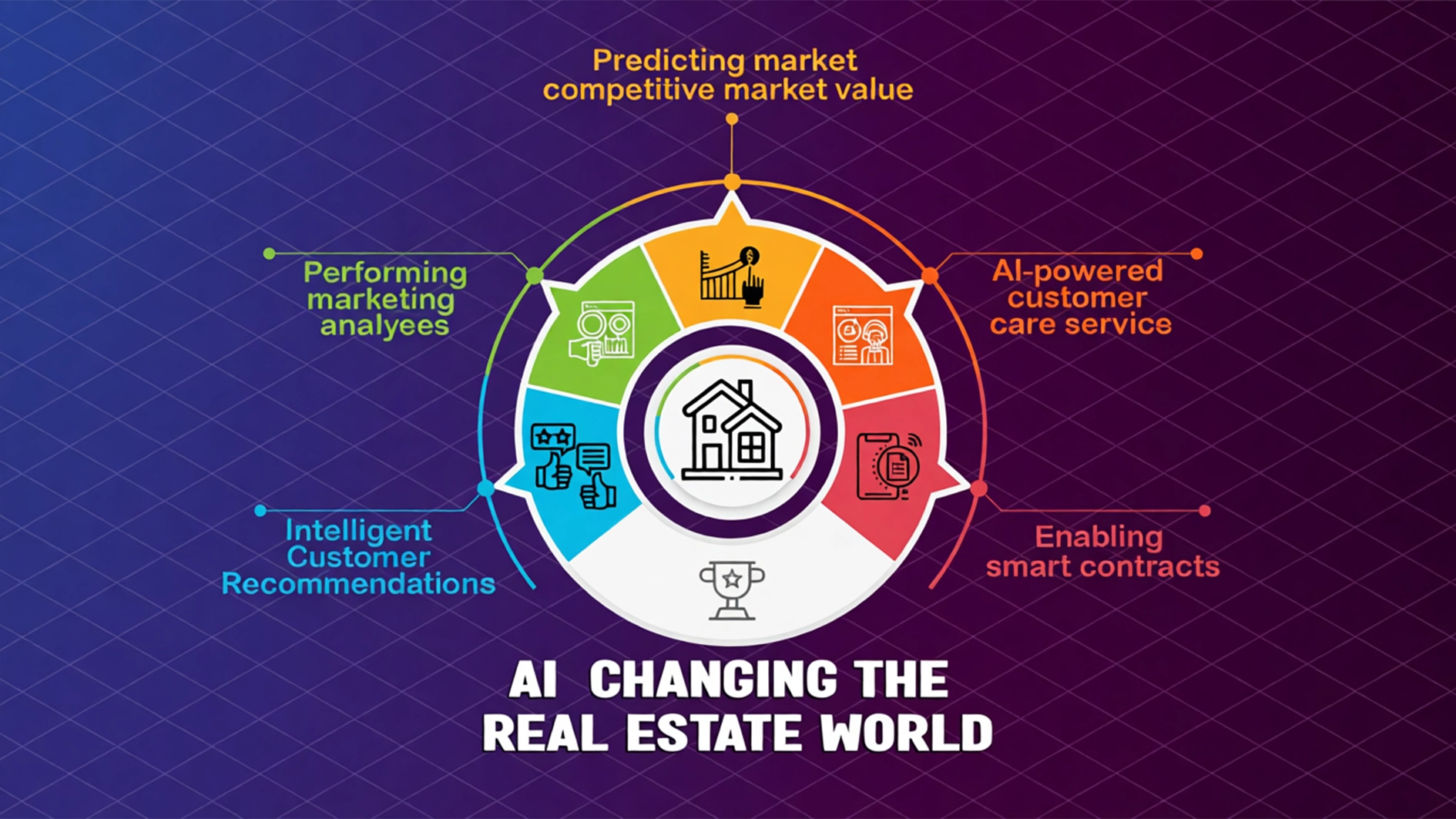
The era of opaque, paper-based, relationship-driven brokerage is gradually fading. In its place, a more data-driven and technology-enabled market is emerging. The question is not whether AI will influence Nigeria’s real estate sector; it already is. Experts argue that the real challenge lies in whether institutions can guide that influence toward long-term stability, transparency and sustainable growth, CHINEDUM UWAEGBULAM reports
Artificial Intelligence (AI) is steadily reshaping Nigeria’s real estate ecosystem, altering how properties are listed, valued, marketed and transacted. From smart listing platforms to automated valuation models, the technology is introducing a new logic into a sector long dominated by informal networks, manual documentation and relationship-driven brokerage.
For decades, estate agents functioned largely as gatekeepers of information. Listings were fragmented, price data was opaque, and access to properties depended on personal networks. AI-powered platforms have disrupted that model. Digital property marketplaces now allow buyers and tenants to filter options by location, price range and amenities in seconds, while automated chat systems respond instantly to inquiries. Data analytics tools generate price comparisons that once required days of manual research.
The implication for estate agents is profound. Their value proposition is gradually shifting from controlling access to listings to providing expert advisory services, including negotiation strategy, due diligence and market interpretation. Rather than eliminating agents, AI is raising the bar for professionalism. Those who embrace data tools are becoming more efficient and competitive, while those who resist may struggle to remain relevant.
AI is no longer a distant concept but a present force reshaping operations, competition and client expectations. For estate agents and valuers, survival will depend on adaptation. For regulators, credibility will depend on foresight. For the government, reforming land governance systems may determine whether AI becomes a catalyst for transformation or merely another layer added to existing inefficiencies.
Smarter valuation, faster transactions
One of AI’s most significant impacts is in property valuation. Automated Valuation Models (AVMs) analyse large datasets, such as historical sales, rental trends, neighbourhood characteristics, and demand patterns, to estimate property values quickly and consistently. In a market often criticised for inconsistent pricing and speculative mark-ups, such tools offer the promise of greater transparency.

However, valuation algorithms are only as reliable as the data feeding them. In Nigeria, land registries remain largely manual and fragmented across states. Inaccurate or incomplete records can distort AI-generated price estimates. Where data is reliable, AI is shortening transaction timelines. Automated document screening, digital lead qualification and online appointment scheduling are reducing administrative bottlenecks, and some agencies now close deals in weeks rather than months.
AI-enabled virtual tours and digital documentation are also unlocking new opportunities in the diaspora market. Nigerians abroad, previously wary of fraud or misrepresentation, can now view properties remotely and interact with agents online. For agencies, this represents significant revenue expansion, as digital transactions allow firms to operate beyond geographic limitations.
Yet this opportunity comes with cybersecurity risks. Real estate transactions involve sensitive personal and financial data. Weak digital security systems expose firms and clients to fraud and identity theft, raising concerns about trust and platform accountability.
Rising pressure on commission structures
As buyers gain access to independent market data, commission structures are also coming under scrutiny. Clients who find properties online increasingly question traditional percentage-based fees.
Some firms are responding with tiered service models, offering basic listing support at lower fees and premium advisory packages at higher rates. Others are focusing on higher transaction volumes facilitated by automation.
The result is a gradual professionalisation of the sector, with emphasis shifting toward value-added services rather than mere introductions.
Regulatory gaps and governance challenges
Despite these gains, the adoption of AI is advancing faster than the development of regulations. Industry bodies such as the Nigerian Institution of Estate Surveyors and Valuers and the Estate Surveyors and Valuers Registration Board of Nigeria are yet to fully articulate comprehensive standards for AI-assisted valuation and digital brokerage practices. Questions remain about liability when AI-generated valuations are inaccurate, how automated pricing tools should be audited and what standards should govern digital listing platforms.
Land administration presents another structural challenge. State land registries are inconsistently digitised, and title verification processes can be slow and bureaucratic. Until foundational land data systems are modernised, AI tools will operate on fragile infrastructure. Government’s role, analysts argue, must therefore begin with digitising land records and harmonising documentation standards nationwide.
Data protection and consumer confidence
As more property transactions move online, data privacy becomes increasingly important. The Nigeria Data Protection Commission has the mandate to enforce compliance with national data protection laws, but enforcement capacity in the real estate space remains a work in progress. Consumer trust will depend heavily on how securely platforms manage identity documents, financial records and title papers. Failure to strengthen cybersecurity could undermine confidence in digital real estate systems.
Another emerging concern is skills readiness. Many practitioners were trained in traditional brokerage models and may lack proficiency in data analytics, digital marketing or AI-assisted tools. Professional education and certification programmes will require urgent updates. Universities and training institutions must integrate modules on property technology, cybersecurity and digital valuation methodologies to prepare the next generation of estate agents.
The Second Vice President of the Nigerian Institution of Estate Surveyors and Valuers, Dr Emmanuel Mark, said AI is transforming Nigeria’s valuation practice by enabling estate surveyors and valuers to focus on high-value tasks.
According to him, Automated Valuation Models complement professional practice by enhancing accuracy and efficiency rather than threatening practitioners’ roles. He explained that the institution is taking steps to address challenges such as unreliable land records and fragmented property data.
Estate surveying and valuation firms, he said, are investing in digital infrastructure and data standardisation to ensure AI-driven tools enhance valuation accuracy without compromising standards. Regulatory bodies, including the Estate Surveyors and Valuers Registration Board of Nigeria, are also working to establish clear guidelines to promote data integrity.
Mark described regulatory safeguards as a masterstroke that could weave innovation with accountability. By establishing clear guidelines, ensuring data quality and mandating transparency, professional bodies can unlock the full potential of AI-assisted valuations and digital brokerage platforms while protecting clients.
Similarly, the President of the International Real Estate Federation (FIABCI), Nigeria chapter, Mr Akin Opatola, observed that AI remains at an early but growing stage in Nigeria’s valuation space. At present, he said, AI is mainly used for market data aggregation, comparable sales analysis and trend forecasting.
“Our property market is not yet fully structured or data-transparent enough for AI to operate independently without human oversight,” he said. While AVMs improve speed and consistency, they cannot interpret irregular land titles or exercise professional judgment. Given that many transactions remain opaque and documentation varies significantly, the professional valuer’s role remains indispensable.
Opatola highlighted structural constraints, including inconsistent land registries, manual documentation processes and limited transaction transparency. “AI systems are only as good as the data they are trained on. If data is incomplete or unreliable, outputs can be misleading,” he cautioned.
He advocated cautious and responsible adoption of AI, emphasising the need to standardise data collection frameworks, digitise land registries nationwide, establish verified transaction databases and develop industry-wide data-sharing protocols. Until such foundations are strengthened, he said, AI should serve as a decision-support tool rather than a final valuation authority.
He also called for mandatory disclosure requirements, professional accountability standards and clear rules governing online property listings and advertising claims. Regulation, he argued, should not stifle innovation but must ensure that technology enhances trust rather than erodes it.
Another estate surveyor and valuer, Mr Emeka Okoronkwo, stressed that while information and technical tools are important, experience and professional judgment remain central to fair and objective valuation. He argued that AI lacks deep insights into the complex “bundle of rights” that form the foundation of property value estimation.
According to him, valuation is intricate and unique, as no two properties are identical. While AI can provide a first layer of analysis, the nuanced interpretation of legal, physical and economic variables requires human expertise. Valuation reports, he added, are issued against individual competence and professional responsibility, meaning that primary data collection and rigorous analysis must precede any opinion of value.
Okoronkwo, Principal Partner, Emeka Okoronkwo Associates, further advocated stronger mentorship and training structures for emerging professionals. New valuers, he suggested, should undergo thorough tutelage under qualified principals for several years to gain exposure to both visible and invisible factors influencing value.

