 Follow Us on Google News


 Follow Us on Google Discover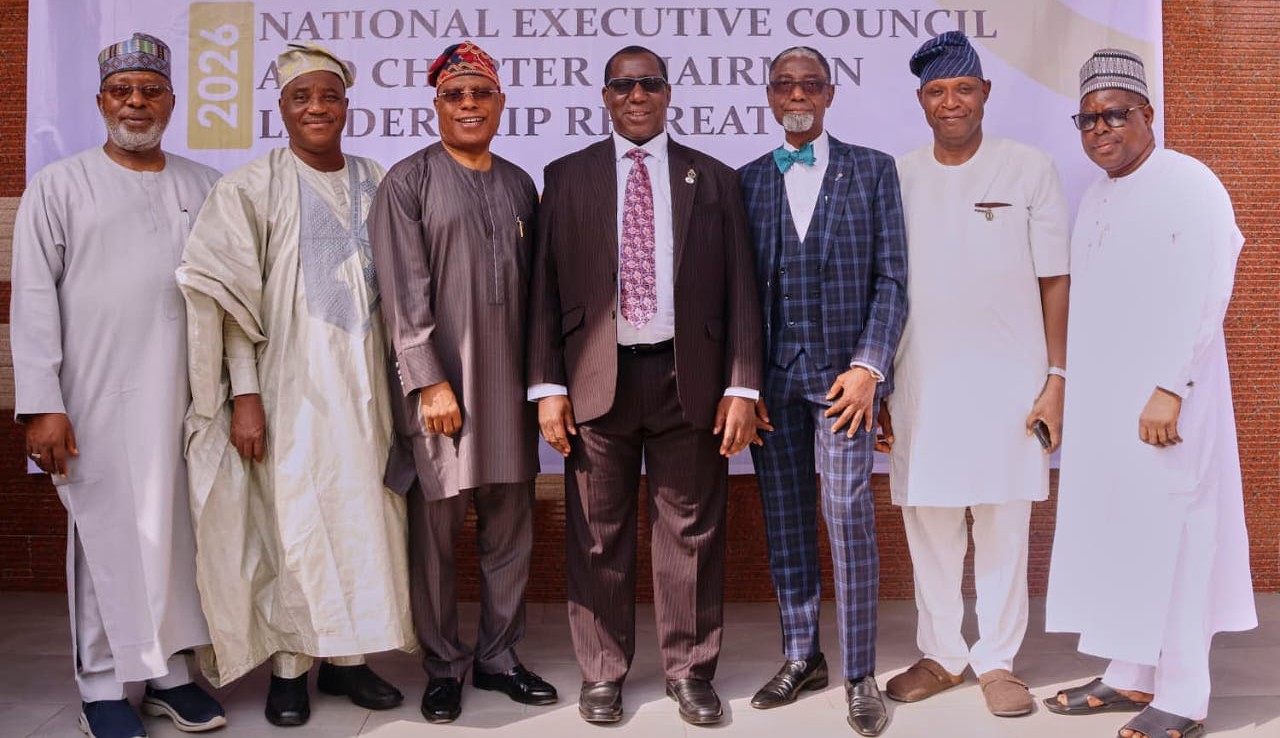
• As expert urges institute’s leadership to embrace data-driven culture for relevance
The Nigerian Institute of Quantity Surveyors (NIQS) has called for stronger advocacy and deeper collaboration among stakeholders to promote a more efficient, resilient and sustainable built environment in Nigeria.
The President of the Institute, Aminu Bashir, made the call at the institute’s National Executive Council and Chapter Chairmen Retreat held in Abuja, themed “From Intention to Structure, From Structure to Delivery.” He said the retreat was part of NIQS’s broader commitment to strengthening professionalism, institutional capacity and leadership effectiveness.
Bashir emphasised that purposeful and visionary leadership remains critical to advancing both the institute and the quantity surveying profession. According to him, the retreat was designed to sharpen the strategic thinking of newly elected council members and equip them with the skills required to deliver on the Institute’s mandate.
“This retreat is about investing in leadership that can drive vision, translate strategy into structure, and ultimately deliver value to members, the profession and the country,” he said.
Delivering the keynote address, former Executive Secretary of the Nigeria Extractive Industries Transparency Initiative (NEITI), Mr Waziri Adio, urged the NIQS leadership to embrace data-driven decision-making as a pathway to relevance, credibility and effective leadership in what he described as the “data age.”
Speaking on “Leadership and Relevance in the Data Age,” Adio said the future of professional bodies would increasingly depend on their ability to deploy data and evidence in setting priorities, shaping policies and engaging stakeholders.

He congratulated Bashir and members of the National Executive Committee on their election, describing the retreat as a clear indication of their resolve to build on past achievements and position the Institute for greater impact.
Although he admitted limited prior knowledge of the quantity surveying profession, Adio said his insights were drawn from his experience as a student of leadership and an advocate of evidence-based policymaking, informed by his work at NEITI and his current role at Agora Policy.
He urged the NIQS leadership to focus deliberately on value creation, noting that public and professional organisations exist primarily to create public value. Referencing the Strategic Triangle framework developed by Harvard professor Mark H. Moore, Adio advised the institute to clearly define the value it seeks to create, ensure it has the authorisation to act, and build the operational capacity required to deliver.
Adio cautioned against attempting to do too many things within a limited tenure, advising the leadership to prioritise and identify a “signature intervention” that would define its legacy. He also stressed the importance of continuous consultation with members and stakeholders, noting that inclusive leadership builds trust, ownership and sustainability.
On the growing importance of data, Adio said the world has moved beyond the information age into the data age, characterised by the superabundance and strategic use of data. He noted that an estimated 2.5 quintillion bytes of data are generated daily, giving an edge to individuals and institutions that can effectively harness and interpret it.
“In today’s world, data is power. It is the new gold,” he said, adding that relying solely on instinct, authority or experience was no longer sufficient for effective leadership.
He called on NIQS to mainstream the use of evidence across its operations, from understanding members’ needs to influencing government policy and public discourse. He advocated the adoption of Data-Driven Decision-Making (DDDM), which he described as using data to inform and validate decisions before committing to a course of action.
Drawing from his NEITI experience, Adio recalled how rigorous data analysis helped reposition the agency and influenced key policy reforms. He cited a 2019 empirical study that quantified Nigeria’s revenue losses due to delays in amending certain laws, noting that the evidence-based report contributed significantly to eventual legislative changes.
According to him, advocacy grounded in evidence is far more effective than sentiment or entitlement. “The world does not owe you a thing. You have to make your case, and make it well,” he said, urging NIQS to commission regular studies that would strengthen its authority, thought leadership and influence within the built environment sector.
He also highlighted how data analysis by Agora Policy helped clarify misconceptions during the national debate on Value Added Tax (VAT) sharing, noting that objective analysis moderated tensions and revealed a more nuanced reality than popular narratives suggested.
While underscoring the benefits of data, Adio cautioned that data is not infallible. He warned against misuse, manipulation and confirmation bias, stressing the importance of quality data, sound methodology and ethical standards.
“Good data enhances credibility; dodgy data undermines it,” he said, adding that leadership in the Data Age requires not just access to data, but the capacity to extract actionable insights and make sound judgment calls.
He encouraged the NIQS leadership to invest in data literacy, build a culture of evidence-based decision-making, and deploy data responsibly to strengthen the Institute’s relevance, credibility and impact.

