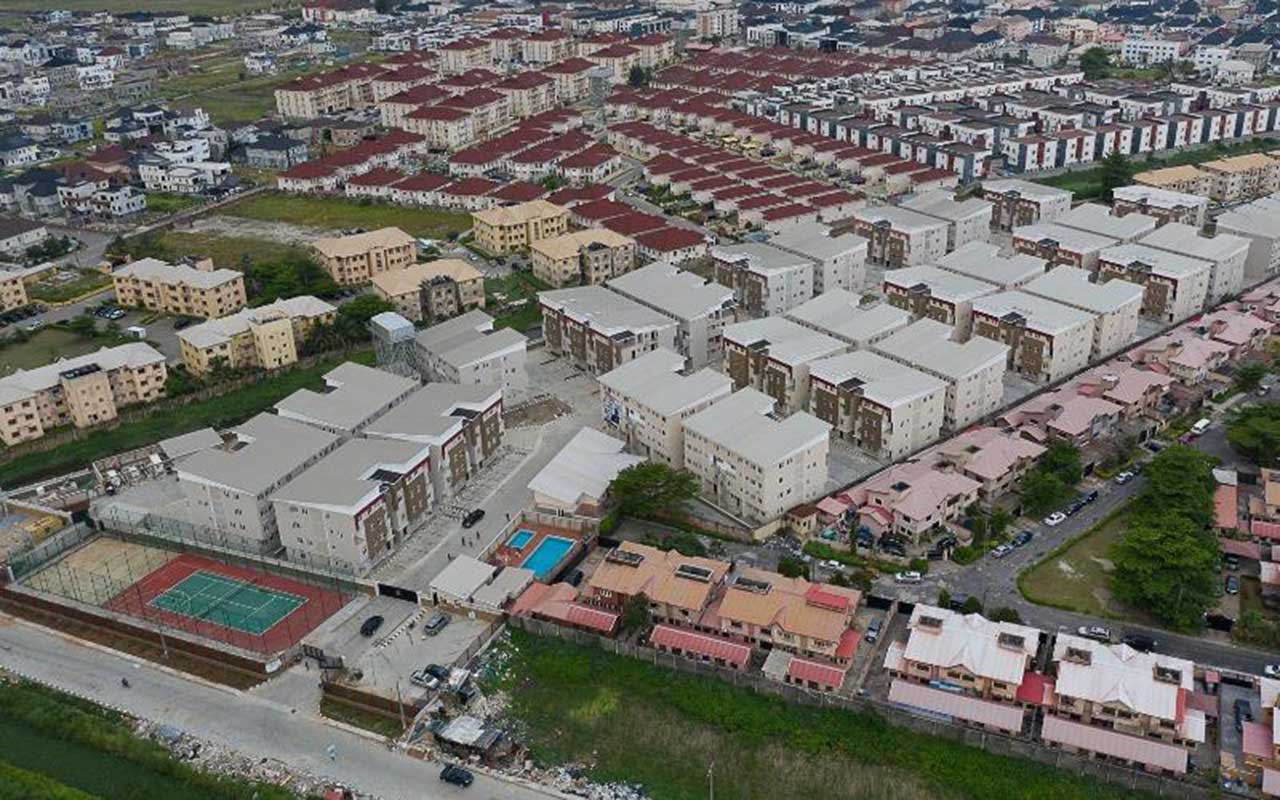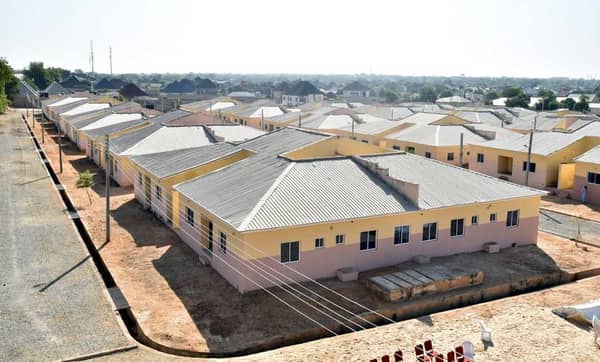
Built environment professionals have urged the Federal Government to embed its housing delivery strategy into the National Housing Policy to ensure sustainability and long-term impact in addressing Nigeria’s housing deficit.
They advised the Ministry of Housing and Urban Development to systematically gather data and feedback from the ongoing Renewed Hope Estates initiative and use the findings to refine future housing strategies and policy implementation.
The professionals, however, commended the Federal Government for the bold move to expand housing delivery nationwide, particularly the provision of mortgage-backed funding with 20-year tenure, single-digit interest rates, and a 10 per cent equity contribution by subscribers.
They spoke during the signing of a Memorandum of Understanding (MoU) on real estate agency and marketing between QShelter Limited and M.I. Okoro & Associates for the Federal Government’s Renewed Hope Housing estates in Abuja, Kano, and the 2004 Coastal Road Estate in Lagos.
Leading the call, the Principal and Chief Executive Officer of M.I. Okoro & Associates, Dr Meckson Okoro, said the Renewed Hope Housing Programme is bringing Nigeria closer to global best practices in housing delivery. He stressed that for housing costs to reduce significantly, government attention must focus on key components such as land, finance, and infrastructure.
According to him, direct allocation of land for such developments and deliberate government provision of infrastructure, including roads, electricity, pipe-borne water, and mass transit, would significantly reduce housing delivery costs, especially for estates located far from urban centres.
He noted that efficient transportation systems would encourage occupancy, while government-led infrastructure provision would lower the final selling price per housing unit. “If developers are left to provide roads, electricity, water and other infrastructure, the cost will be transferred to buyers. Every federal housing estate should also incorporate solar power solutions instead of leaving subscribers to rely on generators,” Okoro said.
On mortgage financing, Okoro described the initiative as commendable but raised concerns over the ease of access to mortgage funds by subscribers. He called on the Central Bank of Nigeria (CBN) to intensify oversight of disbursement banks under the MREIF scheme through regular supervision to prevent delays and unnecessary bottlenecks.
He recalled the collapse of several primary mortgage institutions established during the Babangida administration due to weak regulation, warning that mortgage financing can only succeed with strict checks and enforcement.
Okoro also pledged strict adherence to professionalism in allocating housing units, stressing that if the government sustains the strategy to deliver millions of homes over time, it would generate steady revenue for states through ground rent and land-use charges.
He recommended extending the Renewed Hope Housing strategy to all states and local governments, noting that increased housing supply would naturally reduce purchase and rental prices, rather than relying on price-control laws.
Chief Operating Officer of QShelter Limited, Alamu Adegbenga, disclosed that the Ministry of Housing, in partnership with Continental and General Construction Company (CCGCC), plans to deliver 100,000 housing units nationwide, comprising 20,000 units each in Abuja and Lagos, and 60,000 units across the 36 states.
He said QShelter will deliver about 2,800 housing units in Abuja and 2,000 units in Kano, featuring one, two-, three-, and four-bedroom terrace houses with boys’ quarters. The homes will be available through outright purchase, 12-month instalment plans with 25 per cent down payment, NHF mortgages at six per cent interest, and rent-to-own schemes.
Adegbenga said the first phase of 600 to 700 units in Abuja is expected to be commissioned in 2026. He added that construction has commenced at the 2004 Monastery Estate along the Coastal Road in Sangotedo, Lagos, which will deliver over 2,300 housing units upon completion.
He called on the government to simplify and fast-track title registration processes to further encourage investment in the housing sector. Chairman of QShelter Limited, Kola Sowande, said the partnership aims to support the Federal Government’s housing initiative through transparency, efficiency, and global best practices in housing delivery across Lagos, Abuja, Kano, and other states.
He noted that the collaboration would deploy innovative marketing strategies, professional valuation standards, and transparent engagement to ensure housing affordability, particularly for low-income earners and young Nigerians aged 21 to 35.
President of the Nigerian Institution of Estate Surveyors and Valuers (NIESV), Victor Alonge, expressed confidence in the sales framework, suggesting that a defined percentage of the housing units should be reserved for low-income earners, civil servants, and essential workers.
Also speaking, Captain of the Nigeria UK Golfing Association, Fred Adegeye, said flexible payment plans would attract Nigerians in the diaspora. He noted that diaspora remittances reached about $21 billion in 2024 and said improved transparency has boosted investor confidence in Nigeria’s housing sector.