 Follow Us on Google News


 Follow Us on Google Discover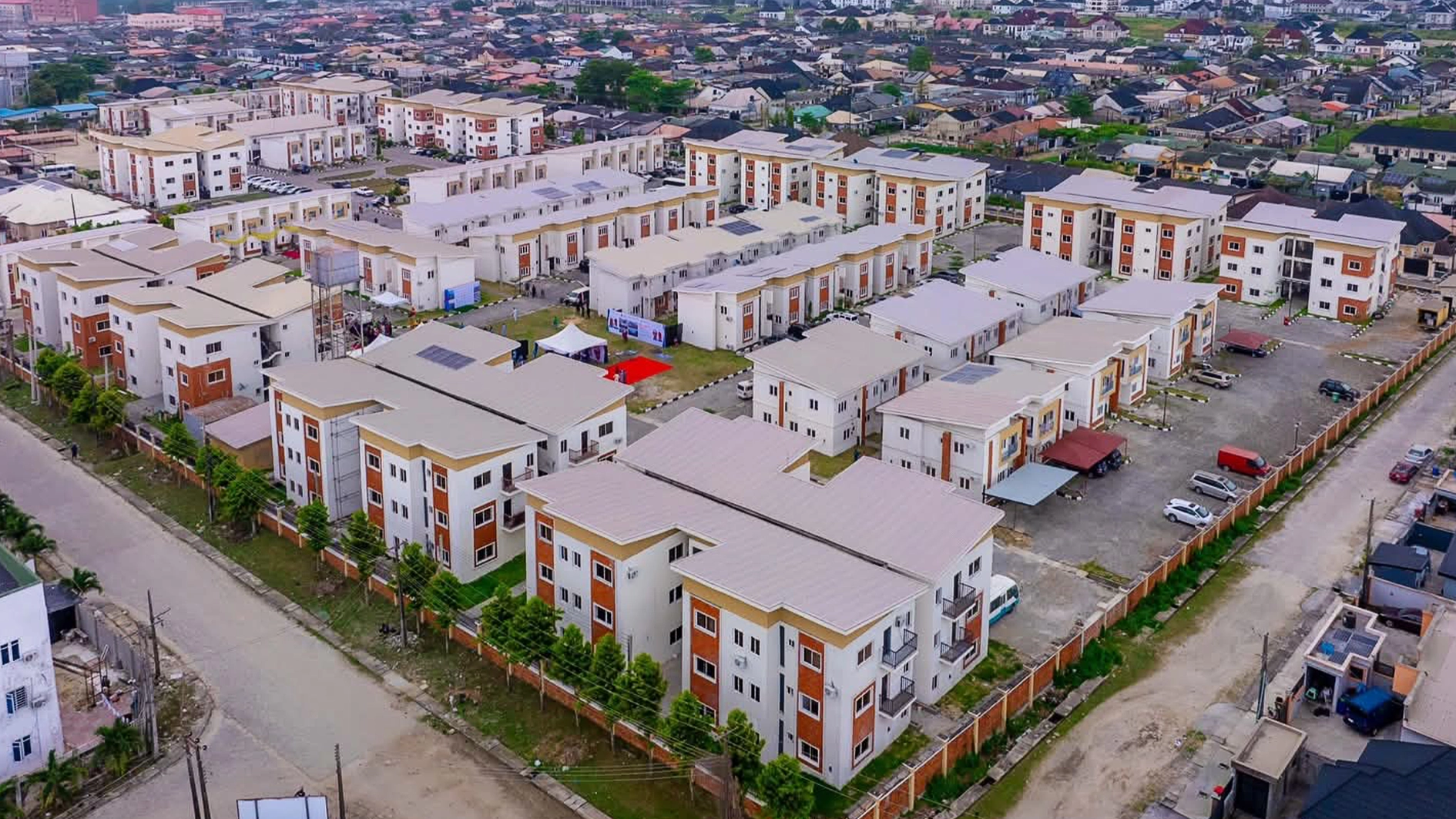
Although tenement buildings played a significant role in Nigeria’s socio-cultural history in past decades, contemporary housing preferences and economic realities are steadily driving them to extinction in urban and suburban areas. Many of the owners are selling off, while others are remodelling to conform to modern design and new planning regulations, VICTOR GBONEGUN reports.
The once-thriving tenement architectural style popularly known as “Face-me-I-face-you” is gradually disappearing from urban settlements as society evolves toward more modern living standards.
Urban renewal initiatives by governments, rising land values, and shifting preferences for contemporary housing are contributing to the disappearance of the shared-apartment buildings, which are increasingly being replaced with mid-rise developments across major cities.
In most of these cities, at least ten tenants are displaced from tenement apartments for every one modern unit. Tenement buildings are residential real estate that accommodate a group of one or two-room apartments, entrances facing each other along a walkway, which leads to the main entrance of the apartment building.
In many parts of the country, such developments represent an improvement on traditional hut-style buildings. Tenement apartments catered to the housing needs of large traditional families with many wives and children. Critical facilities such as toilets, bathrooms, corridors and kitchen spaces were usually shared among tenants within a compound.
A major attraction of tenement buildings is their relatively low rent, which makes them affordable to low-income earners. For instance, monthly rent was once between N2,000 and N5,000, while yearly payments in some cases stood at about N80,000. However, inflation has pushed rents to between N15,000 and N20,000 per room.

The Guardian gathered that in many urban centres, children of deceased owners of tenement buildings are selling off such properties, including the land, either to seek greener pastures elsewhere or redevelop them into more modern apartments.
“Most of the people who own such houses are old and retiring, while their children are not ready to live in such places. So, most of them prefer to sell the buildings.
“In some cases, after selling the property, the children share the proceeds from the sale of the land and building. Only a few decide to redevelop or remodel the property after sharing it. Most simply prefer to sell,” a source said.
Although tenement buildings are gradually fading out, some areas in Lagos, including Ikorodu/Sagamu, Mushin, Bayeku, Oshodi, Ajegunle, Idi-Araba, Bariga, Ojuwoye, Somolu, Ebute Metta, Oyingbo, Lafiaji and Isale Eko, are still populated by informal workers, students and low-income earners, with rents ranging between N150,000 and N200,000 yearly per room. Similar trends exist in some remote parts of Abuja, including Lugbe, Maitama, Gudu and Kuje.
With rapid urban development taking place across many locations, tenement apartments are increasingly being replaced with mini-flats, self-contained en-suite rooms, co-living spaces and hostels with shared kitchens but private rooms, as well as penthouses and other vertical developments.
However, rents in these newer developments, whether built by private developers or government agencies, are often beyond the reach of many prospective tenants, ranging from N500,000 to N1.5 million and above.
Government housing is no longer cheap. For instance, a one-bedroom apartment developed by the Lagos State Government under its Rent-to-Own or Home Ownership Mortgage Scheme (Lagos HOMS) costs about N8 million and above for outright purchase, depending on the location.
Similarly, a privately developed one-bedroom apartment can cost as much as N65 million and above, depending on its location and features, thereby putting such housing beyond the reach of low-income earners.
Occupants of tenement apartments who cannot afford mini-flats or self-contained apartments are often left with no option but to relocate to areas where tenement buildings are still in high demand and relatively affordable.
Industry experts said land has become extremely valuable in both urban centres and suburban locations, with prices rising steadily. In many city centres, the average cost of a 500-square-metre plot ranges from N35 million to N2 billion and above. In the suburbs, land prices are also surging, with a standard plot costing from N4 million upward, depending on the location.
Expounding on the development, a past Chairman of the Nigerian Institution of Estate Surveyors and Valuers (NIESV), Lagos branch, ‘Dotun Bamigbola, confirmed that tenement buildings are almost out of circulation in urban areas and suburbs.
“The tenement buildings are going into extinction because of modernisation and urban development. There is now a social preference for more exclusive living environments, where residents occupy mini flats, one-bedroom apartments, studio apartments or self-contained units exclusively.
“That means your room, kitchen and conveniences are private. You are no longer sharing facilities such as kitchens and bathrooms,” he said.
He linked the transition from tenement apartments to modern housing developments to increased public awareness driven by education and exposure.
“The more educated people become, the more they aspire to live in such environments. Even when they do not have enough resources initially, they still desire a better life for their families. Except when finances are insufficient, most people prefer more private living arrangements,” he said.
From the developers’ perspective, Bamigbola explained that tenement properties no longer generate returns substantial enough to justify the value of urban land.
“Most investors acquire old tenement properties because they are outdated, demolish them as part of urban regeneration efforts, and replace them with modern developments. Even if they are mini flats or two-bedroom apartments, developers can build vertically, subject to planning regulations.
“When you develop vertically, you maximise returns on investment. The sales value and rental income generated from such developments are far higher than what can be realised from traditional tenement buildings,” he added.
Former President of the Association of Town Planning Consultants of Nigeria (ATOPCON), Mr Muyiwa Adelu, argued that tenement buildings originated from Brazil and were primarily designed to accommodate more people within a shared environment using common facilities.
However, he noted that over time, several shortcomings associated with tenement apartments have contributed to their gradual disappearance.
“You know, our traditional system of building in Nigeria is not like that. We have more of a compound family system, with larger populations occupying buildings beyond their intended capacity.
“That population puts unnecessary pressure on available facilities. That is why you hardly see Brazilian-type buildings that still look attractive. One positive aspect is that they provide accommodation, but the quality of such accommodation is often unacceptable,” he said.
Adelu stressed the need for proper regulation to prevent overcrowding and deterioration of such buildings.
“You cannot have a room and parlour occupied by a family of four or six and expect the building to last long. If you have such properties concentrated in an area, property values will not appreciate.
“That is why in many places where these buildings are common, property values are stagnant because the quality of the environment is poor and people no longer want to live there,” he explained.
He added that urban redevelopment and regeneration initiatives are partly responsible for the gradual phase-out of tenement buildings.
“We are trying to change the situation through urban renewal and regeneration programmes. What we can do is modernise the buildings. Through regeneration, infrastructure such as electricity, roads and other social amenities can be improved to support the needs of residents,” he added.
According to him, the government’s responsibility is to ensure adequate infrastructure while encouraging people to embrace more modern housing options instead of overcrowded tenement structures.
Adelu also suggested that existing tenement buildings could be redesigned to make them more accessible and affordable.
“What pushes people into tenement buildings is affordability. The government should come up with well-intended regeneration programmes that address the concerns of the people,” he said.
The Vice Chairman of the Nigerian Institute of Architects (NIA), Lagos chapter, Moniba Odunlami, who has lived and practised in Lagos through decades of urban transformation, said the gradual disappearance of tenement buildings, popularly known as “Face-me-I-face-you,” is largely driven by changing socio-economic realities, increasing land values and evolving housing standards.
According to her, tenement housing previously provided affordable accommodation for low- and middle-income households. However, with rapid urbanisation and rising land costs, developers now seek higher returns by replacing low-density and low-yield structures with self-contained apartments, mini flats and multi-storey developments.
“There is also a growing demand for privacy, improved sanitation, security and modern amenities, which traditional tenement layouts often struggle to provide.
“Additionally, planning regulations, redevelopment pressures and the desire to maximise land use in cities like Lagos and other urban centres have accelerated this transition,” Odunlami said.

