 Follow Us on Google News


 Follow Us on Google Discover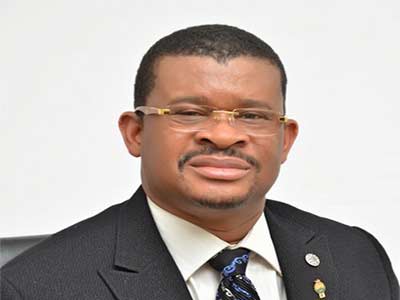
 Senator Lee Maeba is the former chairman of the Senate Committee on Petroleum and also chaired the joint National Assembly Committee on the Petroleum Industry Bill (PIB). He spoke to ITUNU AJAYI on the way out of the woods in the petroleum industry.
What can government do to stabilise the downstream sector of the petroleum industry.
THE downstream sector is a key sector in the petroleum industry. It is the sector that touches every home, every life, and so, I can say the sector is the everyday life sector in the industry. Upstream is key too, a lot of operation is going on offshore, but many people do not even know what is going on there, what everybody is interested in is, whether there is petrol in the filling stations, gas for cooking and for heating.
It is only in Nigeria, among the oil producing countries, where the sector is regulated. Deregulated oil sector is the answer. I had, as a chairman of committee on petroleum before now, gone to seminars outside this country, and the question on every one’s lips is, why is Nigeria with a lot of labour market still interested in regulating the sector? The only reason we don’t see private refineries here is regulation, you cannot regulate refining, you cannot regulate pricing, so, the only way out is complete and total deregulation. Within one year of total deregulation, we would have up to 10 private refineries springing up, and that would offer us nothing less than over 50,000 jobs, in fact, it will provide over 500,000 jobs, because these 10 will give over 5,000 jobs directly inside the refineries, and then, you talk of how many filling stations will open up, because there are more products and all the people the filling stations are going to employ, not to talk of the trucking, how many new drivers, how many new trucks, and so many things down the line. If you want to secure the downstream sector, deregulate. Institutions like Petroleum Products Pricing Regulatory Agency (PPPRA) have no business in the modern market. Deregulation will bring about competition among refineries such that price will naturally come down. I believe that the solution is simple; all we need is a leader with the political will to deregulate. I confronted former President Obasanjo so many times about deregulation, and also, Jonathan, and the problem I discovered is lack of the will power to do it. This one that people are complaining that the price is too high will not be, the price will even collapse, because in the oil market, once oil price collapses, automatically, pump price collapses. Now, oil price has collapsed, well over 70 per cent, pump price is supposed to have collapsed also from N97 to 70 per cent less, its mutatis mutandis. People are not enjoying the market now, because of regulation; so, a deregulated oil sector is the only way out.
A lot of Nigerians don’t even know what subsidy removal is. What comes to their mind is price increase, and talking about political will power, labour union tend to want to blackmail government by threat of strike, does that mean Labour does not understand the advantages you have highlighted and wouldn’t it say the current president is being autocratic?
You just took me back to my background. I was an officer of Nigeria Union of Petroleum and Natural Gas Workers (NUPENG), when I was in the oil industry, before I became an officer of Petroleum and Natural Gas Senior Staff Association of Nigeria (PENGASSAN). Our union then, had discussion with government, specifically, the Babangida government. The discussion that was thrown open to us was, if you deregulate, and you have private refineries that produce and sell, workers will have voice to demand for more money if the profit is very high. Under construction of refineries alone, there would be too many jobs, in operation, so many jobs, in transportation, so many jobs. If the unions like Nigeria, and they want a robust labour market, they will support deregulation. So, the talk of regulation does not exist, because it is against International Labour Organisation law. It is against WTO (World Trade Organisation) Act that somebody produces and then you dictate the price. The implication of all these is that the Nigeria downstream sector is isolated globally and we cannot remain isolated. The labour union laxity or freedom is even better in a deregulated market, because if for instance NUPENG say they have just about 5,000 workers in Nigeria, a deregulated market will increase that to at least 50,000, that implies more dues for the union. The fear of the union is local; the union has to educate its members. There is no way around it, you must deregulate if you like yourself as a union. The removal of subsidy takes burden off the government and increases its revenue, because the more refineries we have, the more tax the government will have. All this talk about Petroleum Equalisation Fund (PEF) is nonsense, you don’t equalise anything. Allow individual marketers to negotiate with consumers and the consumers will decide where to buy. Instead of giving money to equalise or whatever they call PEF, use the money to develop the rails for easy movement of product. It is cheaper to transport product by rail. Without rail, the economy is moribund. The USA moves product by rail 24 hours. It is cheaper and this will even further bring the price of product down.

Isn’t it contradictory for government to remove subsidy pursuant to deregulation of the downstream, and at the same time, aspire to enforce N86.50 per litre pump price?
What the government is doing is modular pricing system. Modular means that there is a price module, when the minister knows that yes, it costs about N65 to produce one litre of petrol, now the price modulator means that he makes an agreement with marketers for a profit margin of about N20 such that the price doesn’t go beyond N86. If the cost of production now jumps beyond N65, then the marketers would then draw the attention of the minister to it. This is the same scenario with Nigeria Electricity Commission (NEC) in the electricity sector. This is not a bad beginning, because to deregulate, you must come gradually so that the price will not just jump up. Even right now, people are paying more in a regulated market, because the product is hoarded.
If you deregulate now, Agip, Oando, Total and the host of them have the right to import and sell, they don’t have to wait for NNPC to import before they can sell, that is what deregulation is all about. All these shortfalls in volume of litres consumed and the one produced locally will disappear because the concern of marketers would be to bridge the gap. That is the business. How can Oando import and leave product at the jetty for NNPC to come and put price, that is total madness, there is no sense in that, let marketers import and sell their product, increase their outlets and make product available. It is only when different marketers are able to import and sell individually that we can have free market. Now that there is no budget for subsidy, good news for Nigeria, you cannot hide behind the door to do subsidy, because it has to be budgeted for, so, if Oando or any other marketer is not making any demand for payment of subsidy, then we are on the right path and gradually, we will get there.
At full capacity, the four refineries in the country can only provide 11 million litres of petrol per day, as against the daily domestic consumption of 40 million litres. This mean there will still be importation of petroleum products. Just at what point is the importation of finished products going to stop?
That is exactly where the issue is, the NNPC has no business in importing product, and it is the business of marketers and it should be left for them. That is the business, people will make their decision on where to buy, pump price may vary and increase or decrease as the global market dictates, that is what deregulation is all about.
As a former Senator, does the National Assembly have any role to play in all of this?
You cannot do deregulation without an enabling law. What would attract investors to come and invest in the refinery is the law. The law that says this sector is deregulated and signed by the president of the country and so it becomes part of the law of the nation. You cannot deregulate by fiat, nobody will take you serious. The National Assembly must make the law to support deregulation. In fact, I was spearheading a situation that if you want to establish a refinery in the country, you have a three-year tax holiday on your operation, you have zero custom duty on all the parts of the refinery you want to install in Nigeria, with all these incentives, refineries will be all over the place if the law can be put in place.
The PIB is an issue in the upstream sector, but will its passage impact in any way on the downstream?
The petroleum industry is made up of the upstream, the midstream and the downstream. The midstream is gas, it is a total package and that is why a law should be made to make all these sectors more viable.

