 Follow Us on Google News


 Follow Us on Google Discover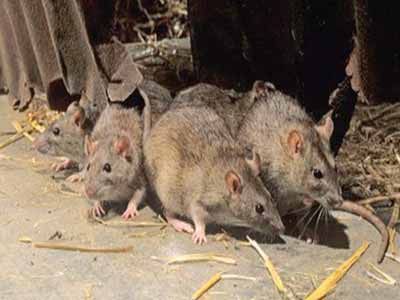
 Infectious diseases are a leading cause of illness and death throughout the world. As long as humans exist and there is an interaction with the environment, infirmities and diseases would always be part of their experience.
Within the last few days, Nigeria has had its share of the misfortune of Lassa fever outbreak, having recently survived the deadly Ebola virus. While diseases outbreak may be inevitable, the management of such cases remain a concern, especially when recurrence becomes a norm.
The outbreak of Lassa fever in the country may have equally increased the awareness of Nigerians about sanitation and personal hygiene. The rapid transmission of the virus continues to send a chill to all as slightest negligence can bring fatal consequences.
While the incidents of Lassa fever infection continue to grow, many Nigerians cannot stop wondering why government often fails to prevent the outbreak of diseases.
In the past, there were health sanitary workers (known as “wole wole” in the South-west, ‘ikoikoi’ in the South-south, “ole ala” in the South-east and duba gari in the North) employed by the government to ensure every household kept their homes clean.
The colonial government first introduced the then sanitary inspectors to the Colony of Lagos to provide preventive health services. The inspectors went about to prevent the breeding of mosquitoes, which was a major killer of the colonial settlers.

Many youths were trained as sanitary workers in the Nigerian School of Hygiene Yaba, Lagos, later known as School of Health Technology. They were later recruited and posted to different local government councils.
The fear of sanitary inspectors then was the beginning of wisdom. Dressed in brown khaki shirt and trousers together white helmets, sanitary inspectors, like mini gods, were everywhere down to the remotest village to enforce the rule of hygiene.
In a chat with The Guardian, Sarumi of Isolo, Lagos Chief Orishamu said Sanitary Inspection Officers as the health workers then called were very strict in their operation. “Once you heard they were around, everybody would run helter-skelter to make sure their houses and environment were clean.”
Chief S.E Atirene an elderly man who resides in Agboju area, Lagos, said his stepfather, Mr. Jacob Johnson, was one of the sanitary inspectors at Okitipupa, Ondo State whose job was to ensure the well-being of citizens through vaccination and monitoring of environment for proper sanitation.
With such efforts, Atirene explained that diseases outbreak such as Lassa fever was unknown as the environment was always kept clean.
A Lagos-based engineer, Akin Awodele, said: “Sanitary Inspectors then used to go from house to house to inspect toilet, bathroom, drainage and dustbin. Open defecation and the use of latrine were seriously prohibited and if you didn’t have bathroom and toilet you would be seriously punished.
“In the past they could even sealed up a house if the house was dangerous to human health. People even feared the officials than the police. I have seen people who locked up themselves anytime they heard that the sanitary inspectors were going to be around.”
According to him, Nigeria would have had a more hygienic environment if the department is still operating, and it would have been able to avert some of the diseases that now afflict people.
“I have experienced how people used to lock up themselves and acted like people didn’t live in their houses when the inspectors were around to inspect because you could not even bribe them. It used to be a serious issue but in the past 15 years the inspectorate has gone into moribund.”
Kehinde Ayokunle, real estate professional who lives in Akure said: “Those days ‘wolewole’ used to arrest and charged people who deviated from the sanitation law. For example, if your neighbours are disturbing you with domestic animals like goats and other animals or pollute the environment you could easily report them.”
According to Ayokunle, people behaved themselves when the department was effective because they wouldn’t want to get into trouble with the inspectors.”
Experts explain epidemiology and solution
Public health practitioner, Dr. Dumebi Owa, said that the Lassa epidemic is a expression of how unhygienic the Nigerian environment had gone and “it has now blown up in our faces.”
She explained that the country’s warm climate is such that allows micro-organisms, bacteria and viruses to grow rapidly, multiplying in their billions for infectious diseases to fester.
Owa, who is also the Committee Chairman of the Nigerian Medical Association (NMA) on World Health Organisation, said except for few places, all major cities in the country are dirty and disease-prone.
Her words: “I have traveled across the country lately and the filthy state is just terrible. Kudos to Calabar, which is an exception. But places like Enugu, Imo and Asaba are all dirty. Benin City is not the one we used to know. Lagos too is very dirty, so why won’t we have Lassa fever?” she said.
She particularly blamed the general public for the filthy condition of the cities.
“We are very dirty and we people are not helping matters. While we would complain that government has not given infrastructure, those newly built roads and drainages are soon filled with dirt in a matter of days.
“I remember as a young child, before you say ‘good morning’ to your parents, you already must have finished cleaning the surrounding. And even before starting your business, you are duty-bound to sweep. But today, everyone is busy running after money and the whole environment is filthy.”
Most pathetic in the matter, according to Owa, is the filthy state of the health facilities, where Lassa fever has claimed medical health workers too.
“This Lassa fever has killed even doctors. If it could kill health workers, so who else can it not kill? Sanitation is already a very big issue even in our hospitals. The equipment needed to keep the place clean are often not there because of the issue of corruption.
“Whether we like it or not, health is wealth. We are talking of improving our economic indices but how does one marry that with the unhygienic and disease-prone surrounding that we have? Is it not the human beings that are healthy that will improve the economy? We are yet to give priority to health. In the 2016 budget, health got only four per cent when the minimum should be 15 per cent,” she lamented.
President of the Society for Public Health Professionals of Nigeria, Prof. Michael Asuzu, suspected that the first case of Lassa fever, recorded in August last year, occurred around a market area often infested with rats.
Asuzu said the mode of transmission could be linked to the exposure of food items such as garri in market places, because rats can contaminate other food items, aside from garri.
According to him, “The first set of cases occurred in August last year in a rural community in Niger, where they were trying to develop a market and they said it was a mysterious disease to them. Nobody reported the deaths, until the son of the principal of a school in the community was infected and the principal reported the case in December.
“If not for that necessary action by the principal, more people would have died of Lassa,” he said.
An infectious disease specialist, Dr. Joseph Onigbinde, noted that the mode of transmission, through contaminated food items such as garri, the last resort of the poor, was undisputable.
Onigbinde said: “This is because most Nigerians like to eat garri, especially when soaked in water; it is most likely that Lassa fever could be transmitted through this means.”
Onigbinde warned Nigerians to be wary of soaking garri during this period, especially for the masses who mostly survive on it.
“Those who drink garri must be careful. If one must drink garri during this period, I would suggest that one fries it again a little before soaking it in water, otherwise it might be dangerous. Lassa fever virus cannot survive beyond 56 degrees centigrade.
“Effective personal hygiene and environmental sanitation are important too. Nigerians must be careful when buying foodstuff in the market, especially our women; they should not taste garri carelessly before buying it, because one does not know how it was prepared and if rats have crawled over it,” he said.
A consultant epidemiologist, Institute of Lassa Fever Research and Control, Irrua Specialist Teaching Hospital, Edo State, Dr. Danny Asogun, added that the spread of Lassa fever could be attributed to poverty, ignorance and poor sanitary condition of modern environment.
Asogun said: “There is a lack of awareness of the disease in the grassroots areas. People there may have heard about it, but poverty has prevented them from knowing how to react positively to it. I think it is a combination of ignorance, poverty and poor environment, these are critical issues,” Asogun said.
The health minister, Prof. Isaac Adewole, on Tuesday conceded that the Lassa fever outbreak is “a national embarrassment”.
“I call it an embarrassment because as a nation we cannot witness Lassa fever every year, it is rather abnormal for a nation that has resources like we should have to be witnessing such epidemic,’’ Adewole said.
Slowly and steadily, the outbreak has since November 2015 claimed about 80 lives in 19 States, including Lagos, Rivers and the Federal Capital Territory (FCT), Abuja. Other affected states are: Niger, Bauchi, Ekiti, Kano, Taraba, Rivers, Ondo, Oyo, Edo, Plateau, Gombe, Delta, Nasarawa, Ebonyi, Ekiti, Kogi and Zamfara
According to the Centers for Disease Control and Prevention, the illness infects 100,000 to 300,000 people in West Africa annually, with about 5,000 deaths on its trail. A recent study showed that Lassa fever virus emerged from present day Nigeria some 1,060 years ago, and spread 400 years ago from Nigeria to other West African countries.
Adewole, however, said other efforts of the government at ending the scourge include existence of eight functional diagnostic centres across the country and National Centre for Disease Control (NCDC).
According to him, there is also intensified effort by the government in establishing additional laboratories in Bauchi, Niger, Taraba, Plateau, Nasarawa and Ogun states.
He assured that with the strengthening of the nation’s epidemiology surveillance and response “Lassa fever would be put under locked and key”.
Adewole further said the nation needed to be proactive and institute evidence base measures to confront varying health challenges.
According to him, President Muhammadu Buhari will launch basic health provision funds, adding that with such measure government will be able to offer free healthcare services considerable number of Nigerians.
What Adewole didn’t however mention is the need for local government authorities to be alive to their primary health and sanitation responsibilities, at least, to ensure cleaner and healthier environment.
In Lagos where Lassa fever has claimed two lives and left 547 under surveillance, the State Ministries of Health, Local Government and Community Affairs are placing a premium on having Medical Officers of Health and Sanitation Officers to communities like the ‘wole-wole’ of old. The challenge, however, is the inadequate manpower to go round the local councils.
Notwithstanding, President of the Lagos State chapter of Environmental Health Officers Association of Nigeria, Samuel Akingbehin, said that with only 547 men in Lagos, they had killed no fewer than 7,243 rats at eight major markets in the state under its “de-rat market programme”.
The exercise was carried out in Onigbongbo, Oshodi, Oke-Odo, Ikotun Idanmota, Ojuwoye, Mile 12 and Alaba-Rago, Markets.
Akingbehin explained that the World Health Organisation ideally estimate at least one environmental health officer to 8000 people. In Lagos, given a total of 547 officers, the ratio is one officer to 30,400 people. The last recruitment of environmental health officers in the State was in 1999.
While he appealed to the State government to employ more officers that would go round the State, the president also called on all executive secretaries of the local government areas to assist them toward the elimination of rodents in markets and ensure cleaner environment.
Akingbehin said eradicating rats in the markets was part of the association’s efforts to curb the spread of Lassa fever in the state, saying the association commenced the programme since the outbreak of the diseases in the country.
According to him, “We are not resting on our oars. We have been killing them (rats) with rodenticides. The exercise is strategic and it is our effort toward the prevention of communicable disease.”
He called on other members of the public and relevant agencies to de-rat markets and homes.

