 Follow Us on Google News


 Follow Us on Google Discover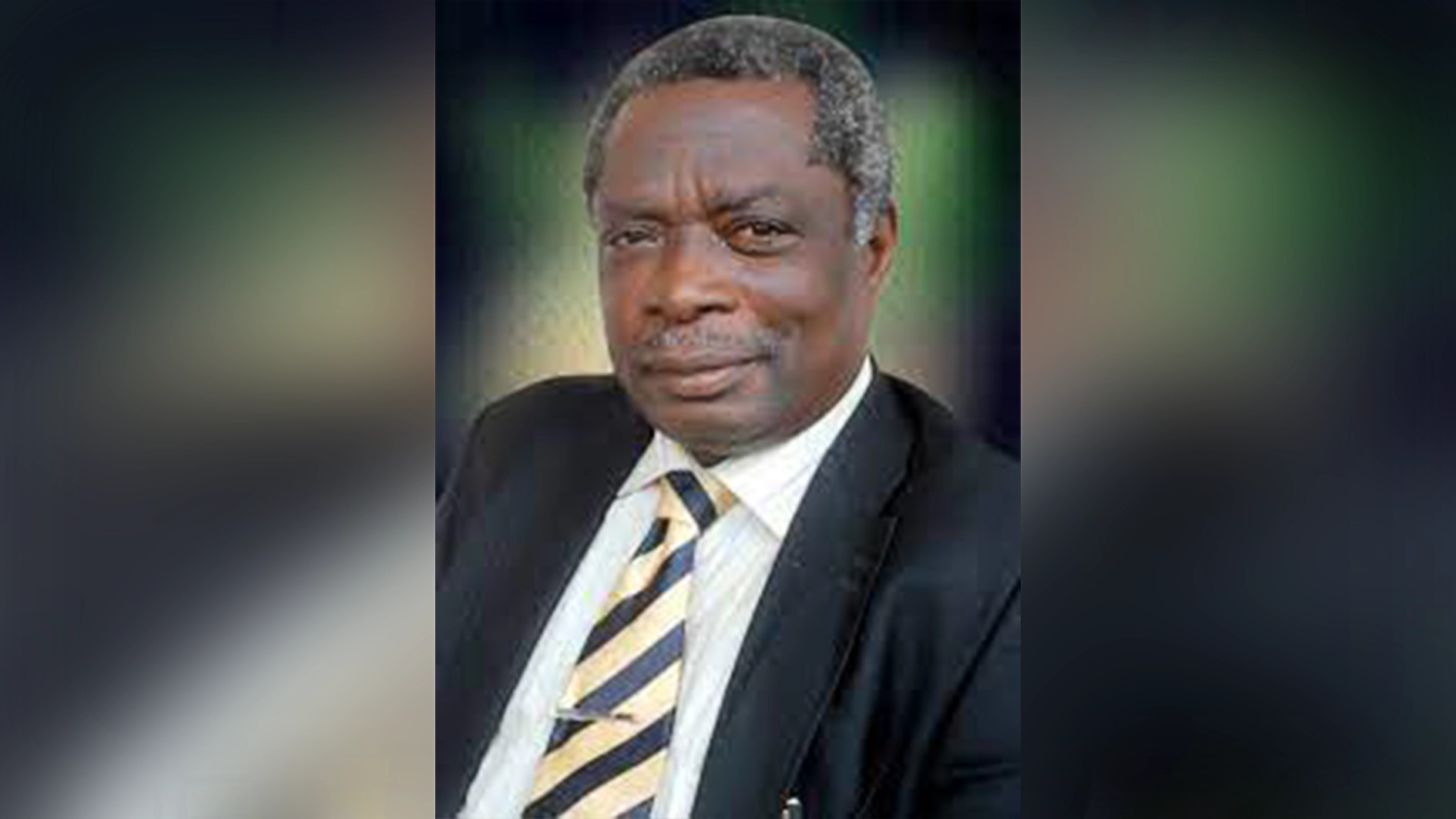
Twenty-three years after the Lagos State Government first proposed the construction of the 4th Mainland Bridge, the project remains on the drawing board, with repeated promises yet to translate into construction work, OLUSEGUN KOIKI and BENJAMIN ALADE report.
For more than two decades, the proposed 4th Mainland Bridge has remained one of Lagos State’s most promising transport infrastructure projects. Conceived to provide an alternative route across the Lagos Lagoon and ease pressure on the existing bridges, the project has survived successive administrations, multiple agreements, and promises of commencement, yet no construction has occurred.
The need for another major bridge has become even more compelling as Lagos continues to experience rapid population growth, urban expansion and increasing vehicular traffic.
The Third Mainland Bridge, commissioned by former military Head of State General Ibrahim Babangida in January 1992, was at the time the longest bridge in Africa. It retained that status until 1996, when the 6th October Bridge in Cairo, Egypt, was completed.
The Third Mainland Bridge begins from Oworonshoki and links the Apapa-Oshodi Expressway and Lagos-Ibadan Expressway before terminating at the Adeniji Adele Interchange on Lagos Island.
But with Lagos’s continued expansion, the bridge and other major arteries have come under increasing pressure, prompting the state government to seek another strategic connection between the mainland and the fast-developing Lekki-Epe axis.

The idea of the 4th Mainland Bridge was first mooted in 2003 during the administration of Bola Tinubu, the then-governor of the state.
The government said at the time that the bridge was required to support the rapidly growing industrial and commercial activities along the Eti-Osa-Lekki-Epe corridor. It was also expected to reduce traffic on the Eko, Carter and Third Mainland bridges.
The indigenous architecture studio NLÉ Works undertook the conceptual design, and the project was later developed into a proposed 38-kilometre bridge and expressway with a design speed of 140 kilometres per hour.
By 2008, during the administration of former Governor Babatunde Fashola, the State government approved the conceptual design.
According to the original plan, the 4th Mainland Bridge would be a two-level structure, with the upper level dedicated to vehicular traffic and the lower level designed to accommodate pedestrian, social, commercial and cultural activities.
The project also includes eight interchanges to improve connectivity across different parts of the state.
Its proposed alignment would pass through Lekki, Langbasa, and Baiyeiku; run along the shoreline of the Lagos Lagoon estuaries; cross the Igbogbo River Basin and the Lagos Lagoon; and reach Itamaga in Ikorodu. From there, it would cross Itoikin Road and Ikorodu-Sagamu Road before connecting to Isawo and, ultimately, the Lagos-Ibadan Expressway around the Ojodu-Berger axis.
The proposed road was designed as a dual carriageway with three lanes in each direction and two-metre hard shoulders. A wide median was also incorporated to provide room for future expansion and a possible light rail facility.
However, the state government said the project may consume about 800 structures and shanties, but assured that occupants of affected structures would either be compensated or relocated.
Besides, the government initially presented the bridge as a landmark project to be undertaken without Federal government funding, relying instead on private-sector financing through a concession arrangement.
On May 25, 2016, the administration of former Akinwunmi Ambode signed a fresh memorandum of understanding (MoU) with a consortium of companies and financial institutions to finance and construct the bridge.
The consortium included Visible Asset Limited, Julius Berger Nigeria Plc, Africa Finance Corporation, Access Bank, Hi-Tech Construction Limited, Eldorado Nigeria Limited, Nigerian Westminster Dredging and Marine and J.P. Morgan, with Visible Assets Limited as the coordinating firm.
At the time, the state government estimated the project at N844 billion and said its completion would make the bridge the longest in Africa, surpassing Cairo’s 20.5-kilometre 6th October Bridge. But once again, the project failed to move beyond agreements.
On May 22, 2017, the Lagos State Government announced it had cancelled its agreement with the consortium, blaming the concessionaire’s delays for the failure to begin construction.
The government later promised to announce a new concessionaire by June 2018. That never happened before the administration left office on May 29, 2019.
The project then entered another cycle of promises under Governor Babajide Sanwo-Olu.
During his campaign for the governorship in January 2019, Sanwo-Olu had reportedly said the 4th Mainland Bridge was not among his immediate priorities if elected.
However, after assuming office, his administration revived interest in the project, with the governor indicating that the bridge could cost about $2.5 billion.
Yet, despite the renewed assurances, physical construction remained elusive.
For transport analysts and other stakeholders, the repeated announcements have increasingly raised questions about the government’s commitment to delivering the project.
Chief Executive Officer of Mobile Technik, Chris Ebong, said the current administration had an opportunity to finally deliver a project that could transform transportation in Lagos, but expressed doubts about the government’s sincerity.
According to him, construction of a bridge of such magnitude was a “once-in-a-generation opportunity” and should be treated as a legacy project capable of serving Lagos for decades.
He said the government needed to approach the project as more than just building a road and bridge, insisting that its environmental, social, financial, and operational implications must be properly addressed.
He specifically called for comprehensive Environmental, Social and Health Impact Assessments, as well as adequate consideration of potential resident displacement in line with the International Finance Corporation’s Performance Standards.
He also stressed the need for a robust framework covering operations, maintenance and the long-term integrity of the bridge.
Ebong said: “It would be great if policymakers in the state could deliver a great service for Lagosians, now and in the future. It is not only up to the governor and his team to get it right. The people must also demand that the governor and his team get it right.”
“We have to look into the financial modelling and the potential tools for financing the bridge. One potential is a public-private partnership, which sounds good, but has not always served the government or its people,” Ebong said.
He warned, however, that maintenance provisions must be watertight, noting that failing to properly maintain a major bridge could have consequences far more serious than the deterioration of an ordinary road.
Also speaking, transportation expert Prof. Samuel Odewumi said the prolonged delay in the bridge’s construction could be attributed to the project’s enormous cost, complex financing arrangements, land acquisition challenges, environmental concerns, and competing government priorities.
Odewumi, who is also the Acting Vice-Chancellor of the University of Uyo and a Professor of Transport Planning and Policy, said a project of such magnitude also required strong coordination between the Lagos State government and the Federal government.
According to him, although the government may be sincere in its commitment to the project, the absence of visible construction had naturally created doubts among members of the public.
He added: “Lagos requires more transport infrastructure to reduce congestion and support its growing population. However, the bridge should complement—rather than replace—investment in rail, water transport, road maintenance and public buses.”
Another transport analyst, Kayode Akinrogun, was more critical, accusing successive Lagos administrations of turning the 4th Mainland Bridge into a recurring political campaign promise.
According to him, several memoranda and agreements have been announced over the years without any corresponding construction activity.
He described the situation as unfortunate, noting that Lagos had been “going in circles” for almost two decades over a project that was becoming increasingly necessary because of the state’s expanding population and traffic burden.
“I’ve not seen any form of seriousness from the government in the state on this project. Nothing tangible is on the ground yet for a project the government said would start this December,” Akinrogun said.
“The government doesn’t have the financial muscle to carry out this project. In fact, I see it as a conduit pipe for the government,” he said.
Besides, Associate Professor of Marketing and Transport Services Researcher at Keele University, United Kingdom, Dr Emmanuel Mogaji, said that a more than two-decade delay in delivering the Fourth Mainland Bridge indicated the complexity of executing mega-transport projects.
Mogaji explained the project involved multiple stakeholders and went beyond the physical construction of a bridge, stressing that repeated announcements without visible delivery had created a credibility problem for the government.
He argued that the government needed to manage not only the project itself, but also its relationship with residents, commuters, businesses, transport operators and communities that could be affected by the development.
“The longevity of the proposal tells us something about the complexity of mega-transport projects. This is not simply a matter of pouring concrete. It involves a lot of stakeholders.
“The longer a transport project remains an announcement and not an experienced reality, the more it becomes a question of institutional trust, not simply infrastructure delivery,” Mogaji said.
On whether the Lagos State Government was sincere about delivering the bridge, Mogaji said sincerity should not be judged by official pronouncements, but by measurable progress.
He also called for clear accountability whenever project deadlines were changed.
On the need for the Fourth Mainland Bridge, Mogaji said there was a strong case for additional cross-Lagoon connectivity, but warned against viewing the bridge alone as the solution to Lagos’ transportation challenges.
He said the project should be assessed by how effectively it improves access for low-income commuters, people with disabilities, women, informal workers, public-transport users, and communities on both sides of the Lagoon.
“If the Fourth Mainland Bridge takes years to complete, millions of Lagosians will still travel tomorrow morning. The government should improve existing mobility services at the same time.
“The Fourth Mainland Bridge may be part of Lagos’s transport future, but it cannot be an excuse to postpone transforming transport services today,” he said.

