 Follow Us on Google News


 Follow Us on Google Discover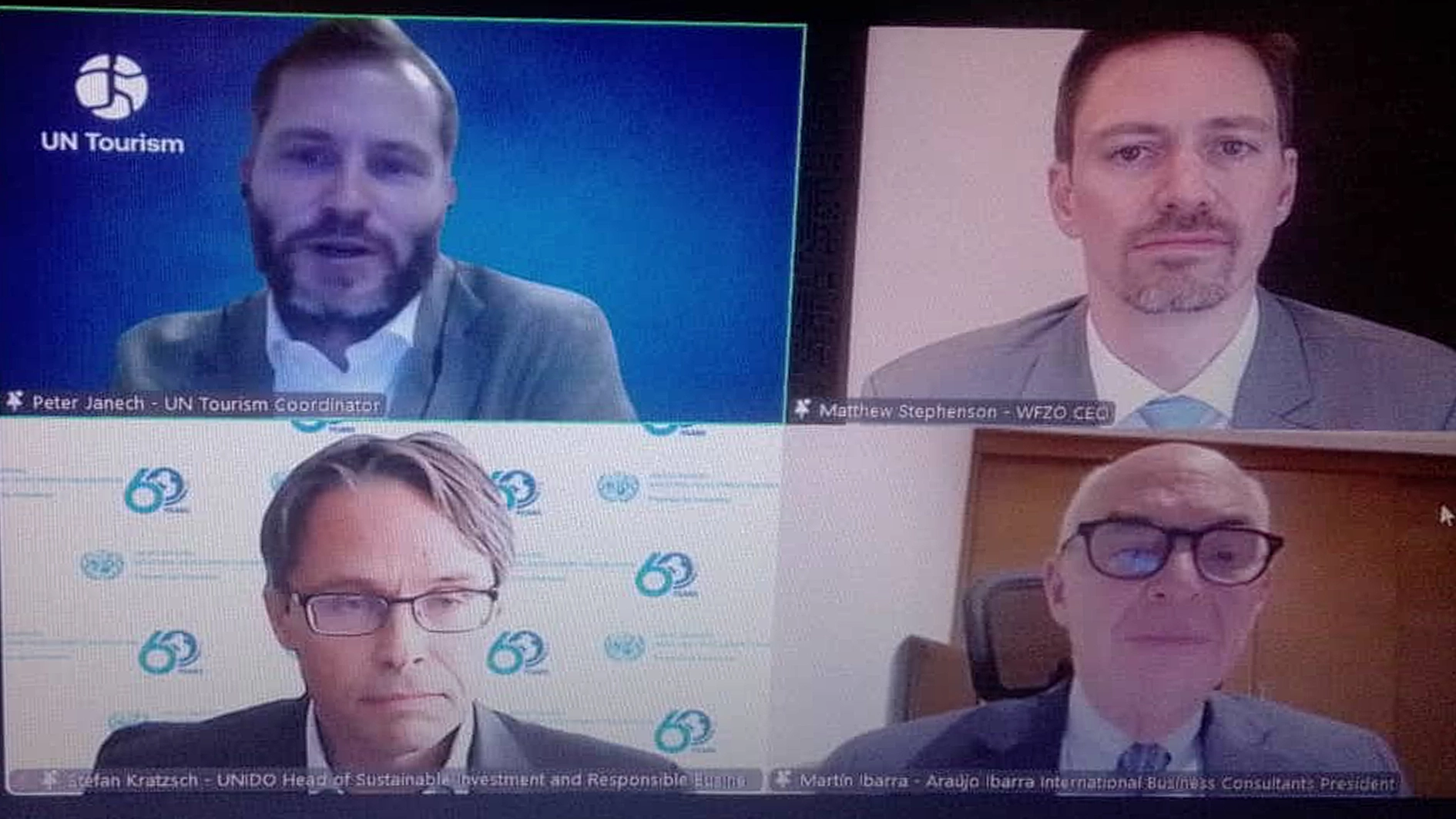
Tourism special economic zones could help countries attract increasingly selective investment and strengthen links between tourism and other sectors, but experts have warned that simply designating an area as a special economic zone will not automatically create viable tourism projects.
The issue was among the key subjects discussed during a webinar titled “Tourism Special Economic Zones (TSEZ): From Concept to Practice”, organised by UN Tourism and the World Free Zones Organization on Friday.
The event brought together experts and practitioners from international organisations and the tourism investment sector to examine how tourism special economic zones, known as TSEZs, could move from policy concepts to practical development tools.
The discussions drew on experiences involving tourism zone developers and professionals from countries including Grenada and Colombia, while experts from international organisations including the United Nations Industrial Development Organization (UNIDO), the World Free Zones Organization and the World Association of Investment Promotion Agencies contributed to the debate.
Alejandro Sabarich Scattaglia, who presented findings from the initiative, said a special economic zone should be viewed as an additional instrument within a country’s wider investment policy framework rather than as a substitute for national policy.
He said investment attraction involved several key components, including investment incentives and investment facilitation.
Investment incentives, he explained, could be fiscal, financial or non-financial, while investment facilitation covered activities such as investment promotion, project and investor matchmaking, project preparation and aftercare services.

“A special economic zone, therefore, should not be considered a fourth component,” he said.
Rather, he said, a zone provides a defined and limited territorial area within which different policy tools can be combined to reduce barriers, provide greater certainty and mobilise investment.
However, he stressed that the designation of an area as a special economic zone was not, on its own, enough to generate tourism investment opportunities.
Several factors fundamental to the success of a tourism project were beyond the direct control of the zone itself, he said.
The destination remained particularly important because natural and cultural assets were not simply the setting for tourism projects but formed part of the tourism experience and the underlying value of investments.
A global survey conducted among members of the World Free Zones Organization, complemented by secondary research, has so far identified 140 special economic zones with a tourism focus around the world.
Of the identified zones, 51 were purpose-built tourism zones, while 89 were broader special economic zones in which tourism was one of several economic activities.
More than half of the zones identified were located in Asia and the Pacific, according to the preliminary findings.
The researchers said they had counted zones that had either been legally designated or formally proposed and would continue to update their global mapping as additional examples were identified.
The research identified several models of tourism special economic zones.
The first is a mixed-use zone, in which tourism is an eligible activity alongside other economic sectors. The second is a purpose-built tourism zone.
Purpose-built zones can be further divided into multi-enterprise zones, which bring together integrated tourism clusters with shared infrastructure and coordinated governance, and single-project zones, in which an individual tourism development effectively constitutes the zone.
However, Sabarich Scattaglia said governments should not conclude that every country needed to establish a tourism special economic zone.
Instead, decisions should be taken on a case-by-case basis, based on whether such a zone could address challenges that existing national policies and institutions could not adequately resolve.
“A tourism special economic zone is not a mechanism for bypassing safeguards. It is not a substitute for national policy. And it is not simply a package of tax exemptions,” he said.
A zone could be useful where national institutional systems were slow or rigid and where a more focused framework could help speed up the implementation of policy measures, he said.
It could also improve the viability of tourism projects by reducing bureaucratic procedures and providing investors with greater certainty.
But where national incentives and investment policies already achieved those objectives, establishing a separate zone could duplicate existing efforts and create additional costs without delivering sufficient value.
The discussion comes as international tourism has continued to recover from the disruption caused by the Covid-19 pandemic.
Matthew Stephenson, chief executive of the World Free Zones Organization, said tourism demand had recovered strongly, with international arrivals exceeding pre-pandemic levels.
However, he said the investment picture had been more cautious.
In the five years before the pandemic, more than 2,600 tourism greenfield investment projects were announced, with a combined value of about $217 billion, he said.
Since the pandemic, however, investment in new tourism capacity has fallen as investors focused more heavily on restoring and improving existing assets.
Global foreign direct investment has also become increasingly selective amid geopolitical and economic uncertainty.
Stephenson said a properly designed tourism zone could help address some of the concerns facing investors, particularly those related to the execution of projects.
While governments could not eliminate political, market or currency risks associated with cross-border investment, tourism zones could help reduce institutional and administrative risks.
These could include delays in securing permits, approval processes that take years rather than months, and weak coordination between government agencies.
“The question is no longer simply: can we offer an incentive?” Stephenson said.
“Instead, we must ask: how can we create an environment in which a tourism project is genuinely investable?”
He said destinations were increasingly competing for selective investment capital, making the quality of the investment environment as important as the incentives being offered.
The webinar also examined how major global trends, including sustainability, geopolitical uncertainty, digitalisation and artificial intelligence, could influence the future development of tourism zones.
Stephenson said sustainability would need to be incorporated into the design and management of tourism destinations, particularly through improved water management, energy systems and waste management.
Protecting the natural and cultural assets that attract tourists was also essential to protecting the long-term value of tourism investments, he said.
Digitalisation would also mean that the tourism zone of the future could no longer be defined solely by its physical boundaries.
Instead, such zones would increasingly need to function as digitally enabled platforms capable of supporting permitting procedures, investor services and visitor management.
Stefan Kratzsch of UNIDO focused on the wider economic and environmental spillovers that could be created when tourism developments were integrated into broader economic ecosystems.
He said mixed-use zones could create opportunities for circular economy initiatives and industrial symbiosis.
For instance, excess heat or steam produced by a manufacturing facility could potentially be captured and supplied to nearby hotels, spas, swimming pools or wellness centres.
Similarly, organic waste generated by hotels and other tourism businesses could be converted into biogas and used to provide energy for businesses within the zone.
Shared wastewater treatment facilities and renewable energy projects could also serve both tourism and industrial operators.
Kratzsch said the presence of multiple businesses within a defined area could create economies of scale that made such infrastructure commercially viable.
However, he warned that tourism special economic zones could become isolated economic enclaves if they failed to establish meaningful links with local communities and businesses.
Visitors could arrive at a tourism destination and remain within their hotels, while food and other goods consumed by the establishments were imported from outside the local economy.
In such circumstances, local businesses and communities could receive only limited benefits from tourism investment.
Experts therefore stressed the need to develop local production and supply chains and ensure that small and medium-sized enterprises could participate in tourism-related economic activities.
Tourism operators could also encourage improvements in local agricultural and agro-processing industries because hotels often require high standards for food safety, quality and reliability.
These standards could help local producers improve their capacity and potentially access wider markets.
The speakers also raised concerns about excessive competition among countries through tax and financial incentives.
Where incentives are offered for five or 10 years, countries could be drawn into increasingly aggressive competition to attract investors, creating what Kratzsch described as a potential “race to the bottom”.
He said regional cooperation, particularly through regional economic blocs, could help countries avoid competing in ways that undermine their long-term economic interests.
The webinar concluded with the view that tourism special economic zones could become effective investment and development tools where they are designed to address genuine gaps in national investment systems.
Their success, however, will depend on factors extending beyond tax incentives or the legal designation of land.
Experts said tourism zones must be built around viable destinations, efficient governance, sustainable infrastructure and investment facilitation while ensuring that local businesses and communities participate in and benefit from tourism development.
They also stressed that incentives and support systems should address both the construction and operational phases of tourism projects.
While investors require clarity on land, permits, financing and construction incentives during the development stage, the long-term operation of tourism businesses depends on issues including taxation, access to supplies and human capital, physical and digital infrastructure and effective post-investment support.
The operational phase, the experts said, is ultimately where the promise of a tourism special economic zone is either delivered or lost.

