 Follow Us on Google News
 Follow Us on Google Discover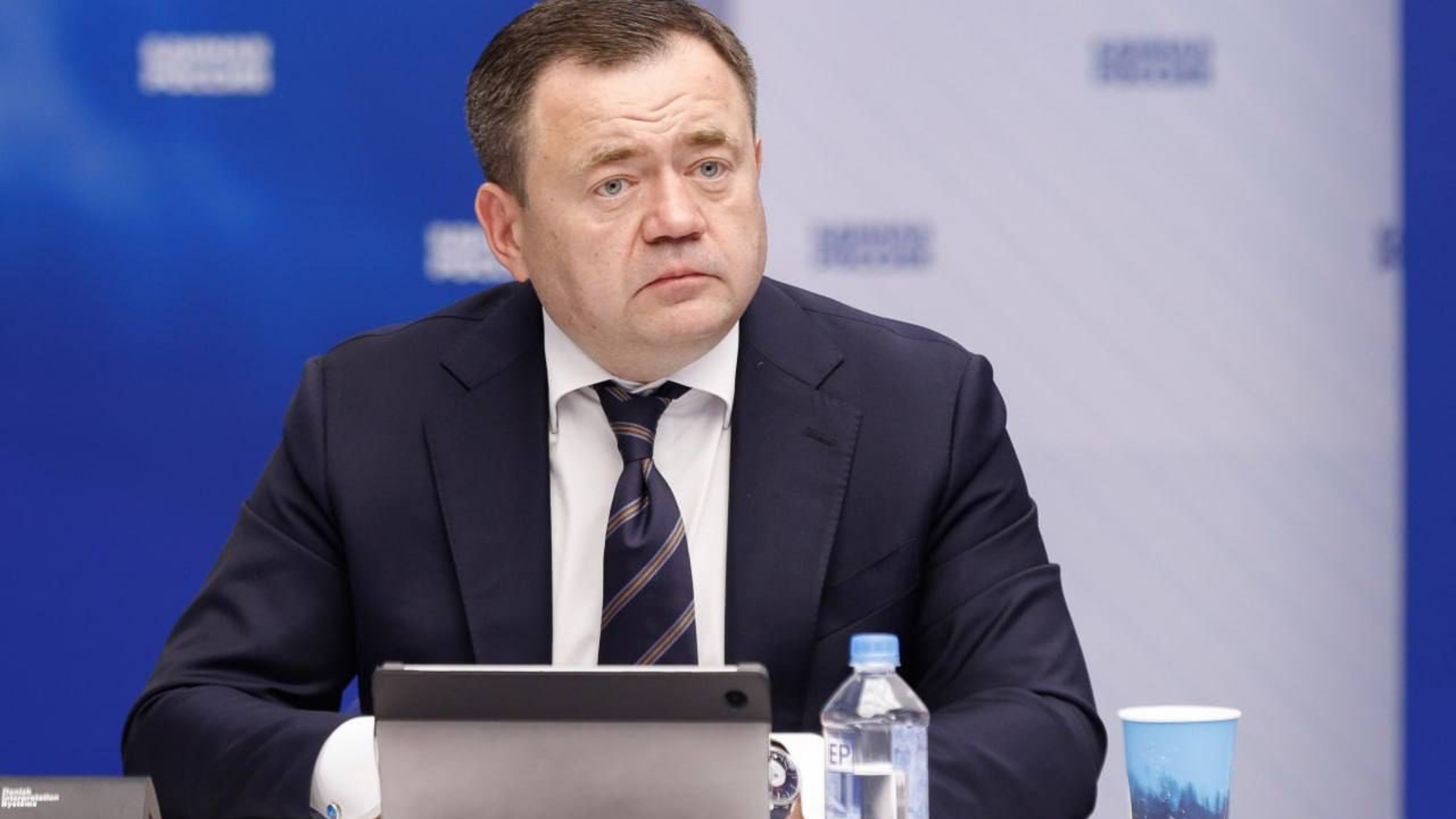
Chairman of PSB Bank Petr Fradkov, in an interview with RBC, discusses what is happening in one of the most closed sectors of the economy — cross-border payments and how the A7 international payment system operates, which essentially lacks international payments.
How did the global payment system work before, what has changed now, and why?
I wouldn’t say that there was one thing before and now there’s another. We are still within the existing paradigm of the global payment system. However, we see the emergence of alternative opportunities.
The entire world has faced the reality that payments have become the most complicated topic in finance. This is essentially a tool of “new warfare.” Financial Times even wrote about this quite frankly and unequivocally, stating that the dollar is also a tool of this war. It serves as a soft power that is fundamentally important for controlling transactions and payments globally.
When we talk about moving away from the dollar in payments as our goal, it is essential to understand that, on one hand, this is correct, but on the other, it does not completely resolve the issue. Looking at payments worldwide, the share of the dollar still fluctuates between 40% and 50%. At the same time, the significance of payments in national currencies is growing. According to the Central Bank, the share of the ruble in export earnings is expected to be above 53% by the end of 2025, while in import payments, it will be around 55%.
However, the dependence on the international financial infrastructure that we discuss cannot be measured solely by the payment currency. You can shift from the dollar to the ruble, yuan, or digital instruments, but the dependence on the external framework itself remains because there is foreign compliance and liquidity solutions that allow for precise control over payments between countries.
If we talk about the SWIFT system, it unites a vast number of organisations — tens of thousands — and is used in all countries, but we see that it is not politically neutral. Therefore, countries are attempting not only to switch to national currencies in payments but, importantly, to create their own payment infrastructure that would allow them to control their own trade flows in both bilateral payments and settlements with third countries.
In practice, such solutions are currently being developed in Russia, including within the framework of PSB projects and the A7 cross-border payment system.
Can such infrastructure be politically neutral if it is the country’s own infrastructure?
Yes, it can. The world is moving away from the idea that there is one universal payment system through which everything must pass. A set of national, regional, and inter-regional solutions is forming. They will compete with each other just like banks, payment systems, logistics routes, and technological platforms do.
We are witnessing a global shift where the international payment infrastructure is beginning to be replaced by a list of national systems. The world is moving in this direction regardless of the Russian situation: if in May 2020 only 35 countries were studying or developing central bank digital currencies, now there are already 146. And there are many such examples. We can recall the Chinese [cross-border payment system in yuan] CIPS and the attempts of several major countries — Indonesia and Brazil — to pursue an independent policy in international trade. We are talking about new competition in the market: the system is starting to fragment, and the products offered in the payment mechanisms sector begin to compete with each other at the sub-regional level. Various solutions are emerging, including in digital assets and stablecoins, which are becoming elements of value transfer. All of this gives rise to an updated payment system. I should note that stablecoins may be a temporary entity.
How has Russia’s dependence on the international “politically non-neutral” payment system changed since 2022? The Chinese system in yuan is designed for China, after all.
That’s exactly the point, that when applying new mechanisms, we need to try to adhere to the principle of moving away from one dependence without falling into another. Fintech and any technological market develop very rapidly. We must not be deceived into thinking that using modern digital solutions is the answer to breaking away from dependence on classical tools and traditional banking. It’s not entirely so.
The point is that Russia needs to create its own payment framework — domestic in origin but international in function. We have plenty of both technical solutions and financial capabilities.
PSB, together with the A7 cross-border payment system, is developing one of these projects for a new payment architecture where payment does not depend on the approval of a third party.
A modern payment framework can involve a combination of traditional banking, digital assets, stablecoins, tokenisation solutions for promissory notes, and various forms. However, this mechanism must not only address the restrictions we find ourselves in but also be a competitive product in the international market that is in demand, including for payments between third countries. In other words, we are not talking about trying to bypass restrictions but creating a modern system that can be competitive in the international market.
How big is this market?
Estimates can be rather general. The flow of operations related to SWIFT infrastructure is estimated at about $150 trillion. Speaking of digital tools, according to Artemis Analytics, in 2025, the volume of operations with stablecoins is expected to reach $33 trillion, increasing by 72% year-on-year. Just for comparison: Visa’s transaction volume for the same year is $16.7 trillion, and Mastercard’s is $10.6 trillion. This demonstrates that stablecoins have become a significant part of the global payment infrastructure.
I should clarify that stablecoins may be a temporary entity. We shouldn’t regard them as a given and assume that this toolset will be used for decades. They are a quick response to a changing world. But it is very important that the mere fact of using these tools does not mean moving away from the link to the dollar in payments.
According to BIS estimates, 98% of the value of all stablecoins is tied to the US dollar.
Even 99%, by some estimates. The total market capitalisation is $312 billion, meaning more than $300 billion comprises various dollar-denominated stablecoins.
The most popular is USDT.
USDT is issued by a private company registered in one of the offshore territories, but this same company is one of the largest holders of US Treasuries. So, the basic dependence on the dollar and the US debt market hasn’t gone anywhere.
It’s important to distinguish between form and content. The form is stablecoins, which are convenient and understood, while the content is a new form of dependence on dollar-linked products. It’s no coincidence that one of the first decisions made by President Donald Trump’s administration was the legalisation of cryptocurrency legislation and the creation of corresponding structures. Essentially, this is an attempt to preserve the old system on new principles. It’s a controlled market and controlled products.
How is this control technically implemented, against which you are working?
It’s important to understand this. Without going into technological details — Tether Limited retains full control over the issued USDT and can block any tokens at its discretion, wherever they are placed. Unfortunately, such precedents already exist.
Such mechanisms have already been applied. Tether has blocked funds not only from owners linked to illegal activities but also simply at the request of the U.S. administration. In recent years, significant assets belonging to owners from Iran and Russia have also been blocked.
This shows that even a modern digital instrument can remain fully controlled by its issuer. Therefore, the question is who controls the infrastructure for its circulation. In this regard, we consider it important to develop our own digital financial instruments and our own payment infrastructure.
Is tightening compliance a matter of time and situation?
It is the same compliance, just in a different technical format, in another shell. There should be no illusions here: yes, technology has changed, but dependence remains.
Our pride is that we were the first to issue a stablecoin tied to the ruble through the A7 company — A7A5. This is a small piece of the global stablecoin market, but it is the largest non-dollar stablecoin. The turnover of A7A5 since its inception has reached nearly $140 billion.
It is also very important that we are not unique in this; many countries are following this path — Indonesia, Brazil, and others. They are actively developing their own solutions for alternative payments and issuing their stablecoins tied to national assets. For now, they are small in scale: the capitalisation of the Brazilian BRZ is about $52 million, the Japanese JPYC is around $18 million, and the Turkish BiLira is about $6 million. Recently, the chairman of the National Bank of Kazakhstan announced that they also plan to use their own tenge stablecoin for international settlements. This is a vivid example of how the global payment system is transforming right now, including our closest neighbours.
It is precisely the settlements not tied to USDT that represent the segment of the market that will grow and may eventually become a real alternative to the established Western infrastructure. We consciously chose this niche to build our own infrastructure, unlike other payment agents. I reiterate, this is not merely a matter of sanctions and restrictions; it is genuinely a matter of a new market that is developing very, very rapidly. If it weren’t a profitable business, it would simply be a fool’s errand.
If this is not about circumventing sanctions, is it an economically substantive business? Is it profitable?
If it weren’t a profitable business, it would simply be a fool’s errand. Financial sovereignty and, more broadly, technological sovereignty are state tasks. But even the most complex state task can encompass several sub-tasks: for example, circumventing sanctions can be included here. But in a broad sense, a state task must be economically viable. It is fundamentally important that the entire mechanism we created is a profitable, economically viable mechanism. There is a demand for it from both our exporters and importers. But it is also becoming interesting for third countries as an alternative form of payment.
Are we talking about the use of A7 tools by third countries for transactions between themselves?
Between themselves, of course.
So aside from our interests?
Our interest, I believe, is present here because it is our solution.
Bypassing Russian trade flows?
Of course. This is becoming very interesting to other countries as an independent payment tool.
What operations have already taken place?
We are working quite closely with many countries in Africa and Asia. For example, we have officially opened an A7 office in Nigeria — one of the largest African economies. This country has a population of almost 250 million people. In 15–20 years, it is forecasted to reach 400 million. Speaking about the population of the African continent as a whole, it is expected to grow to 2.5 billion by 2050. This is a huge market, which also exists under restrictions — many African countries still do not have central banks. And there are about a dozen such countries.
And your interests extend to countries without central banks?
Including. Why not? It’s interesting for us, and it’s interesting for these countries to have an alternative. We’re not talking about abandoning classic principles in payments. It’s a combination of both traditional solutions and modern ones that are actively evolving. I am not at all convinced that cryptocurrencies in payments, stablecoins, are the final entity.
What could they evolve into, in your opinion?
They could be entirely different products related to digital assets. For example, electronic promissory notes or some tokenized solutions. There can be various forms of value transfer.
But the popularity of stablecoins was also determined by their tie to the dollar.
Of course. But here I would divide the question into two components.
The first is which currency the stablecoin is pegged to, meaning in relation to which currency it maintains stability. For the most widespread stablecoin in the world — USDT, issued by Tether — the peg to the dollar was quite logical. A significant portion of international trade and settlements were conducted in US dollars, so it was convenient for the market to quote digital assets in that currency.
The second component is what backs the stablecoin and why the market is confident that it can be exchanged at the declared rate. Today, USDT is backed not only by cash but also by U.S. Treasury bonds, gold, and other assets. However, for market participants, it’s more important to maintain confidence that 1 USDT can be exchanged for approximately $1.
It is important to make another clarification here. The Tether system is structured in such a way that only a limited circle of market participants can directly present USDT for redemption and receive U.S. dollars from the issuer. For most holders, this mechanism is inaccessible. They operate through exchanges, exchangers, brokers, payment agents, and other intermediaries.
That is why trust is built not only on the quality of the issuer’s reserves but also on the existence of a developed exchange infrastructure. As long as there is a liquid market where USDT can be quickly exchanged for dollars or other currencies, trust in the instrument itself remains intact.
Moreover, this exchange does not always happen strictly one-to-one — there are fees and market costs, but it is the infrastructure that provides the practical liquidity of the stablecoin.
Therefore, today competition is gradually shifting from individual digital assets to the infrastructure within which they circulate.
This is the path along which A7A5 is developing. It was not created as just another exchange token but as an element of A7’s own settlement infrastructure. The response of international regulators is telling: A7A5 has already been included in the EU sanctions lists as an independent infrastructure project. This confirms that competition today is not only between individual financial instruments but also between entire payment ecosystems.
You mentioned the Chinese payment system CIPS. Does A7 have any interaction with this platform? Or do you consider it a competitor?
This is where the strength of modern approaches lies: on one hand, we talk about competition, and on the other, the use of each other’s opportunities. The beauty of having different systems is that the more players operate in this market, the more stable the system becomes.
Are they your competitor in Africa?
I wouldn’t say we’re in competition right now. Alternative payment methods are still not very tangible in terms of volumes. There’s an understanding that these tools need to be created. Competition will emerge at some point.
My background is in foreign trade, but I am not, strictly speaking, a specialist in international payments and settlements. However, I have always been involved in foreign trade; that’s my area of expertise. I worked with competitive products in the external market — organizing financing, lending, insuring export credits.
Recently, states have started competing not just with goods because a product must inherently be of high quality or comparable quality in terms of consumer characteristics. It doesn’t matter whether it’s an airplane or a turbine. Countries competed with their financing capabilities. The OECD defined the frameworks within which such competition was possible, for instance, to prevent subsidization. This gave countries an advantage in promoting their products — who would provide cheaper loans, who would offer longer terms, who would cover risks, and who would provide guarantees. In America, for example, the EXIM Bank provided guarantees for export projects.
The next layer is that promoting your own products implies a payment system as well. In current conditions, this can sometimes take precedence — the ability to conduct transactions that you control and know won’t be blocked. This can draw real commodity flows along with it. The approach and the entire structure have changed. In this sense, we are talking not just about payment systems competing with each other, but rather about a system where payments become a cornerstone of any foreign trade transaction. There are two aspects here: first is the control and independence of payments, which relates to security, and second is economic feasibility.
In many areas, classic banking has simply become more expensive and slower. This aspect has nothing to do with any sanctions restrictions.
Is it more expensive for Russia or for the world in general?
In the world. If you look at standard payments, they can take days and involve significant commission fees. That’s a lot. The beneficiaries of this system are not the countries making the payment, but third countries that created this infrastructure and now use it also to justify the commercial component.
Returning to the question of the profitability of new payment systems — this is a completely standard, legal business in a good sense, which is being created as an alternative to classic banking.
How, when, and in what context did the idea to create A7 come about?
I won’t hide the fact that the trigger was the restrictions we faced in 2022. The financial restrictions turned out to be the most severe among all imposed limitations, even when considering the logistical ones. We have long lived within this payment system and, in a way, continue to live under oligopolistic conditions, where literally a few players dictate prices and all other terms.
Are these American banks?
It’s specifically the largest American banks that have developed this system over the last few decades. They built a clear and transparent system, but it’s also a huge business… Then we faced the fact that it can be a tool for political pressure and influence. This became obvious. Other countries are interested in alternatives because they need reliable tools for cross-border payments. For such states, it’s not only economically viable but also a matter of security.
These changes prompted PSB to create the A7 system. The goal was to form our own payment infrastructure capable of conducting international operations independently of external restrictions.
After sanctions were imposed in 2022, many payment agents appeared against the largest banks.
It became a large market for agents, including grey agents who were unregulated and did not pay taxes… But they solved short-term problems—where there’s demand, there’s supply. Payment commissions at that time reached 5-6%, and in some cases up to 7% of the transaction amount. What business can withstand such an increase in costs? It’s impossible.
Why did this happen? Because some agents, communicating directly with clients, passed on the risk of the transaction to other agents, and those to even more agents, and so on. That’s where such high costs came from. Plus, there were risks about whether the payment would go through—due to the large number of intermediaries.
Now the demand is different: businesses need a timeline, clear commission rates, documentation, a route, currency liquidity, and legal frameworks. A large or medium-sized company needs to align its accounting, taxes, and explanations for the bank, auditors, and regulators.
Is A7 killing the payment agent business?
A7 has its own infrastructure worldwide—a decentralised, distributed one that includes elements of both traditional banking and digital solutions, as well as everything related to having the appropriate brokerage, exchange, and so on.
It took a short time to create this infrastructure. Did it fundamentally already exist?
Its elements existed; we simply brought them together.
How does it work? How do you ensure liquidity in different currencies considering the declared geography?
If we talk about the legal framework of the entire process, then in reality no sanctions are being violated, because there is no such thing as a cross-border payment. It’s precisely that which has restrictions. There are distributed liquidity pools that exist worldwide in various currencies. If you take the jurisdiction of each individual country where we operate, then within it, this is absolutely normal, standard business that complies with all the regulations of that country.
How do you attract liquidity? It’s colossal.
Various sources, including funds raised from large companies and private investors. This is standard business — a process beneficial for all participants. There’s nothing unique about it.
Is this settled by netting?
Not exactly netting; it’s more about liquidity management. So, it’s not pure clearing. It’s not scary to fall under sanctions; what’s scary is not being able to implement your settlement mechanism after falling under sanctions.
Can you explain how this works?
When A7 started operating, we set ourselves the main goal and task — we should not be afraid of falling under sanctions. We’re not hiding, and we’ve been honoured in this regard. The Financial Times, quickly figuring it out, wrote about A7, calling it a good working tool for settlements. But they presented it in their context as a way to bypass sanctions.
However, we see it more broadly: it’s not scary to fall under sanctions; what’s scary is not having the ability to implement your settlement mechanism after falling under sanctions. The system is designed in such a way that, even after being sanctioned repeatedly, in various forms and types, the company continued its activities in processing payments for our clients. Such resilience in the operation of the system is important because there are not only one-off transactions for large exporters or other super-large players, where every payment is customised for them. A7 is a market platform that now conducts up to 2,000 payments per day.
Of different levels?
Of different levels. 2,000 payments automatically suggests that these are both medium-sized companies and small businesses.
Is it not about breaking down large operations into smaller ones?
Certainly not. We have 15,000 companies as regular clients using A7 products. That’s quite a lot, representing various levels of companies.
What is the smallest?
There are microbusinesses and individuals.
Are individuals also interested?
Life goes on. People travel for vacations, people get medical treatment, people pay for education. And the system allows for that. It’s a functional mechanism. The purpose of our activity is not to create some customised solution for a specific client, although that is also possible. It’s a system that meets the interests of any level, from large exporters to individuals who need to make payments for personal needs.
You mentioned that the market of payment agents used grey schemes and didn’t pay taxes. How much have you paid in taxes?
We are the first agency company to operate in this sector at all. The first resident company in this sector. A company that has completely transparent reporting within the Russian framework. According to this, we have paid 25.5 billion rubles in taxes since we started operations.
What are the taxes based on?
On commission. That is our income. Our commission is 0.3% plus VAT. This is a well-known commission, and it’s fair without any markups.
How is it achieved?
This commission exists because we do not resell or buy services from someone else. This is very important. We control the entire chain, which allows us to manage costs.
Did you require huge investments to create this chain initially?
No, it was necessary to create a corresponding management system: basic approaches — our own compliance, risk management, a “know your customer” system, a decentralised management structure. A settlement company does not require any mega-infrastructure in terms of investment.
A proprietary infrastructure is not one bank, one route, and one country. It’s a distributed network of settlement centres, partner financial institutions, trade and legal structures operating within local legislation.
Have the investments already paid off?
I cannot say that everything has paid off yet because the system is still developing. For us, the most important issue is access to liquidity. That’s the most challenging part because liquidity is the key factor. And this business requires a liquidity management system. That is probably the main asset.
How do you solve this problem?
There are various tools for attracting liabilities, both from large businesses and private investors. We do not sell this as a public product. But it’s a standard investment mode.
Let’s assume that 90% of the world will be under sanctions, and 10% will not. What will happen, I don’t know.
In the A7 list, payments reach all of Europe. The last sanctions package from the European Union imposed sectoral sanctions against Russian cryptocurrency services with the expectation of mega-compliance from any European agents. Are there consequences for A7?
This has not affected our business at all. That’s the short answer.
We have never been, I emphasise, never in a position where we couldn’t fulfil our obligations to clients due to any type of sanctions. This derives from the distribution of our infrastructure and the ability to use combined tools depending on the task.
Is the current threat in the new EU package to extend such an approach to third countries also not frightening?
That’s a complicated issue. The question of secondary sanctions is generally broader than A7’s business. Let’s assume that 90% of the world will be under sanctions, while 10% will not. What will happen then, I don’t know. I simply don’t understand how that would work. Theoretically, anything might be possible.
Counterparties in third countries, depending on where their interests lie, may start to choose what is preferable for them.
They may, but representatives from many countries are motivated not only by the fear of “violating” — I put this word in quotes — some sanctions or falling under secondary sanctions; they are also motivated by the interests of their countries, businesses, and the possibility of conducting transactions, having systems that are alternatives to two or three existing ones.
This is a complex issue that the Global South is facing. Communicating with many partners, I can confidently say that it is indeed a pressing issue. This includes Africa, Latin America, and certain Asian countries. Each country has its own interests and tasks. Everyone has realized that the topic of payments is a bottleneck that can, at any moment, become a serious constraint for conducting trade payments. This is a fact.
You mentioned that A7 continues to develop, that the market is changing and needs to change as well. Is legislation keeping pace with this development?
I wouldn’t link A7’s company with the development of legislation. A7 definitely does not want to and will not run ahead of the train, ahead of the legislation. That’s not our method. A7 operates within the legal framework of the countries where it works, including Russia. In terms of the market, legislation is moving forward. There’s no need for immediate solutions.
Different countries are at different stages of developing their legislation. There are countries like El Salvador, which was the first to implement maximally free crypto legislation. Belarus is an excellent example as well, with very interesting legislation. It was one of the first countries in the region to establish a special legal framework for digital assets. The European Union, on the contrary, has taken a path of comprehensive regulation through the unified MiCA regulation, which is already in effect within the EU. At the same time, the Netherlands is considered one of the most developed crypto jurisdictions within the European Union due to the consistent approach of regulators and a favourable environment for the development of fintech and digital assets.
There are other interesting examples too. The UAE has effectively created a separate regulatory system for virtual assets: in Dubai, there is a specialised regulator, VARA, which exclusively addresses this market. And in Abu Dhabi, there is a specific legal regime for companies working with digital assets. This is a rare case where a regulator was built from scratch for this market. Hong Kong is developing its own model through the licensing of virtual asset service providers, and since August of last year, it has adopted separate regulations for stablecoins. Singapore remains one of the most mature jurisdictions, where regulation is built around the licensing of market participants, risk management, and user protection.
I believe we are also moving in the right direction. Given the scale of our economy, this is being done gradually. The law on “Digital Currency and Digital Rights,” which was passed by the State Duma in the second and third readings, I view as an important step. This is progress. I support regulation for both agents and the crypto market.
Do you have plans related to this regulation? Or does it not affect you?
I cannot say that at all. I believe that our entire chain must work effectively—the combined payment pathway must be efficient and comfortable at every stage. Where it concerns Russian regulation, we must have the most advanced solutions within its framework. And this applies throughout the entire chain.
We look at other markets to understand how elements of our payment chain can be executed in various countries. Therefore, we monitor all trends worldwide, tracking what solutions different countries offer. But we do not narrow this down to just crypto solutions. We look at various alternatives to traditional banking. There are many such solutions, and our task is to not miss these trends so that we can become a real global competitor for third countries. A7 is precisely a way to occupy a position where Russia can be a provider of this new infrastructure rather than a laggard.
What share of this market can be expected with the system you are currently working on?
Are you referring to the global market? That’s a good question. The only thing I haven’t thought about is this. I don’t want to make a blind guess. Let’s refer to the numbers. The total capitalisation of all stablecoins is estimated at around $312 billion. About 99% of that is linked to dollar-denominated instruments. Only 1% accounts for other currencies, and within that percentage, we are the largest with a capitalization of A7A5 at about $570 million. Following us is the European stablecoin pegged to the euro, which is valued at $440 million. In third place are the Brazilians with a significant gap at $52 million.
If we don’t linearly tie this to A7A5, which is just one of the products, then I think a target of 10% of the market is quite substantial. If such an ambitious goal is set, it would mean not just trading within Russia but using payment mechanisms in international trade.
And what is the timeline?
It depends on the resistance from those who currently hold 99% of the market.

