 Follow Us on Google News
 Follow Us on Google Discover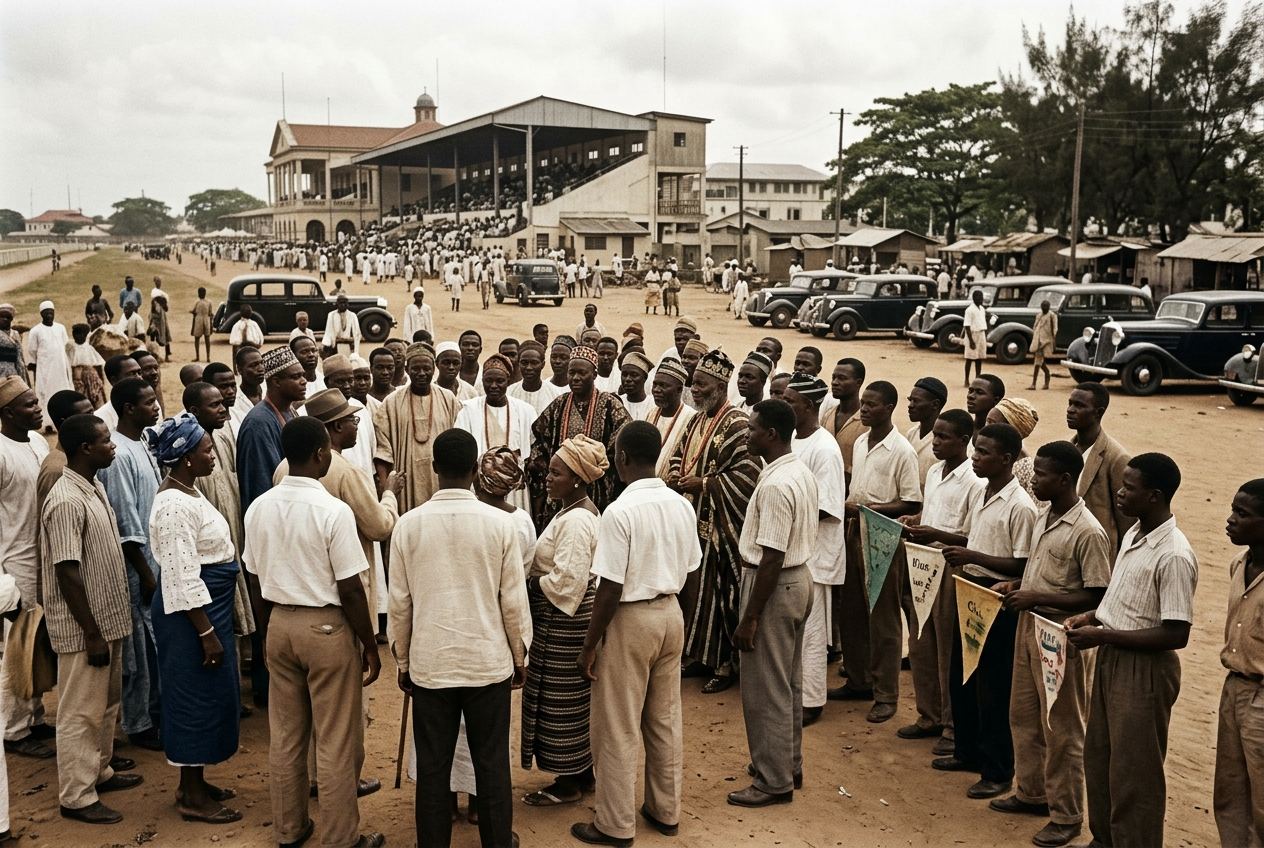
Welcome, and thank you for stopping by. If you have ever stood in front of a browning photograph in a Lagos sitting room and wondered what the world looked like when your grandfather was still a boy in short trousers, this piece is for you. I have spent months in archives, old survey journals and colonial gazettes chasing one deceptively simple question, and what follows is the conclusion of that work, carried by years of writing about the long story of this country under British rule. So, what happened in 1936 in Nigeria? Rather a lot, as it turns out, and almost none of it made the front page at the time.
That is the odd thing about 1936. It has no coup, no flag change, no independence bell. It sits quietly between the drama of the Aba Women’s War in 1929 and the roar of the Second World War, and because of that it gets skipped in most classrooms. Ask a room of secondary school pupils in Ibadan what happened in 1936 and you will get blank faces, then a guess about the war.
But quiet years are often the ones that do the real work.
I think of 1936 rather like the foundation trench of a house. Nobody photographs it. Nobody admires it. And yet every wall that goes up afterwards depends on how carefully it was dug.
What Happened in 1936 in History Around the Wider World
Before we get to Lagos and Kano, it helps to know what the rest of the planet was doing, because colonial Nigeria did not live in a bubble. News arrived by ship, by telegraph and by the wireless sets that a handful of wealthy families kept in their parlours, and it shaped what people here argued about over their evening meal.
It was a year of monarchs. King George V died in January and his eldest son took the throne as Edward VIII. By December that same year, Edward had signed an instrument of abdication at Fort Belvedere in order to marry Wallis Simpson, and his younger brother became King George VI. Three kings in a single calendar year. In Nigeria, then a British colony, this meant new stamps, new coins eventually, and a great deal of confused administrative paperwork in provincial offices from Calabar to Sokoto.
It was also a year of fascism finding its confidence. Italian forces took Addis Ababa in May and Rome formally annexed Ethiopia, folding it with Eritrea and Italian Somaliland into what Mussolini called Italian East Africa. In July, General Franco’s rising against the Spanish Republic opened the Spanish Civil War. In August, Berlin hosted the Olympic Games, where Jesse Owens won four gold medals and made a rather more eloquent argument against Nazi racial theory than any speech could have managed.
Now, why does the Ethiopian invasion matter so much for our story?
Because Ethiopia was, for educated Africans everywhere, the proof that an African state could stand as a sovereign equal. When Italy swallowed it, something snapped. Across West Africa, young men who had previously argued for gradual reform started asking harder questions, and collection tins for the Ethiopian cause appeared on Lagos street corners. The invasion did more to radicalise a generation of Nigerian nationalists than any pamphlet.
So, What Happened in 1936 in Nigeria? The Direct Answer
Here is the short version, and then I will unpack each strand.
In 1936, three things of lasting consequence happened in Nigeria. The legal institution of slavery was finally extinguished across the Northern Provinces, closing a process the colonial state had deliberately dragged out for nearly forty years. The Lagos Youth Movement renamed itself the Nigerian Youth Movement, becoming the first political organisation in the territory to claim the whole country rather than a single city as its constituency. And the colonial economy, flattened by the Great Depression, turned decisively upward, with the Land and Survey Department reporting greatly increased activity across all its branches and a new Registration of Titles Ordinance coming into force. Around these three sat a fourth strand, quieter but personally decisive: a young Onitsha man named Nnamdi Azikiwe, then editing a newspaper in Accra, was arrested in June and tried for sedition, an experience that pushed him home to Lagos the following year to found the West African Pilot.
The entities you want to hold in your head, if you are studying this year properly, are these:
- Sir Bernard Bourdillon, Governor of Nigeria from November 1935, presiding over the recovery
- The Nigerian Youth Movement, and its founding figures including Ernest Ikoli, H. O. Davies, Samuel Akinsanya and Dr J. C. Vaughan
- The Sokoto Caliphate’s long afterlife, and the 1936 closing of the legal status of slavery in the North
- Nnamdi Azikiwe and I. T. A. Wallace-Johnson, arrested together in the Gold Coast in June 1936
- Yaba Higher College, opened in 1934, whose second-class status was the original grievance that produced the movement
Each of these deserves proper attention, and the sections below give it to them. But if you came here for a one-line answer to give your lecturer, it is this: 1936 was the year Nigerian nationalism stopped being a Lagos hobby and became a national project, while the last legal scaffolding of slavery came down in the North.
Let me take the slavery question first, because it surprises almost everyone.
When the British conquered the Sokoto Caliphate at the turn of the century, they inherited one of the largest slave societies in modern history. Rather than emancipate anyone, the colonial administration abolished the legal status of slavery and invited enslaved people to purchase their own freedom, a policy the historians Paul Lovejoy and Jan Hogendorn memorably called a slow death for slavery. Many could never raise the money. The residue of that arrangement, in law and in practice, was not fully cleared until 1936. Forty years. Read that again and sit with it.
I remember first encountering that date in a university library in Zaria and simply not believing it. I checked three separate sources before I accepted it. It is one of those facts that quietly rearranges how you see the whole colonial project, and it is why I have very little patience with the tidy story that Britain arrived bearing abolition. Records and objects from precisely this period sit in the collections managed by the federal body that looks after the country’s museums and monuments, including a dedicated museum of colonial history at Aba, and I would encourage anyone serious about this era to visit rather than rely on textbooks.
The economic turn matters too, and in a very ordinary way. The Depression had gutted export prices for palm produce, cocoa and groundnuts. Teachers had taken salary cuts. Traders in Onitsha and Kano had watched margins vanish. By 1936 the recovery was visible enough that the colonial survey service was recording increased work across every branch, which is the sort of dry administrative sentence that actually means people were building again, registering land again, and daring to plan. That mattered enormously for the political mood. Hungry people organise for bread. People who have just started eating again organise for rights.
And then there is the human scale of all this. The census figures of the period counted roughly twenty million people in the whole territory. Today the National Bureau of Statistics demographic bulletin tracks a country of well over two hundred million. Whatever your grandparents’ generation was arguing about in 1936, they were arguing about it on behalf of a Nigeria roughly one tenth the size of ours.
One more thread before the table. The men who signed up for the Nigeria Regiment in the late 1930s, and who would shortly be sent to Burma, are still remembered every 15 January. At the most recent commemoration, the President and the National Assembly pledged ₦320 million to the Nigerian Legion, the body that cares for veterans and the widows of fallen soldiers. The 1936 generation is not an abstraction. Some of their families are still collecting on that promise.
The Years Around 1936 in Nigeria at a Glance
The table below sets 1936 beside the years either side of it, so you can see why it functions as a hinge rather than a footnote.
| Year | What happened in Nigeria | What was happening elsewhere | Why it still matters |
|---|---|---|---|
| 1929 | Aba Women’s War against warrant chiefs and taxation; 55 women killed by colonial troops | Wall Street crash begins the Great Depression | Forced the British to scrap the warrant chief system and rethink indirect rule in the South East |
| 1934 | Yaba Higher College opens; Lagos Youth Movement founded in protest at its inferior status | Hitler consolidates power as Führer in Germany | Education grievance becomes the seedbed of organised nationalism |
| 1936 | Legal slavery ends in the Northern Provinces; Lagos Youth Movement becomes the Nigerian Youth Movement; economy recovers; Registration of Titles Ordinance in force | Italy annexes Ethiopia; Berlin Olympics; Edward VIII abdicates | The year nationalism went national and the last legal traces of slavery were cleared |
| 1937 | Azikiwe returns from Accra and founds the West African Pilot in Lagos | Japan invades China; Guernica bombed | Gave the movement a daily newspaper and a mass readership |
| 1939 | Southern Provinces split into Western and Eastern Provinces; Nigeria enters the war with Britain | Second World War begins in September | Created the regional map that would shape every later crisis |
| 1943 | Nigerian battalions form the bulk of the 81st and 82nd West African Divisions in Burma | Allied momentum turns in North Africa and the Pacific | Returning soldiers came home with expectations no colonial governor could contain |
Read across that table and a pattern jumps out. Every burst of Nigerian political energy sits immediately downstream of either an economic shock or an imperial humiliation abroad, and 1936 delivered both at once, which is precisely why it produced an organisation rather than a protest.
Who Was the First Person to Come to Nigeria, Long Before 1936?
This question gets asked constantly, and it is usually asked with the wrong assumption buried inside it. People imagine somebody arriving. Landing. Discovering.
Nobody discovered Nigeria. People have been living here for a very, very long time.
The oldest human remains found anywhere in West Africa came out of a rock shelter called Iho Eleru, near Akure in what is now Ondo State. The Yoruba name means Cave of Ashes, and the site was excavated between 1964 and 1965 by Thurstan Shaw and his team, who recovered a burial along with something in the region of half a million stone tools. Radiocarbon work put the skeleton at roughly thirteen thousand years old, and later uranium-series dating suggested a range of about 11,700 to 16,300 years. It remains the only Pleistocene human fossil ever recovered in western Africa.
So the honest answer to who came first is that nobody came. They were already here, and they were here when much of northern Europe was still under ice.
If what you actually mean is who arrived from outside, the answer is the Portuguese, and the date usually given is around 1472. They reached the coast, began trading in earnest with the Kingdom of Benin, and exchanged European goods, particularly firearms, for ivory, palm oil and, with grim inevitability, enslaved people. That contact is nearly five hundred years older than the events of 1936, and it is the reason a coastal trading relationship eventually hardened into a colony.
I find it useful to say this plainly when I speak in schools. Nigerian history does not begin with a European sail on the horizon. It begins with a burial in a cave in Ondo State, and everything else is a much later chapter.
Who Gave Nigeria Its First Name, and Why It Stuck
Here is a fact that catches people out at parties: the name Nigeria is younger than the Ekiti Parapo War and older than the country itself.
It was coined by a British journalist named Flora Louise Shaw, colonial editor of The Times of London and, at the time, the highest paid woman journalist in Britain. In an article published on 8 January 1897, she proposed the word Nigeria for the sprawl of territory then administered under the cumbersome official label of the Royal Niger Company Territories. Her argument was practical rather than poetic. The existing name was too long, too commercial, and applied to no other part of Africa, so a single word drawn from the river and the area it waters would serve better.
She later married Sir Frederick Lugard, who as Governor-General fused the Northern and Southern Protectorates on 1 January 1914 and made her suggestion official. Which means the woman who named the country was also, by marriage, positioned at the centre of the administration that assembled it. Neat, and rather uncomfortable.
Some Nigerian commentators have argued forcefully that our national centenary was miscounted, and that 1897 rather than 1914 is the year the entity acquired its identity. That case has been made at length in an argument about the way we date our own beginnings, and whatever you conclude, it is a healthier debate than pretending the question is settled.
It is worth being precise about the limits of the claim, though. Shaw suggested the name in a newspaper column. She did not christen a country, and the suggestion sat unused for sixteen years before Lugard adopted it. Evidence for the exact moment of coinage remains thinner than the confident retellings suggest, and I would treat any account that dramatises the scene with polite scepticism.
What the 1936 generation inherited, then, was a name given by a foreign journalist to a territory assembled for administrative convenience. Understanding that helps explain why the Nigerian Youth Movement’s 1938 charter fixed on the development of a united nation out of a conglomeration of peoples as its stated aim. They were not describing a nation. They were proposing to build one. The structural problems left behind by that assembly have been picked over ever since, including in a careful reckoning with what the 1914 merger actually did to the country.
Has Nigeria Ever Fought Any War Since 1936?
Yes, and considerably more often than most people assume.
Start with the wars fought under the British flag. Nigerian units served throughout the First World War in the Cameroons campaign between 1914 and 1916, and then in East Africa from 1916 to 1918. In the Second World War, roughly forty-five thousand Nigerian soldiers served in the British forces, and Nigerian regiments made up the bulk of the 81st and 82nd West African Divisions. They fought in the East African campaign and then in Burma, where the third brigade of the 81st Division, composed entirely of Nigerians, was chosen to fight as part of Orde Wingate’s Chindits. Many of those men had never seen an aeroplane before they were flown into the Burmese jungle.
Their sickness to battle casualty ratio was among the best in the theatre, which historians have read as a compliment to both the soldiers and their conditioning. They are also, to this day, chronically under-acknowledged in the standard histories of that campaign, and I have never quite forgiven the British publishing industry for it.
Then comes the war everyone knows. The Nigerian Civil War ran from 6 July 1967 to 15 January 1970, after the Eastern Region declared itself the Republic of Biafra on 30 May 1967. Estimates of the death toll vary enormously depending on methodology, ranging from around five hundred thousand to as many as three million, with the great majority of those deaths caused by starvation during the federal blockade rather than by combat. Between two and four and a half million people were displaced. It is the reason Armed Forces Remembrance Day moved from 11 November, as observed elsewhere in the Commonwealth, to 15 January, the date the instrument of surrender was handed to Olusegun Obasanjo by Philip Effiong.
After that, Nigeria became an exporter of soldiers rather than a battlefield. Nigerian troops led the ECOMOG interventions in Liberia from 1990 and in Sierra Leone through the 1990s, at considerable cost in lives and money. There was a long border dispute with Cameroon over the oil-bearing Bakassi peninsula, resolved at the World Court in 2002 and implemented in 2008. And since 2009 the country has been fighting a domestic insurgency in the North East that has outlasted several administrations.
So: six categories of conflict in a century, if you count colonial service, civil war, peace enforcement, border dispute and insurgency separately. Nigeria is not a country that has been left alone, and any honest assessment of where we stand now has to reckon with that inheritance, as one recent examination of the distance between our founding and our present argues at some length.
Seven Steps to Tracing What Really Happened in Any Year of Nigerian History
People often ask how I check a year like this. Here is the method I use, and it works whether you are writing a dissertation or settling an argument in a WhatsApp group.
- Fix the administrative frame first. Find out who the governor was, what the territory was legally called, and which currency was in circulation, because every document you read afterwards will assume you know. In 1936 the answers were Bourdillon, the Colony and Protectorate of Nigeria, and the British West African pound.
- Check the colonial annual reports and survey journals before anything else. These were published yearly, they are dry as harmattan dust, and they contain the ordinances, land registrations and departmental activity levels that tell you what the state was actually doing rather than what it said it was doing.
- Read the year twice, once as local news and once as imperial news. An ordinance passed in Lagos in 1936 often makes no sense until you know what the Colonial Office in London was worried about that season.
- Track the newspapers, not just the government. The Nigerian Daily Times, and from 1937 the West African Pilot, carried the arguments that colonial files suppress. Where a file records a decision, a newspaper records the fight over it.
- Convert every figure into something you can feel. A colonial salary of eighty pounds a year means nothing on the page. Work out what it bought in yams, school fees or a bicycle, then compare it with what the equivalent costs in Naira today.
- Cross-check any date that sounds too tidy. Popular retellings compress and dramatise, particularly around the naming of the country and the founding dates of political organisations, where sources genuinely disagree by a year or two.
- Visit the physical evidence where you can. A morning at the National Museum in Onikan, or at the colonial history museum in Aba, will teach you things about texture and scale that no citation ever will.
Follow those seven and you will very rarely be embarrassed by a footnote.
Final Thoughts on What Happened in 1936 in Nigeria
I set out months ago expecting to find that 1936 was an empty year, a gap between the interesting bits. I was wrong, and I am glad to have been wrong.
What I found instead was a hinge. The year the last legal machinery of slavery in the North was finally dismantled, four decades after the conquest that was supposed to have ended it. The year a Lagos pressure group looked at a map and decided to speak for the whole country. The year the economy lifted its head, and a generation with slightly more money and considerably more anger began to organise. The year Ethiopia fell, and educated Africans everywhere quietly concluded that patience was not going to be enough.
None of that is dramatic on its own. All of it together produced the 1938 Nigerian Youth Charter, the West African Pilot, and eventually the coalition that took the country to independence in 1960.
If you take practical steps from this piece, let them be these:
- Go and look at the primary sources yourself, starting with the colonial annual reports and the newspapers of the period, rather than trusting a summary that has been copied from a copy
- Interrogate any date you were taught as settled, particularly 1914 and 1897, and find out who benefits from the version you were given
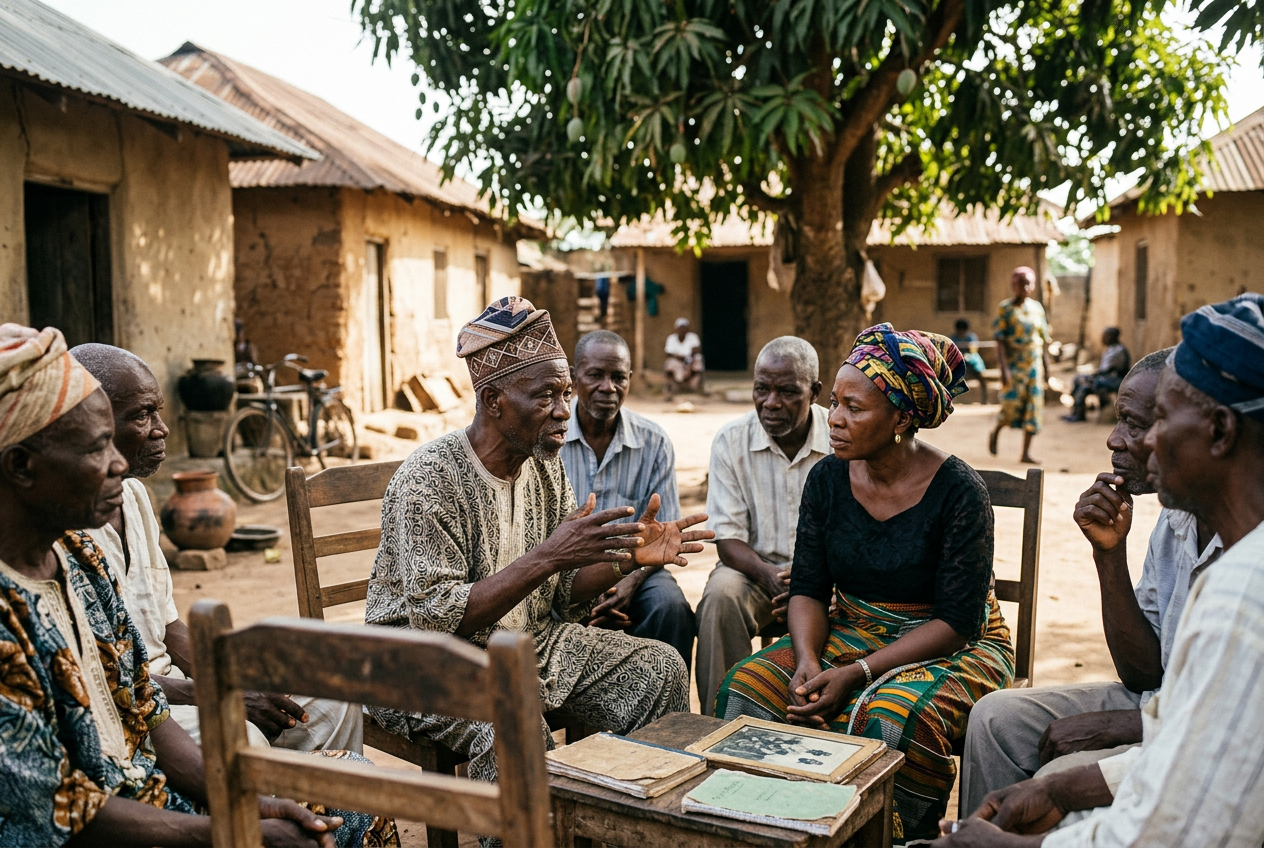
- Talk to the oldest person in your family this month and write down what they say, because the 1936 generation’s children are now in their eighties and their memories are not archived anywhere
Related Articles
If the naming question caught your interest, you will probably enjoy my longer piece on the flag, the coat of arms and the other emblems the country chose for itself after independence, which asks what the country’s chosen emblems actually say about it and how deliberately those choices were made. And for the deeper time question raised by Iho Eleru, my examination of which faith tradition was practised here first covers the archaeological evidence from Nok and Igbo-Ukwu in far more detail than I could fit here.
Key Takeaways
- 1936 was the year the legal status of slavery finally ended across Northern Nigeria, roughly forty years after British conquest, and the year the Lagos Youth Movement renamed itself the Nigerian Youth Movement
- The name Nigeria was proposed by the journalist Flora Shaw in The Times on 8 January 1897 and only became official when Lugard merged the protectorates on 1 January 1914
- Human occupation of this territory goes back at least thirteen thousand years at Iho Eleru near Akure, while the first European contact came around 1472 with Portuguese traders at Benin
Frequently Asked Questions About What Happened in 1936 in Nigeria
What happened in 1936 in Nigeria?
In 1936 the legal status of slavery was finally extinguished across the Northern Provinces, the Lagos Youth Movement renamed itself the Nigerian Youth Movement and claimed a national mandate, and the colonial economy recovered strongly from the Great Depression. Nnamdi Azikiwe was also arrested and tried for sedition in the Gold Coast that June, an episode that brought him home to Lagos the following year.
Was slavery still legal in Nigeria in 1936?
The colonial administration had abolished the legal status of slavery in Northern Nigeria decades earlier but chose a gradual approach that required enslaved people to buy their own freedom. The residual legal framework was not fully cleared until 1936, which is why historians describe the process as a slow death rather than an abolition.
What was the Nigerian Youth Movement?
It began in 1934 as the Lagos Youth Movement, formed in protest at the inferior status of the newly opened Yaba Higher College, and took the name Nigerian Youth Movement in 1936. Its 1938 charter set out the aim of building a united nation from the many peoples inside the colonial borders, making it the first genuinely national political organisation in the territory.
Who was the governor of Nigeria in 1936?
Sir Bernard Henry Bourdillon was Governor of Nigeria throughout 1936, having taken office on 1 November 1935 and serving until 1940. He served under three sovereigns in that single year, since George V died in January, Edward VIII reigned briefly, and George VI succeeded in December.
What happened in 1936 in history around the world?
Italy annexed Ethiopia in May, the Spanish Civil War began in July, Berlin hosted the Olympic Games in August where Jesse Owens won four gold medals, and Edward VIII signed his abdication in December. Britain therefore had three kings in one calendar year, which had direct administrative consequences across every colony including Nigeria.
Who gave Nigeria its first name?
The name Nigeria was proposed by Flora Louise Shaw, colonial editor of The Times of London, in an article published on 8 January 1897. She argued for a short single word drawn from the River Niger to replace the unwieldy official title Royal Niger Company Territories.
Did Nigeria exist as a country in 1936?
Nigeria existed as a single administrative entity in 1936, having been created by the amalgamation of the Northern and Southern Protectorates on 1 January 1914, but it was a British colony rather than an independent state. Independence would not come until 1 October 1960, twenty four years later.
Who was the first person to come to Nigeria?
Nobody arrived to find an empty land, since human occupation here goes back at least thirteen thousand years, evidenced by the burial excavated at the Iho Eleru rock shelter near Akure in the 1960s. That skeleton is the only human fossil from the Pleistocene period ever recovered anywhere in western Africa.
When did Europeans first reach Nigeria?
Portuguese traders made the first recorded European contact with the coast at around 1472, roughly four and a half centuries before the events of 1936. They established substantial trade with the Kingdom of Benin, exchanging European goods and firearms for ivory, palm oil and, increasingly, enslaved people.
Has Nigeria ever fought any war?
Yes, repeatedly. Nigerian units fought in the Cameroons and East Africa during the First World War and in East Africa and Burma during the Second, the country fought a civil war against Biafra from 1967 to 1970, and it has since led interventions in Liberia and Sierra Leone alongside a long domestic insurgency in the North East.
Did Nigerians fight in the Second World War?
Around forty five thousand Nigerian soldiers served in the British forces during the Second World War, forming the bulk of the 81st and 82nd West African Divisions. They fought in the East African campaign and then in Burma, where an entirely Nigerian brigade served with Orde Wingate’s Chindits behind Japanese lines.
Why is 1936 not taught much in Nigerian schools?
Curricula tend to prioritise years with a single dramatic event, such as 1914, 1960 or 1967, and 1936 offers no coup, no constitution and no independence ceremony. Its significance is structural rather than theatrical, which makes it harder to teach but arguably more important to understand.

