 Follow Us on Google News
 Follow Us on Google Discover
As the tier of government closest to the people and grassroots institutions, the local councils hold the key to Nigeria’s talent factory and her return to the elite division of international sports. This critical tier, however, has failed in its duties due to officials’ apathy toward sports development and inadequate funding, among other factors, CHRISTIAN OKPARA reports.
Across the country, only a few local councils boast of developed sports facilities like stadiums and indoor sports halls, and even when such facilities exist, they are mostly used by “outsiders” because most of the councils do not have developmental programmes that make for routine use of such structures.
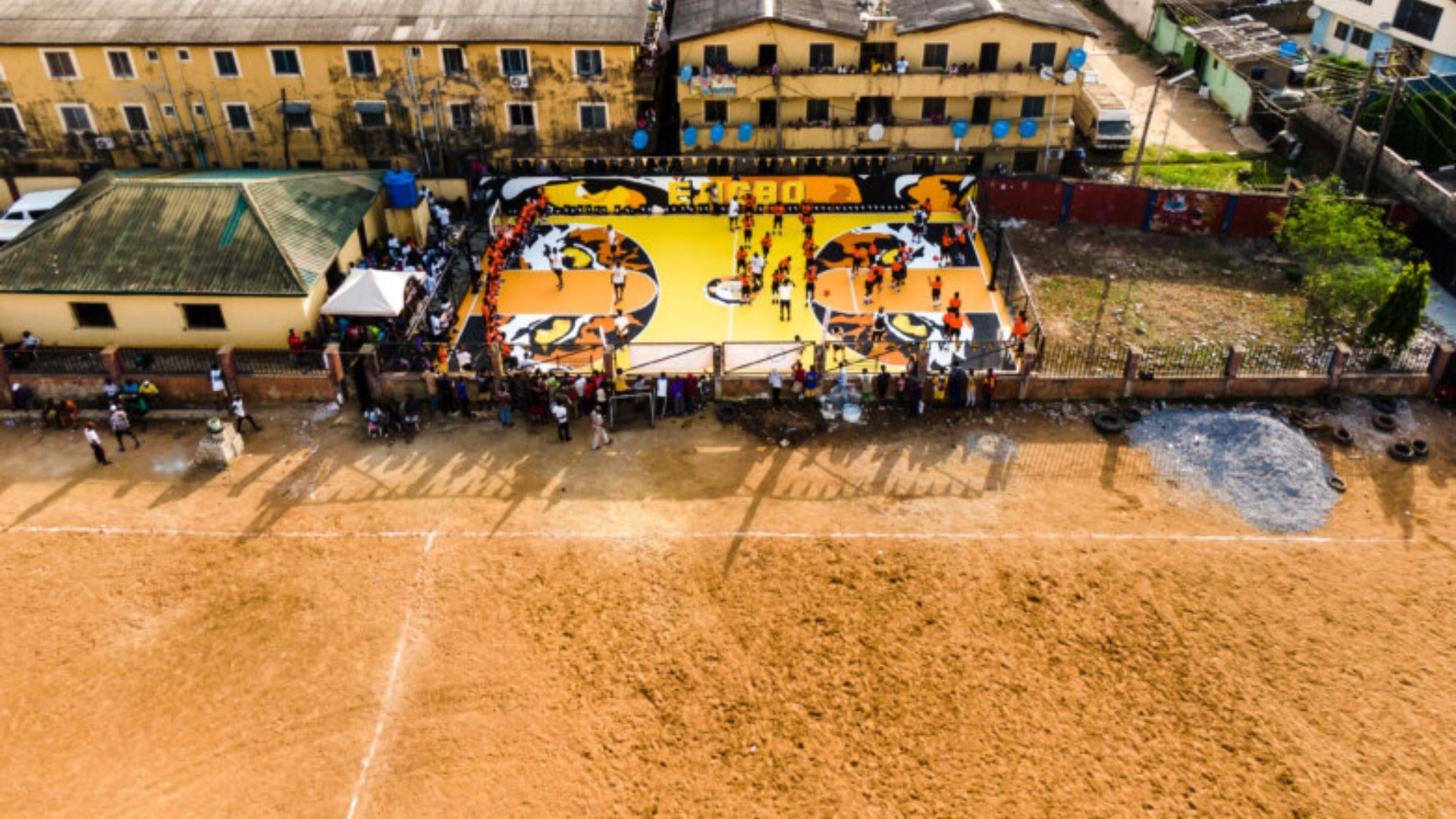
For instance, the Ejigbo Local Council in Lagos State has a mini-stadium, which in the past served as a breeding ground for future stars who graduate from the facility to either Rowe Park in Yaba or the Teslim Balogun Stadium.
Presently, the Ejigbo Stadium, which has no grass on its football field, serves as a playground where schools hold their inter-house sports competitions. Leisure football players take turns practising on weekends.
According to an official of the local council, who pleaded anonymity: “What happens is that schools rent the field for their inter-house competitions. Sometimes members of the public use it for parties, but the place comes alive on weekends when different sets of local football players practice here.
“In 2022, the Giant of Africa built that basketball court you see there for the children of the community and its environs to practice the game.

“If you come here on a Saturday, you will see children and adults from different areas playing basketball here.
“The current government of Governor Babajide Sanwo-Olu is building sporting facilities across the state, and we believe that in due course, it will refurbish this stadium.”
By design, local councils are supposed to play a crucial role in developing sports in the country. This is because, as the closest tier of government to the people, it has access to raw talent and the schools that produce it, and therefore is better positioned to harness it than both the state and federal governments.
In the immediate post-independence years up to the late 1990s, local governments had defined roles in sports development, as the talents they presented in competitions such as inter-local government sports festivals and various statewide championships were recruited by states for national championships, where they faced stiff competition. It is through these national championships that the country selects its athletes for international competitions.
The old Eastern Region, for instance, sent coaches to the divisions to work with games masters in introducing various sport disciplines to students, with the best among the new student athletes selected for further training in controlled environments.
These selected athletes formed the bulk of the Eastern Region’s squad for the national championships.
This system was replicated across all other regions and leveraged structures left by the colonial masters to develop sports in the respective zones.
Sadly, with the military’s introduction of unitary government in the late 1960s, local councils lost their power to control sports, as everything was now centralised in the central government.
The return to civilian rule in 1999 was supposed to correct the imbalance in sports development, as local councils, by then, had elected officials with the authority to control their affairs independent of the federal and state governments. But this has not been the case.
Experts insist that the local council must play a crucial role in sports development by providing funding, constructing and maintaining sports infrastructure, and implementing policies that promote community participation.
They are also expected to foster local talent through school programmes, organise community competitions, and partner with private stakeholders to create sustainable sports environments that improve public health and social cohesion.
However, most local councils have abdicated their roles in promoting and developing sports because they are hampered by the way their officials get into office, as well as by the suffocating influence of the state government.
Indeed, most local council officials owe their stay in office to state governors, who selected them for their positions in the first place. They can only do or embark on programmes to the extent that state governors permit them.
A principal officer in Bende Local Council of Abia State, who pleaded anonymity, told The Guardian that the council had in the past tried to organise community competitions for its 13 component towns, but these efforts did not materialise because the council lacked the resources and manpower for such ventures.
“In a society where everything is concentrated in the hands of the state governor, you can hardly see any local government rich enough to build stadiums or standard community playgrounds. But we believe things will change if the federal government and the Senate enforce the financial autonomy of the local governments.”
Aside from financial constraints, a former chairman of the Lagos State Sports Commission, Kweku Tandoh, said local councils have not been adequately educated about their roles in sports talent discovery and development.
“And here I blame the various state sports commissions/councils that have not fully integrated the councils in their structure and planning.
“You cannot blame me for not doing something you have not given me the responsibility to do. It is the duty of the state sports commissions/councils to engage with the councils for effective talent discovery and development.”
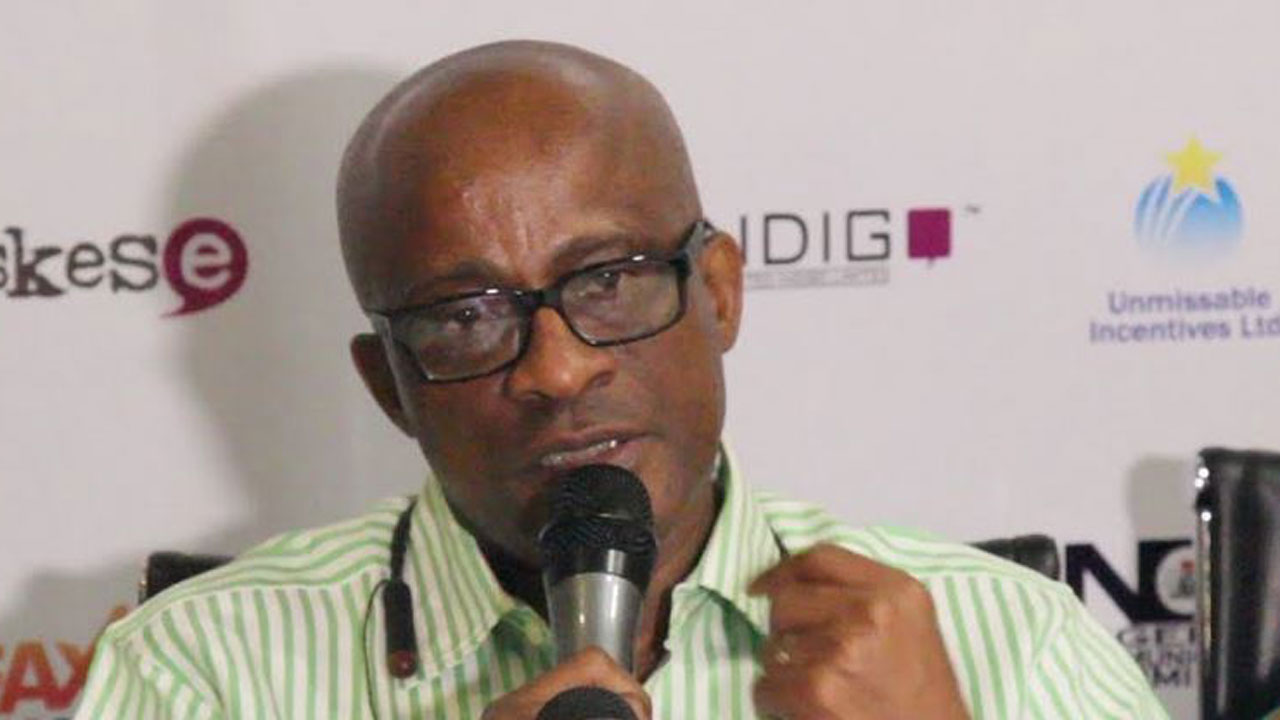
Tandoh said that Nigeria’s recent fiscal policy, which gives councils direct funding from FAAC, has given them the best opportunity to support grassroots sports development if the state sports commissions are well engaged.
The onus, he added, is on the sports administrators to get the councils fully involved. He emphasised that Lagos State is one of the few states that have local councils involved in sports development.
He said: “When the state transformed from the Ministry of Sports to Lagos State Sports Commission in 2016, the law establishing the Sports Commission stated clearly that Local Council Sports Committees must be set up for each council with two representatives of the council, one person from the private sector in that local government and then a sports officer from the sports commission as Secretary.
“This is what we started operating when I was the chairman of the Lagos State Sports Commission, and we were able to get the LGs fully involved in all our grassroots activities to the extent that many of our grassroots programmes were sponsored by the LG concerned. I believe this is still the case in Lagos State.
“I have always advocated that grassroots sports development can only succeed in effectiveness and impact when all three tiers of government are fully involved and working together. When I was a consultant on sports to the Edo State Government, I helped midwife the establishment of the Edo State Sports Commission, and we also put the setting up of LG sports committees in the Edo State Sports Commission Law. I was able to do the same for Kwara State when I helped set up the Kwara State Sports Commission.
“I believe this is the template that every state sports commission should take up and implement so that we can harness the synergy required between the three tiers of government for effective and sustainable grassroots sports development.”
A former councillor in the Zangon Kataf Local Council of Kaduna State, Stephen Bityong, said that local councils are handicapped by several factors, including poor funding and insecurity, which have made it “extremely difficult to gather youths together for sports.”
He said before now, local councils played prominent roles in producing stars and nurturing them to the limelight, “but the country has changed so much. We now live in a tense situation, where you must consider the security of lives and property before thinking of gathering people together.
“Unlike in the past, when local governments could independently organise events suitable to their environment and culture, everything now revolves around state governments.
“You cannot take people’s children to a sporting event and come back to tell them that you could not return the children safely because they have been kidnapped.
“Again, the autonomy granted to local governments is effectively only on paper. The state governments still control these local governments and dispense funds to them as they see fit. But despite these challenges, some local governments still use sports as a social tool to rehabilitate victims of the insecurity that has permeated society.
A former Abia State director of Sports, Isaac Ogbonnaya Isaac, said that the problem with sports development at the council level has nothing to do with poor finances. Rather, he blames misplacement of priorities and apathy for the underdevelopment of the sporting sector at the local council level.
He said: “Almost all the chairmen or mayors in the local government areas do not see sports as a sector that can create jobs and help youths eke a living; rather, they see sports as leisure. But they forget that when you engage youths in sports and sporting activities, you have succeeded in taking them out of crime and criminality. Local government administrators believe that engaging in sporting activities will not allow them to amass wealth. They would rather spend money on frivolities.”
On ways to rejuvenate the local councils for sports development, Isaac said: “There should be laws that ensure that the councils dedicate 10 per cent of their budgets to sports development. Moreover, companies and organisations should be compelled to remit five per cent of their profits to sporting activities. There should be sports endowment funds in all the local councils of the federation. In the past, every effort made in this regard did not see the light of day due mainly to a nonchalant attitude and the apathy demonstrated by council administrators. They don’t understand the importance and unifying factor of sports in human endeavours.”
Apart from advocating for a law that mandates a certain percentage of councils’ budgets be dedicated to sports and sporting activities, Isaac also suggests that sports should be placed on the exclusive list to ensure proper and adequate grassroots development.

