 Follow Us on Google News


 Follow Us on Google Discover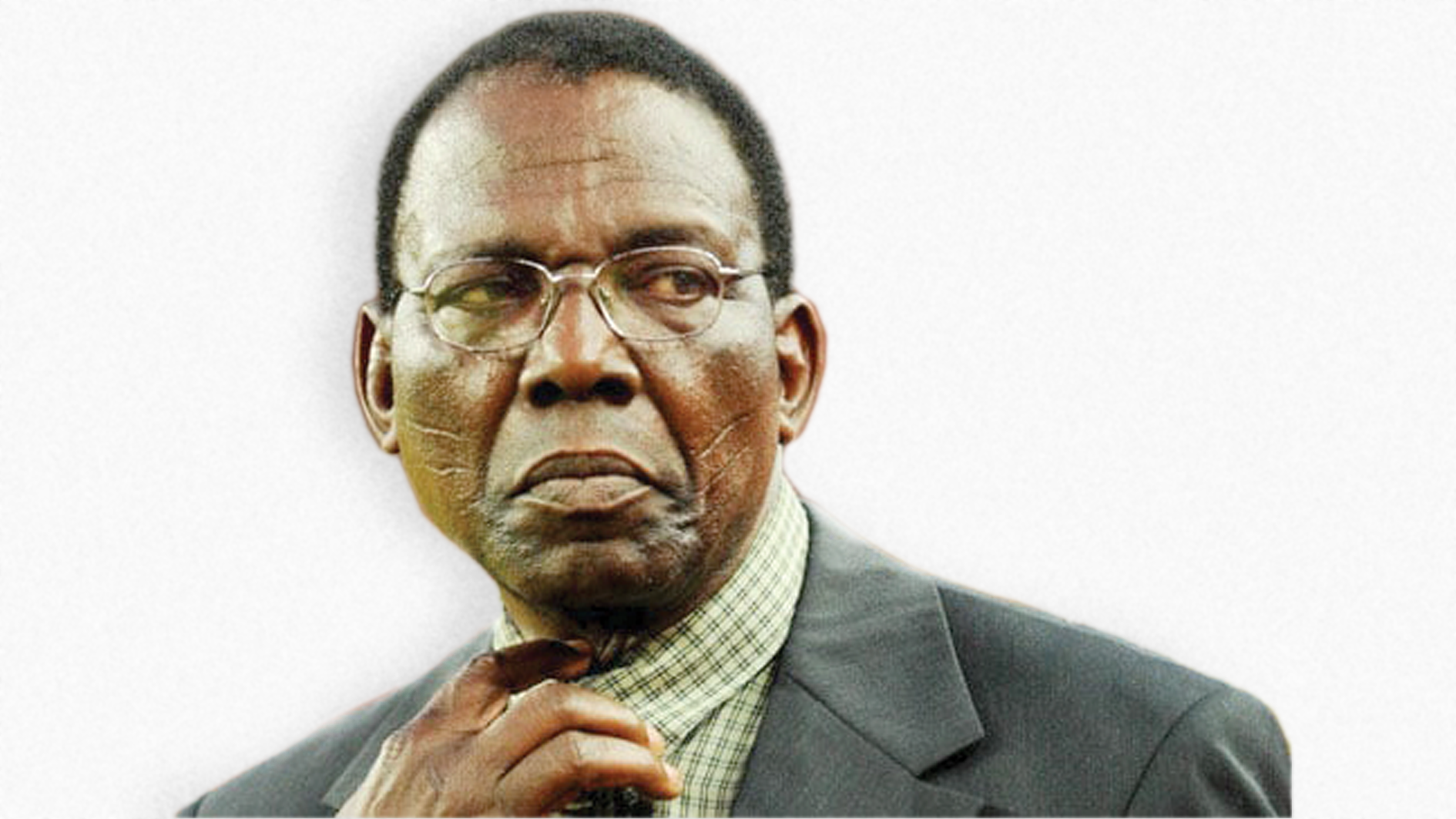
A flurry of tributes has continued to trail last Monday’s demise of veteran football tactician, Adegboye Onigbinde, who passed on at the Obafemi Awolowo University Teaching Hospitals Complex, Ile-Ife, just a short distance from his ancestral home in Modakeke, Osun State.
The death of the former national team handler was announced by his family on Monday through a WhatsApp message signed by a family member, Bolade Adesuyi.
The family added that details of the funeral arrangements would be announced at a later date.
The 2002 World Cup coach celebrated his 88th birthday on March 5 before his passing.
His death came amid a sombre period for Nigerian sport, following closely on the heels of the passing of Chamberlain Nnamdi Dunkwu, as well as two respected sports journalists, Niyi Oyeleke and Tonex Chukwu.
For Onigbinde, football was not merely a profession, but a defining passion of his adult life.

For several decades, Onigbinde played his role as a coach, administrator and mentor within Nigeria and beyond, leaving an enduring imprint on the country’s football milieu.
Not much is known of Onigbinde as a footballer, but he was an all-rounder in the coaching business.
After obtaining his Grade Two Teachers’ Course at St. Luke’s College, Ibadan, in 1961 Onigbinde began his coaching in the then Western Region, travelling from school to school and from town to town to impart football knowledge to young players.
The late coach recently traced the turning point of his career to a chance encounter in the early 1960s with Nigeria’s legendary footballer, Teslim Balogun.
Onigbinde regarded Balogun, popularly known as “Thunder”as the greatest footballer Nigeria had ever produced.
According to him, it was Balogun who set him on the path to coaching.
At that time, Balogun, who was working alongside the national team coach Moshe-Jerry Beit haLevi, organised a Grade B coaching course under the Western Regional Council of the Nigeria Football Association.
The course took place at the Liberty Stadium, now Obafemi Awolowo Stadium from June 26 to July 16, 1961.
Among those trained were several individuals who would later shape Nigerian football, including Onigbinde, Niyi Akande, Ayo Adeniji and Godwin Etemike.
Onigbinde continued his professional development years later when he participated in another coaching programme organised by Balogun in March 1969. Among the participants in that course was Yinka Okeowo, who would later serve as secretary of the Nigeria Football Association.
With those formative experiences, Onigbinde found his lifelong vocation.
His early club career included managing the now-defunct Water Corporation FC of Ibadan before he rose to prominence with Shooting Stars Sports Club, one of Nigeria’s most historic clubs.
Under his guidance, the Ibadan-based IICC Shooting Stars reached the final of the 1984 African Cup of Champions Clubs, a major milestone in the club’s continental journey.
Onigbinde also led the national team, then known as the Green Eagles, to the final of the 1984 Africa Cup of Nations, where Nigeria finished runners-up.
His career later extended beyond Nigeria’s borders. In the early 2000s, he worked as a technical instructor and youth coach with the Trinidad and Tobago Football Association, helping to develop the country’s U-17 programme.
Onigbinde left that position in late 2001 after assembling a promising youth squad that competed against local professional teams.
Shortly afterwards, he returned to Nigeria to take charge of the Super Eagles and led Nigeria to the 2002 FIFA World Cup, becoming the first indigenous coach to guide the country to the global tournament.
Beyond trophies and statistics, colleagues and players remember Onigbinde as a disciplinarian, a thinker and a committed teacher of the game.
In its reaction to Onigbinde’s death, the Nigeria Football Federation (NFF) described his passing as “the exit of a great man who served Nigeria football wholeheartedly and was diligent and devoted to the development of the game.”
The NFF General Secretary, Dr Mohammed Sanusi, said the Modakeke high chief was “an extraordinary achiever who impacted positively, not only on Nigeria football, but on the African and the global game at large.”
He added: “Indeed, a big tree has fallen. Chief Onigbinde ate, drank, breathed, slept and lived football development. We will miss him greatly, as he was never tired of giving advice on the game’s development even at his ripe old age. We pray that God will grant him eternal rest, and also grant his family, relations, friends and the Nigeria football fraternity the fortitude to bear the big loss.”
Speaking with The Guardian, the proprietor of Cable Football Academy, Coach Edwin Onovwotafe, a product of the National Institute of Sports (NIS), Lagos, said: “We have lost yet another guru in football.
“I met Onigbinde on a few occasions, and I must say he impacted a lot within the industry.”
He recalled one of their encounters when Onigbinde returned from the FIFA World Cup in 2002.
“Onigbinde led a club from the South West to the newly constructed Oghara Stadium for a league match then, and his mere presence attracted fans from neighbouring towns like Mosogar, Jesse, Ologbo, Sapele and even Warri to Oghara. Then, I was already in the coaching business, and I drew a lot of inspirations from Onigbinde’s calmness and composure on the bench,” Onovwotafe said.
Also speaking on Onigbinde’s demise, the chairman of Oyo SWAN, Ayomiku Ajibola, said that the late coach made immense contributions to the development of football in Nigeria and across Africa through his decades of service to the game.
According to him, Onigbinde’s dedication, technical expertise and passion for football left an enduring legacy that would continue to inspire generations of players, coaches and sports administrators.

