 Follow Us on Google News


 Follow Us on Google Discover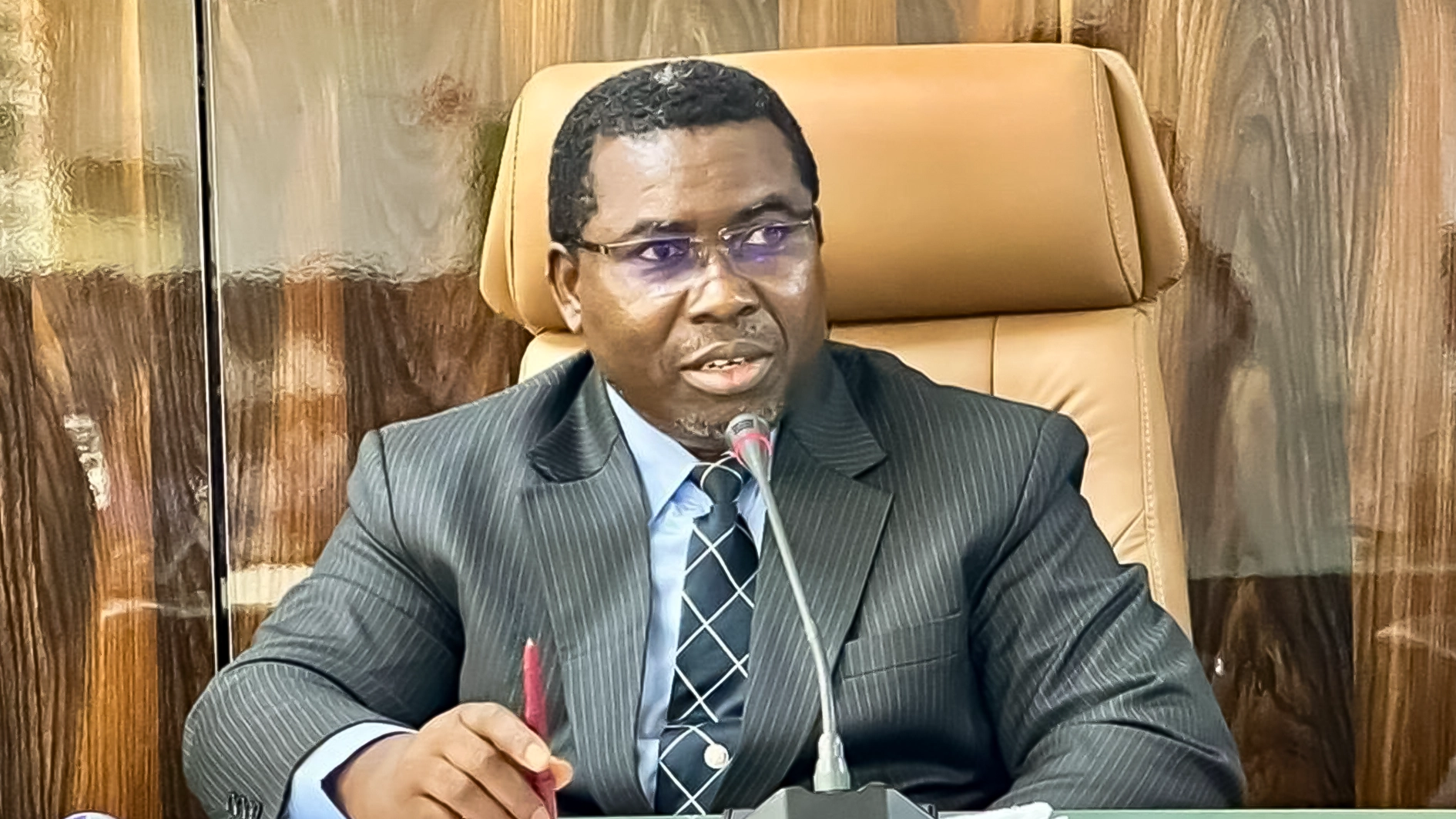
For an electoral commission that has spent years battling public distrust, allegations of result manipulation and questions over its handling of election technology, the August 15 Osun governorship election offered INEC Chairman, Prof. Joash Amupitan, an important test.
The election was by no means perfect. Reports of vote-buying, pockets of violence, technical problems with the Bimodal Voter Accreditation System (BVAS) and low voter turnout exposed weaknesses that the commission must address before the 2027 general elections.
But beyond those shortcomings, the poll also produced something important: an election result that independent observers were able to test against their own data and largely validate.
Yiaga Africa, which deployed 300 observers across the state, said the results announced by the Independent National Electoral Commission were consistent with its statistical estimates.
Its projection put the Accord Party between 50.3 and 54 per cent, the APC between 43 and 46.8 per cent, and the African Democratic Congress between 1.4 and 2.1 per cent.
INEC eventually announced 51.9 per cent for Accord, 45.2 per cent for APC and 1.7 per cent for ADC.

For Amupitan, who assumed office as INEC chairman in November 2025, that may be one of the most important takeaways from the election.
The chairman had entered Osun under considerable scrutiny. His leadership had already attracted criticism from political actors and civil society groups, while the commission was under pressure to demonstrate that lessons from previous elections had been learnt.
In the weeks before the poll, Amupitan personally engaged stakeholders in Osogbo, including political parties, security agencies and civil society organisations, as the commission sought to address concerns around the election.
He also extended the period for collection of Permanent Voter Cards in Osun after disclosing that 1,906,390 PVCs had been collected ahead of the election.
More importantly, the commission appeared to have paid attention to election-day logistics.
Yiaga Africa said accreditation and voting had commenced in 41 per cent of its sampled polling units by 8:30 a.m. and risen to 96 per cent by 9:30 a.m. It also reported that BVAS functioned properly in 80 per cent of the polling units it observed, although malfunctions occurred in the remaining 20 per cent.
The organisation’s assessment was significant.
Asmau Maikudi, chairperson of Yiaga Africa’s Osun Election Observation Mission, said INEC and the security agencies had “largely passed the test”, while noting that the election showed that the commission could improve its standards.
The Centre for Democracy and Development (CDD-West Africa) also described the election as largely peaceful, although it raised concerns over BVAS failures, vote-buying and isolated incidents of violence.
That balance is important. The organisations did not give INEC a blank cheque. Rather, their assessments suggested that the commission got several fundamental aspects of the election right while still having work to do.
The CLEEN Foundation similarly said the conduct of security personnel during the election provided useful lessons for the 2027 elections, although it identified unresolved concerns around BVAS performance, ballot-box security and electoral reforms.
The Kimpact Development Initiative (KDI), another election-monitoring organisation, recorded 15.3 per cent BVAS failure in its preliminary assessment, as well as three violent incidents and 19 cases of vote-trading.
Its findings therefore offered another reminder that improvements in election administration did not eliminate the problems surrounding voter choice and election technology.
Yet perhaps the clearest evidence of the commission’s performance came from the ability of independent observers to independently verify the result.
Yiaga Africa’s statistical estimates fell within the range of the figures eventually declared by INEC. That meant the announced results were broadly consistent with what its observers expected from the polling units they monitored.
An independent review by EveryVotes, an election-observation initiative of Legis360 and PAACA, reached a similar conclusion.
It independently collated Form EC 8A result sheets published on INEC’s IReV portal for 3,749 of Osun’s 3,763 polling units. Its tally reproduced the same winner and runner-up as INEC and produced a virtually identical margin.
That matters because one of the biggest problems surrounding Nigerian elections has not always been simply who won at the polling unit. It has been whether citizens can follow the figures from the polling unit to the final declaration.
In Osun, independent observers were able to do that.
The result still showed important gaps.
EveryVotes found duplicate uploads of the same result sheet in six polling units and discrepancies between accredited-voter figures on physical result sheets and INEC’s official accredited total.
It also found disability provisions absent in roughly one-quarter of observed polling units. Vote-buying remained a major concern, with observers recording voter inducement or interference by party agents in about two out of every five observed units.
SERAP subsequently called on INEC, EFCC and ICPC to investigate reported cases of vote-buying, violence and other electoral offences arising from the election.
The problems therefore provide Amupitan with a clear agenda before 2027.
The achievement in Osun is not that INEC conducted a flawless election. It did not.
The more defensible argument is that the commission demonstrated that an election can be administered in a way that makes the final result independently testable.
The credibility of an election cannot depend on the goodwill of the losing candidate or the confidence of the electoral commission in its own figures.
It must also be possible for observers, journalists, political parties and citizens to examine the evidence and reach broadly the same conclusion.
On that score, Osun gave Amupitan something positive to build on.
The chairman now faces the harder task of ensuring that the gains seen in Osun become institutional practice rather than the success of one election.
As the country heads towards 2027, the challenge will be to eliminate the remaining gaps in BVAS performance, strengthen result transmission, tackle vote-buying and ensure that every eligible voter including persons with disabilities can participate.
Osun may therefore not be the election that proves INEC has solved Nigeria’s electoral problems. But it could be the election that shows Amupitan’s commission has begun to move in the right direction.

