 Follow Us on Google News


 Follow Us on Google Discover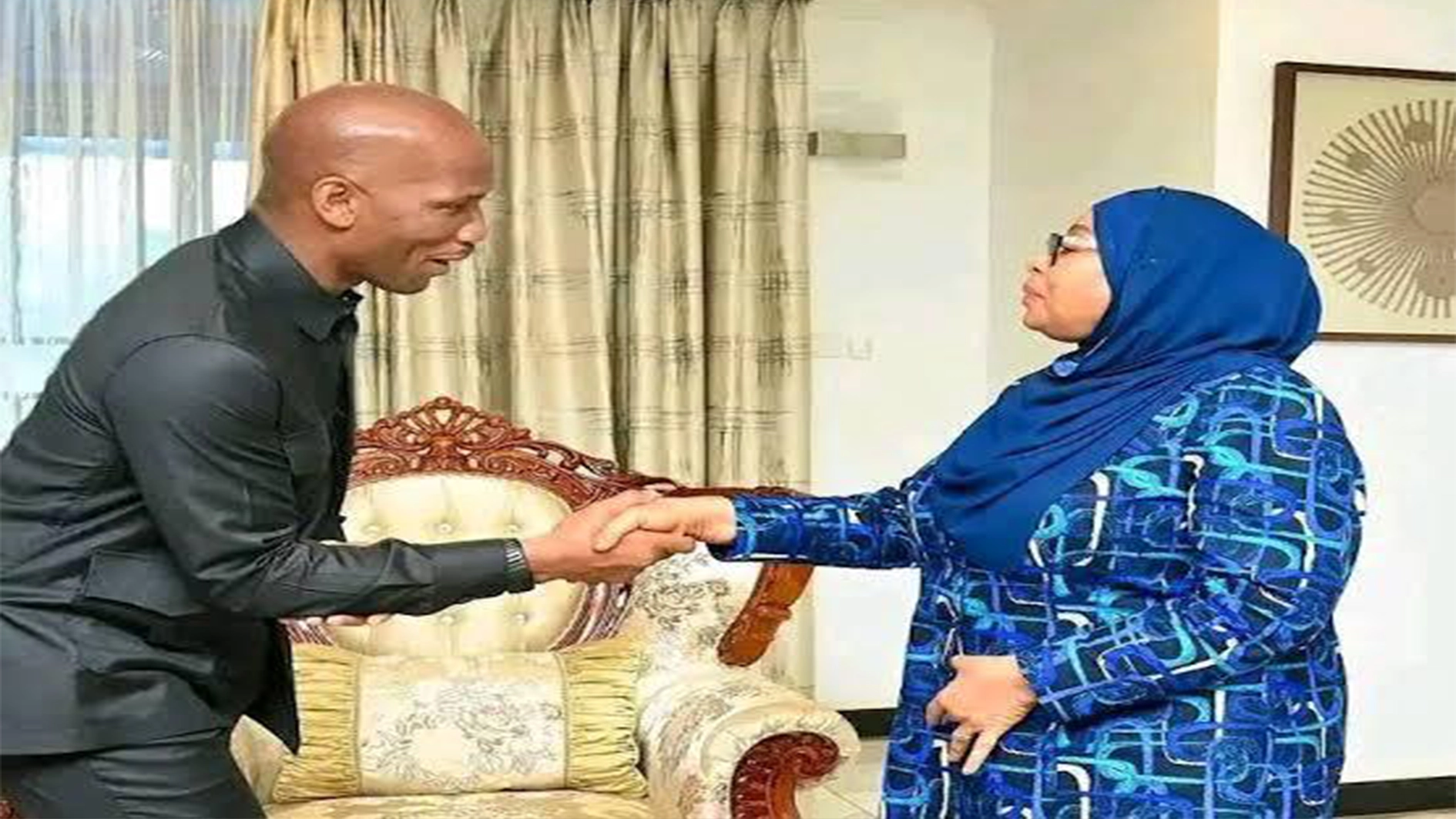
Football is usually a highly patriotic game. So it doubtless raised some eyebrows when Tanzania’s President Samia Suluhu Hassan chose Didier Drogba, an Ivorian, to be her country’s ambassador for the AFCON 2027 tournament.
Arguably a global football icon and a continent-wide tournament make a winning combination. But for those who know Drogba’s story, the symbolism runs considerably deeper.
In 2005, Ivory Coast stood on the brink of renewed civil war and years of conflict had left the country shattered. Against this tense backdrop, Drogba and his teammates made history by securing qualification for the 2006 World Cup. A camera rushed into the changing rooms where Drogba addressed a nation watching at home.
“From the north, south, centre, and west, we proved today that all Ivorians can coexist and play together with a shared aim” the captain declared before he and his teammates sank to their knees. He urged his country to lay down its weapon and hold elections.
Of course, this did not single-handedly end a civil war. Life is not a Hollywood movie. But the words had weight. Both sides came back to the negotiating table and a ceasefire followed. Football had given their country a reason to hope.
That impetus to rise above our differences and focus on shared humanity is why Tanzania’s choice of ambassador is so fitting, and so deliberate. AFCON 2027 is more than a tournament. For Tanzania, it may prove to be exactly what it the country needs.

The people of Tanzania have endured their own challenges lately. The violence surrounding the October 2025 elections left 518 people dead and strained relationships between the government and its people. The Commission of Inquiry, set up by President Samia, gathered 63,000 testimonials, and its findings were sobering. It revealed how disaffected young people had been recruited and exploited by disaffected groups. Youths were housed in specialised training camps and offered payment of up to 50,000 Tanzanian shillings to attack police stations and voting booths across the country.
While these attacks tapped into young people’s sense of frustration and alienation, football offers an alternative architecture of teamwork, aspiration and belonging. Sport has long been recognised for its role in supporting young people at risk of radicalisation. After special talks with President Samia at the State House, Drogba himself said that “The sports sector is an important resource for social development. It has the potential to support young people and strengthen society.” He hopes to play a pivotal role in developing football academies and youth development programmes across the country.
In this respect, Tanzania hosting of AFCON is much more than a sporting event. After receiving the Commission’s report, President Samia spoke of a “journey of healing the wounds of the nation.” She stressed that more than 126 tribes stand together as one people. Hosting AFCON at exactly this moment offers Tanzania something that policy alone cannot provide: a shared national project, a reason for collective pride, and a stage on which the country can present itself to the world on its own terms.
The tournament is also helpful for Tanzania’s relationships with other African nations, which were shaken by the violence in October and a perceived crackdown by security forces. Co-hosting AFCON alongside Kenya and Uganda offers Tanzania a platform to project regional unity and collaboration. The spirit of collaboration was underlined by Kenyan President William Ruto’s recent visit to Tanzania, where he said, “Our destiny is tied together, our future is one”. Notably, he commended President Samia for her role in establishing the Commission of Inquiry and welcomed its report as an important step towards accountability and reconciliation.
President Ruto also highlighted strengthening bilateral relations. In 2025, bilateral trade between Tanzania and Kenya had already reached a staggering $860.3 million in 2025, accounting for 40% of all intra-East African Community commerce.
Tanzania continues to be a regional unifier. A $2.5 billion standard gauge railway linking Dar es Salaam to Kigali is advancing. The endeavour aims to lower transport costs, streamline logistics, and create new business opportunities. The joint hosting of AFCON 2027 further projects this image of an increasingly cooperative East Africa.
Didier Drogba once gave a divided nation a reason to hope. Inviting him into this project signals Tanzania’s understanding of the difference between the politics of reconciliation and its practice. Tanzania is willing to pursue both. The wounds of October 2025 will not be healed by a football tournament. But a country that can come together around a shared moment of joy, pride and possibility is a country that is already beginning to heal.
Football is a universal language, and Tanzania is learning to speak it fluently.

