 Follow Us on Google News
 Follow Us on Google Discover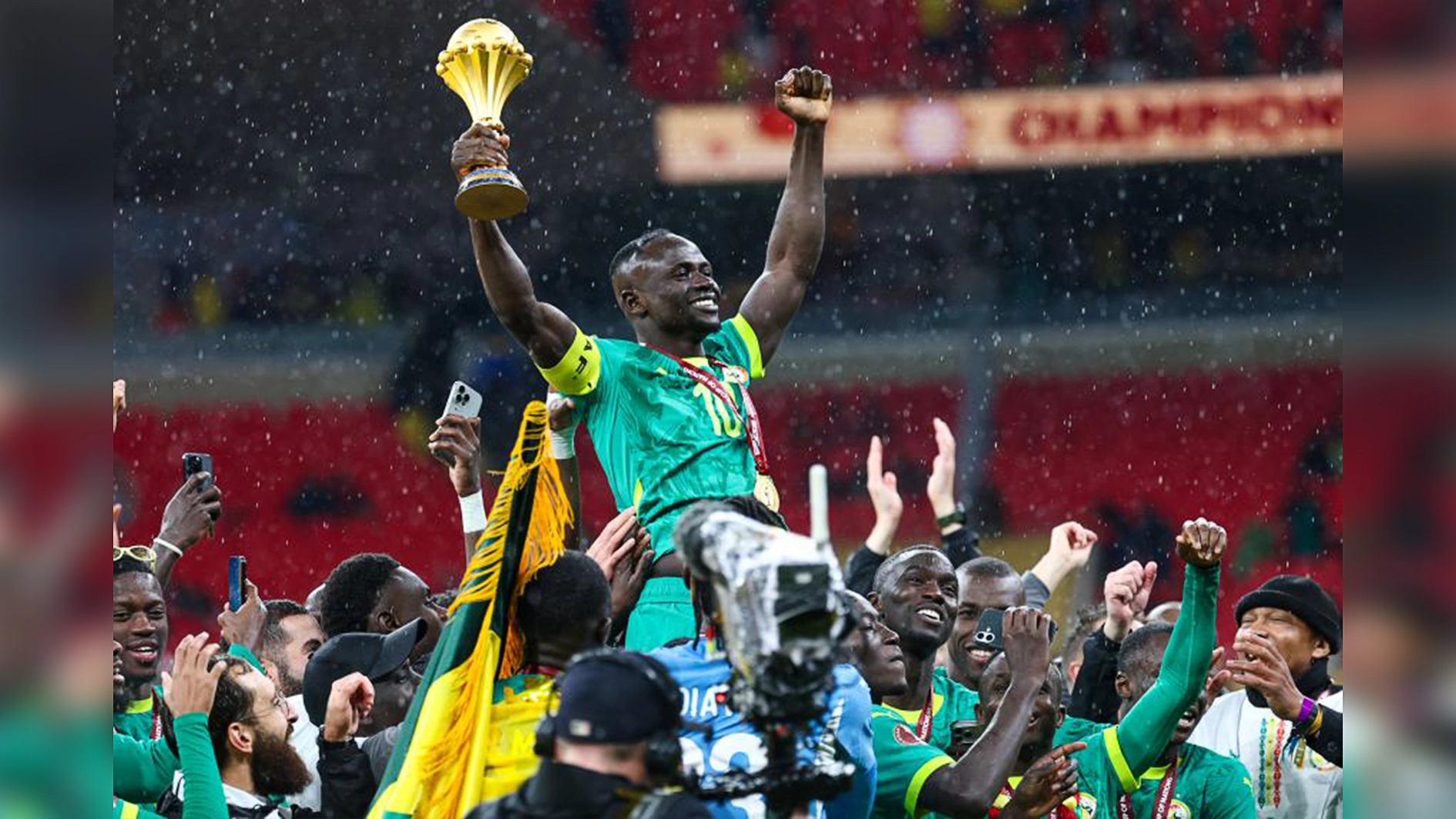
The Senegalese government has called for an “independent international investigation” into “suspected corruption” at African football’s governing body after it stripped Senegal of the 2025 Africa Cup of Nations title and awarded it to Morocco.
Senegal beat Morocco 1-0 in January’s final but the Confederation of African Football (Caf) overturned the result on Tuesday because Senegal’s players walked off the pitch in protest when hosts Morocco were awarded a stoppage-time penalty.
The players returned after a 17-minute delay, and Brahim Diaz’s ‘Panenka’ penalty for Morocco was saved before Senegal’s Pape Gueye scored an extra-time winner.
Following an appeal by the Moroccan FA (FRMF), Caf ruled that Senegal had forfeited the match, with the “result being recorded as 3-0 in favour” of Morocco.
In a statement, the Senegalese government said the “unprecedented and exceptionally serious decision” was based on “a manifestly erroneous interpretation of the regulations, leading to a grossly illegal and deeply unjust decision”.
It said: “Senegal unequivocally rejects this unjustified attempt at dispossession.”

BBC Sport has contacted Caf for comment.
Fight is far from over -Senegal FA chief
Earlier on Wednesday, the Senegalese Football Federation (FSF) said it would appeal against Caf’s decision at the Court of Arbitration for Sport (Cas), calling it “an unfair, unprecedented and unacceptable decision which brings discredit to African football”.”This decision is a breach of trust that is not based on any rule of law,” FSF secretary general Abdoulaye Seydou Sow told Senegalese TV channel RTS 1.
“We felt that the jury wasn’t there to uphold the law, but to carry out an order.”We will stop at nothing. The law is on our side. The fight is far from over. Senegal will defend its rights to the very end.
“Some Senegal players have suggested they will not relinquish their winners’ medals.”We know what we experienced that evening in Rabat. And no-one can take that away from us,” Senegal and Everton midfielder Idrissa Gueye said on social media.
The walk-off by Senegal prompted the International Football Association Board (Ifab), football’s lawmaking body, to open a consultation on how to deal with situations when “players unilaterally decide to leave the field of play, or team officials instigate such action, as a means of protest against a referee’s decision”.S
Senegal’s players, apart from Sadio Mane, left the pitch after the award of a penalty for Morocco by referee Jean Jacques Ndala shortly after he had disallowed a goal by Ismaila Sarr at the other end.Ndala gave the penalty in the 98th minute after being advised by the video assistant referee (VAR) to consult the pitchside monitor and review defender El Hadji Malick Diouf’s challenge on Diaz.
Infantino Condemns Walk-Off as CAF Decision on Morocco–Senegal Final Sparks Debate
FIFA President Gianni Infantino has condemned the controversial scenes that marred the recent final between Senegal and Morocco, describing the walk-off as “unacceptable” and warning that such incidents “must be condemned and never repeated.”
The fallout from the match has continued to generate widespread debate, particularly following the decision by Confederation of African Football (CAF) to award the title to Morocco.
The tournament itself was overshadowed by criticism of refereeing decisions and the use of VAR, with some observers alleging bias in favour of Morocco. Senegal had earlier raised “serious concerns” over their treatment and security arrangements upon arrival in Rabat for the final.
CAF ruling sparks controversy
In its ruling, CAF upheld Morocco’s victory and partially accepted an appeal related to misconduct involving ball boys during the final. The governing body also reduced fines initially imposed on the Moroccan Football Association.
The match, played in torrential rain, saw Senegal goalkeeper Edouard Mendy repeatedly disrupted by ball boys who interfered with his equipment, including attempts to remove his towel.
In a separate incident, Senegal’s reserve goalkeeper, Yehvann Diouf, was reportedly tackled and dragged by ball boys after attempting to intervene.
‘Game should be won on the pitch’
The decision has drawn criticism from former CAF Head of Disciplinary, Raymond Hack, who questioned the integrity of the ruling and warned of a growing perception of political interference within African football governance.
“The game should be won on the field of play, not in a boardroom,” Hack said, arguing that only the referee has the authority to abandon a match.
He noted that allowing post-match rulings to determine outcomes could set a dangerous precedent, where teams routinely challenge results through appeals or legal action.
Hack also suggested that Morocco’s players should have formally declared they were playing under protest if they intended to contest the outcome, adding that Senegal’s appeal to the Court of Arbitration for Sport could take up to six months to resolve.
Mixed reactions across Africa
Reaction to CAF’s decision has been sharply divided. Moroccan journalist Jalal Bounar said the ruling was met with “great excitement and joy” across Morocco, with many believing justice had been served.
However, Algerian journalist Maher Mezahi said the broader reaction across Africa has been one of outrage.
“It feels like CAF has once again embarrassed the sport,” Mezahi said, pointing to past controversial rulings that were later overturned by CAS.
He cited the governing body’s history of contentious decisions, warning that repeated reversals undermine confidence in its disciplinary processes.
History of football walk-offs
While the sanction imposed on Senegal for walking off is seen as unprecedented, similar incidents have occurred in global football history:
-
1920 Olympics Final: Czechoslovakia walked off against Belgium in protest at refereeing decisions and were disqualified.
-
Manchester United vs Lille (2007): Lille players briefly walked off after a controversial goal but later returned.
-
AC Milan vs Pro Patria (2013): Players left the pitch following racist abuse directed at Kevin-Prince Boateng.
-
Paris Saint-Germain vs Istanbul Basaksehir (2020): Both teams walked off after allegations of racist language by an official, with the match replayed.
-
Fenerbahce vs Galatasaray (2024): Fenerbahce walked off in protest over scheduling disputes.
-
Colombe Sportive du Sud vs Panthère du Ndé (2026): The Cameroonian Super Cup was abandoned after a disputed penalty and red card, with the outcome still pending.

