 Follow Us on Google News


 Follow Us on Google Discover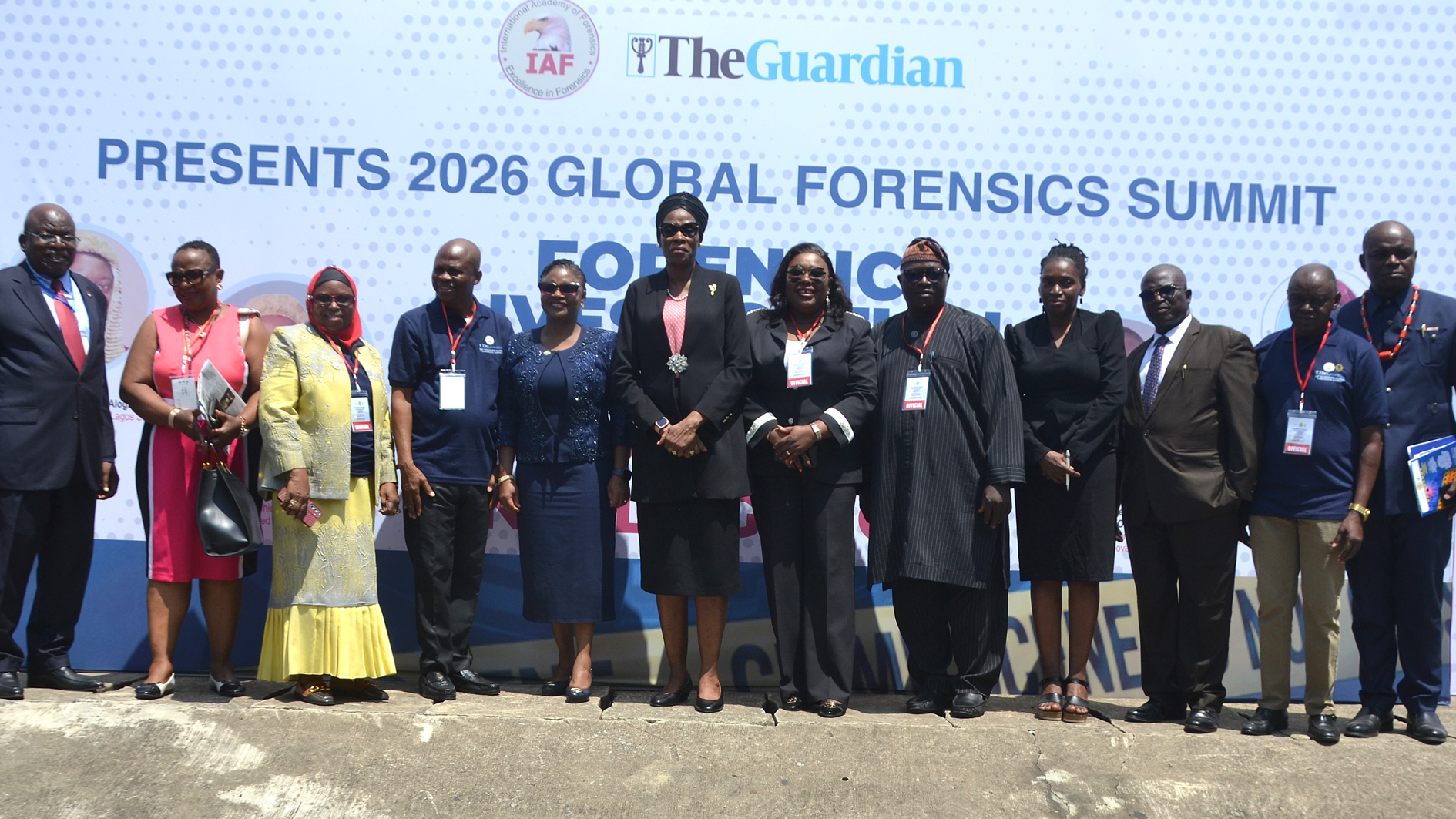
As criminal networks increasingly exploit digital frontiers, stakeholders in forensic science, law enforcement, security, academia, and public administration have converged on the University of Lagos for the 2026 Global Forensic Summit.
The gathering aims to bridge the “forensic gap”, the stark divide between what investigators discover at a crime scene and the scientific proof required to secure convictions in a court of law.
The global summit, which was organised by the International Academy of Forensics in partnership with The Guardian Newspapers, Nigeria, features an expansive corporate exhibition showcasing cutting-edge diagnostic tools and forensic software alongside high-level technical sessions.
The summit, themed “Forensic Investigation and Criminal Intelligence: Strengthening the Administration of Justice in the Age of Technological Advancement,” arrives at a pivotal moment.
Evolving tactics in cybercrime, financial fraud, digital deception, identity theft, and transnational organised crime continue to challenge conventional law enforcement methods.
However, organisers emphasised that the same technological advancements would also provide powerful tools for justice, including artificial intelligence, data analytics, and biometric identification.

The Governor of Lagos State, Babajide Sanwo-Olu, represented by the Permanent Secretary of the Citizens Mediation Bureau, Mrs Aderinsola Olanrewaju, highlighted the modern operational hurdles facing Nigeria’s commercial capital.
He added that 21st-century crime scenes were no longer strictly physical, saying they were frequently found inside servers, mobile devices, or financial transactions logged in digital ledger systems.
He noted that whenever a chain of custody failed, or digital evidence was inadmissible due to improper retrieval, “it is not only a case that is lost; it is the confidence of citizens in our institutions that is eroded.”
He said Lagos recently established a fully operational Cyber Security Operations Centre to monitor and respond to digital threats targeting state infrastructure in real time. These technological upgrades complement legislative reforms.
He stated that the ultimate ambition of the state was to foster “a justice system where evidence speaks clearly, courts decide swiftly, and citizens, whether they come as victims seeking redress or as suspects, are entitled to a fair hearing and can trust the process to be honest.”
Aligning with the call for robust institutional reform, and representing the Chief Judge of Lagos State, Justice Kazeem Olanrewaju Alogba, Justice Olutoyin Atinuke Ipaye underscored that true nation-building relies heavily on an impartial justice system.
According to her, physical infrastructure like roads, bridges, and industries stimulates economic growth, and sustainable national development cannot exist without a judiciary that commands public confidence and upholds the Constitution as the nation’s grundnorm.
Justice Ipaye said that a country’s endurance relies on its moral and legal foundation.
Providing the broader institutional framework for these reforms, Professor Dele Olowokudejo welcomed local and international delegates, framing the summit as a vital defence mechanism for modern public institutions.
Prof. Olowokudejo noted that no single agency or nation could handle the transnational threats in isolation.

