 Follow Us on Google News


 Follow Us on Google Discover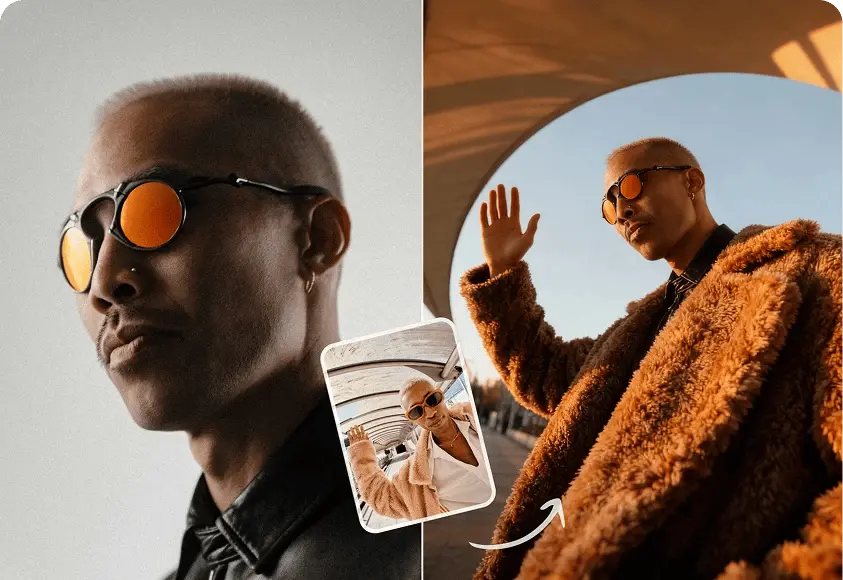
Photography has a deep-rooted history in Nigeria. From the iconic studio portraits of the 1970s involving intricate heavy poses and backdrops, to the vibrant snapshots of family Owambe parties in the 90s, our history is documented in albums stored in cupboards across the country.
However, Nigeria’s humid climate is not kind to physical prints. Photographs fade, stick together, or suffer from water damage and mould. For a long time, once a photo was damaged, the memory was considered partially lost. But we are currently standing at the intersection of heritage and technology. Artificial Intelligence (AI) is offering a new way to reclaim these memories, turning the task of photo restoration from a specialist skill into an accessible, one-click reality for every Nigerian family.
The Science of Digital Restoration
How does a computer “know” what a damaged face looked like? This is the most common question regarding AI restoration.
Unlike simple editing software that just adjusts brightness or contrast, AI photo restoration tools use “Deep Learning.” These algorithms have been trained on millions of high-definition images of human faces.
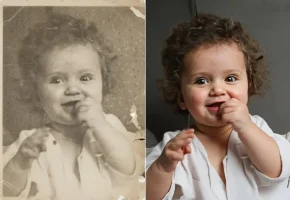
When you upload a blurry or scratched photo of a grandparent, the AI detects the facial landmarks—the eyes, the nose, the jawline. If details are missing due to a scratch or blur, the AI predicts the most likely structure of the face based on its training data. It effectively “hallucinates” the missing pixels with high accuracy, sharpening the image and removing the noise caused by age.
Colourising the Past

Perhaps the most emotional application of this technology is colourisation. Many of Nigeria’s historical moments—from Independence Day celebrations to early family portraits—are in black and white.
Modern AI can analyse the grayscale values and infer colour. It knows that trees are green, the sky is blue, and it can estimate skin tones with increasing accuracy. Seeing a black-and-white photo of a Lagos street from 1960 suddenly burst into colour creates a visceral connection to the past, making history feel immediate and relatable.
The “Clean Aesthetic” on Social Media
Moving from the past to the present, AI is also shaping how Nigerians present themselves online today. The visual standard for social media platforms like LinkedIn, Instagram, and Twitter has risen dramatically. A grainy, poorly lit selfie is no longer sufficient for professional branding.

We are seeing a surge in the use of AI for “Personal Branding.” This involves:
- Upscaling: Taking a lower-quality phone image and increasing its resolution for print or high-res display.
- Retouching: Subtly smoothing skin or fixing lighting imbalances without the “fake” look of early beauty filters.
- Background Control: Using background removal AI to swap a messy room for a clean, professional studio backdrop suitable for a CV or corporate profile.
Bridging the Skill Gap
The most significant impact of these tools is the democratisation of creativity. Ten years ago, “Photoshopping” something was a verb that implied hiring a graphic designer. Today, “prompting” or using an AI slider is a skill available to anyone with a smartphone.
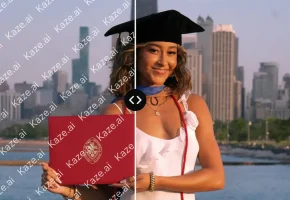
This is particularly relevant for the Nigerian youth. As the digital economy grows, the ability to create high-quality visual assets is becoming a basic literacy. AI tools are lowering the barrier to entry, allowing students, creatives, and storytellers to produce work that competes on a global stage without needing years of technical training.
Conclusion
Technology is often viewed as something that pushes us toward the future, away from the past. However, in the case of AI image processing, it acts as a bridge. It helps us preserve our history by restoring our old photos, and it helps us build our future by giving us the tools to present our best selves online. Whether it is saving a grandmother’s portrait or launching a digital career, AI is empowering Nigerians to take control of their visual narrative.

