 Follow Us on Google News
 Follow Us on Google Discover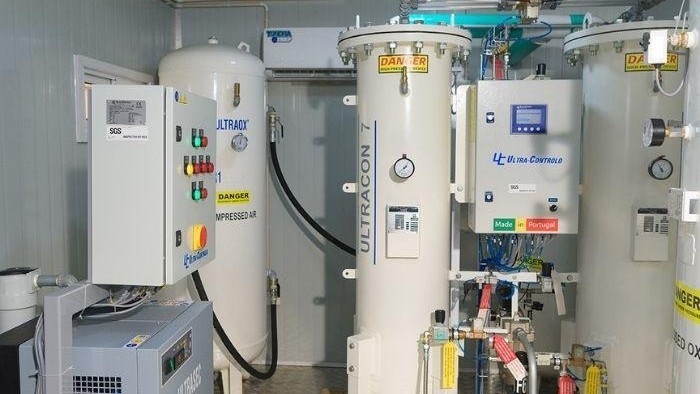
IHS Towers is a leading telecoms firm with a niche in the infrastructure provision segment, precisely, towers and route fibre. In the last few years, the firm has impacted the society with various forms of corporate social responsibilities, across all sectors.
In Nigeria, IHS Towers has moved beyond traditional philanthropy to a “shared value” model, where CSR is treated as an extension of national infrastructure development. By 2025, the company had invested over ₦11 billion in critical infrastructure, pivoting from small-scale donations to massive, multi-sector projects that align with the UN Sustainable Development Goals (SDGs).IHS Nigeria through its empowerment programme in Nigeria has impacted several communities, schools, hospitals, organisations, including individuals that got empowered with ICT skills, sponsored within and outside of Nigeria.
Donation of oxygen plant to hospitals
IHS’ footprints have been very visible, even in hospitals. For instance, in partnership with United Nations Children Fund (UNICEF), it donated nine oxygen plants across Nigerian hospitals. Some members of staff from some of the hospitals that benefited from the oxygen plant donation, such as Olabisi Onabanjo University Teaching Hospital (OOUTH) in Shagamu and Paleon Memorial Hospital in Lagos, revealed the impact of this initiative to the hospital community.
Chief Medical Director at OOUTH, Dr Oluwabunmi Fatungase, told journalists that the oxygen plant in OOUTH was established by IHS three years ago, in collaboration with UNICEF.
“Before now, the hospital had to get oxygen from vendors in Lagos and in Ibadan, and the process was hectic and expensive. On a few occasions we bought oxygen cylinders that we didn’t even know whether they were full cylinders or half cylinders that leaked on the way. The demand for oxygen is on the high side but the supply was limited before IHS came to our rescue. At least more than two-third (80 per cent) of the total number of patients that entered into the hospital needed oxygen, because we have a four-bedded intensive care unit, including unit wards, medical wards, with over 15 specialties and other sub-specialties.

“After the establishment of the oxygen plant, IHS placed us on a three year maintenance sustainability plan, which we enjoyed. The plant has 80 KVA Generator to power the place so that when the grid is not functional, the plant would always function, and IHS is planning to install solar energy in the facility.
“The plant has saved lots of lives, because it also supports other departments and sub-specialties for research. The oxygen plant is touching lives, touching the grassroots, touching people who do not even know who IHS is or what UNICEF stands for, and the hospital is truly grateful to IHS,” Fatungase said.
According to her, the government alone cannot handle healthcare delivery. We need more organisations like IHS to continually support healthcare delivery services in Nigeria.
“The hospital receives nothing less than 1,000 patients per day, with the outpatients numbering about 430 per month and about 89,000 per annum, and 80 per cent of these patients use oxygen, which is essential to any hospital. Since its establishment, the oxygen plant has reduced mortality rate, and also decreased morbidity, which is the ultimate disability that could come from lack of oxygen or unavailability of oxygen. The oxygen plant has helped in reducing hospital bills for patients by two third of what they usually pay. Since the establishment of the oxygen plant, we have had no shortfall of oxygen supply to the hospital and we now have more than enough supply and this has also helped the hospital in its several research works and we are grateful to IHS for this,” Fatungase further said.
3MTT Initiative
IHS Nigeria partnered with the Federal Government of Nigeria on its 3 Million Technical Talent (3MTT Programme), designed to train three million Nigerians in digital skills. Through the partnership, IHS is financing dedicated learning hubs across several communities in Nigeria, where digital skills in emerging technologies are taught.
Speaking with journalists, the Community Operations Lead of IHS sponsored 3MTT Programme, Auwal MS, said over 1.8 million Nigerians signed up for the programme and the beneficiaries were selected using their BVN/NIN for verification to ensure unique and genuine applicants. Training spans 12 tech tracks, including software engineering, product management, data analysis, cybersecurity, UI/UX, etc.
According to Auwal, “So far, between 210,000 and 240,000 beneficiaries have been trained across multiple cohorts, and many of the beneficiaries have secured remote jobs, internships, micro-jobs, while others have set up startup companies. Over 30,000 job opportunities created through internships, full-time roles, freelance/micro-jobs, and beneficiaries now work within Nigeria and internationally.”
One of the beneficiaries, Damilola Makinde, who was trained in Product Management, said he joined the programme with zero knowledge in product management, but gained hands-on training through 12 weeks of theory and practical sessions.
“After the training, I secured an internship with a Dubai-based company, which later became a full-time remote job for me. I have since worked on multiple live products, with one launching in the United Arab Emirates (UAE). My major challenge during the training programme was the distance to the learning centres, but with perseverance and determination, I was able to overcome the challenge,” Makinde said.
Another beneficiary of the IHS sponsored 3MTT programme, Dr Bassey Asuquo, who is the Founder of Linia Finance, narrated how he was trained in data analysis &visualisation under the (3MTT) programme.
According to him, he participated in IHS-sponsored hackathons at state, regional, and national levels, and won funding, data, and devices through different competitions, and eventually built a product initially adopted by Enugu State Ministry of Women Affairs. He later co-founded Linia Finance, a fintech startup, and later secured N25 million local investment and $10,000 international funding. So far, Asuquo has created jobs for 12 team members that are 3MTT beneficiaries.
School Connectivity & Digital Literacy
Umar Sama’ila is one of the beneficiaries of the IHS School Connectivity and Digital Literacy programme sponsored by IHS, through the 3MTT initiative. He spoke about how some schools in Katsina State benefited from the school initiative.
According to him, students in Katsina State were trained in Computer basics, Graphic design, Software development, among others. Students now participate in national competitions on digital skills, and several students have progressed into university to study computer science-based programmes.
Another beneficiary, Maryam Shuaibu Aliyu, was trained in Cybersecurity in Kaduna State, under the 3MTT initiative. According to her, she joined the training in Kaduna State without a laptop and with no tech background.
“During the training, I won a laptop through IHS-supported monthly learning showcases. Since I graduated, I have trained two cohorts of women in introductory cybersecurity and I have conducted cybersecurity awareness programmes in schools and communities in Kaduna State,” Aliyu said.
Global Educators Programme
The IHS Global Educators Programme, in partnership with the Limitless Space Institute in the United States of America, trained 20 Science and Mathematics teachers selected from Nigeria and Brazil and they were trained in both their host countries and in Texas, United States of America.
One of the beneficiaries, Haa Maranatha, who is a Chemistry teacher from Federal Government College, Jos, spoke to journalists about the impact of the Global Educators programme.
According to Maranatha, the training exposed her to space science and the Science, Technology, Engineering and Mathematics (STEM) innovation.
“My teaching approach shifted from exam-focused to problem-solving and curiosity-driven learning. My students have won a national microgravity contest, and different schools in Northern Nigeria have received internet connectivity and STEM kits sponsored by IHS,” Maranatha said.
Another beneficiary of the Global Educators Programme, Dr Kayode Adewale, who is a Mathematics teacher from Ogun State, also spoke about the impact of the programme.
“The training exposed me to new teaching methodologies in Mathematics and I had direct interaction with astronauts and space institutions in the United States of America, during the training period. Since I returned to Nigeria from the training programme, I have trained 517 teachers across Ogun State, under a scheme, which I titled: ‘517 Go to Space Initiative’. Aside from training other teachers in Nigeria, the initiative has impacted over 100,000 students indirectly, as the trained teachers were also involved in training their students. Based on the impact of the training across schools in Ogun State, I was appointed as Ogun State Education Ambassador and shortlisted among top 50 teachers globally for an international teaching prize.
Project Empower Initiative
There is also Project Empower, an initiative of IHS Nigeria, designed to empower individuals through practical skills acquisition and entrepreneurship development. The programme is implemented in collaboration with Fields of Skills and Dreams (FSD), who serve as the implementing partner and the initiative has benefitted several individuals.
One of the beneficiaries, Adedeji Abiola, is a graduate of Houdegbe North American University where she obtained a B.Sc in International Relations. Before joining the IHS empowerment programme, she was working eight hours with a company from 9.00a.m–5.00p.m daily with little salary that was not enough to sustain the family.
“My husband encouraged me to try the empowerment programme, and that encouragement changed my life. Since joining the programme, I have been able to stand on my own financially. I no longer wait 30 days to get paid; I now earn income daily. I also train others using the catering knowledge I gained from IHS and FSD sponsored programmes. Before the training, I had no knowledge of baking. Now I can bake vanilla, chocolate, and red velvet cakes, as well as snacks like meat pies, doughnuts, egg-rolls, buns, puff-puff, and more. I even continued learning beyond the programme because knowledge is continuous,” Abiola said.
Another beneficiary of the programme is Florence Olumuyiwa, who hunted for a job after her university education without finding any, until she joined the training programme.
“I was already into hairstyling and wig making, but I wanted additional skills to strengthen my opportunities. I learned pastry making, including meat pies, egg-rolls, buns, puff-puff, small chops, and other snacks. The training greatly improved my income and confidence. Even after being robbed, I was able to recover quickly because of the savings and income I earned through selling pastries,” Olumuyiwa said.
John Umama, who is also a beneficiary, said the training changed his mindset, business intelligence, time management, and customer relations.
“I plan to grow my registered company, which I named John Chibez Renewable Energy, where I will train others using the skills I acquired,” Umama said.
Engineer Jerry Solomon, an Electrical and Electronics Engineering graduate is also a beneficiary of the programme. “After being retrenched from my job with Ikeja Electric, I was without a job until I joined the programme through a referral.
“I gained hands-on training in solar installation, which I did not learn in school. Today, I am employed in a lucrative company and my income has significantly improved. I can now afford better living conditions, support family members, and explore new opportunities confidently,” Umama further said.
The Founder, Fields of Skills and Dreams (FSD), a Vocational, Technical, and Entrepreneurship Academy, Omowale Ogunrinde, told journalists about her experience.
“FSD has been in operation for the last 22 years, working in the area of social entrepreneurship and skills training across Nigeria. We started working with IHS Nigeria about seven to eight years ago, implementing Project Empower across different states in Nigeria. The essence of the project is to empower young people with practical skills and provide them with the equipment needed to set up small businesses of their own. Our training covers technical and soft skills, such as character development, resilience, time management, discipline, and emotional intelligence. More than 70 per cent of participants have consistently achieved measurable and impactful outcomes,” Ogunrinde said.

