 Follow Us on Google News


 Follow Us on Google Discover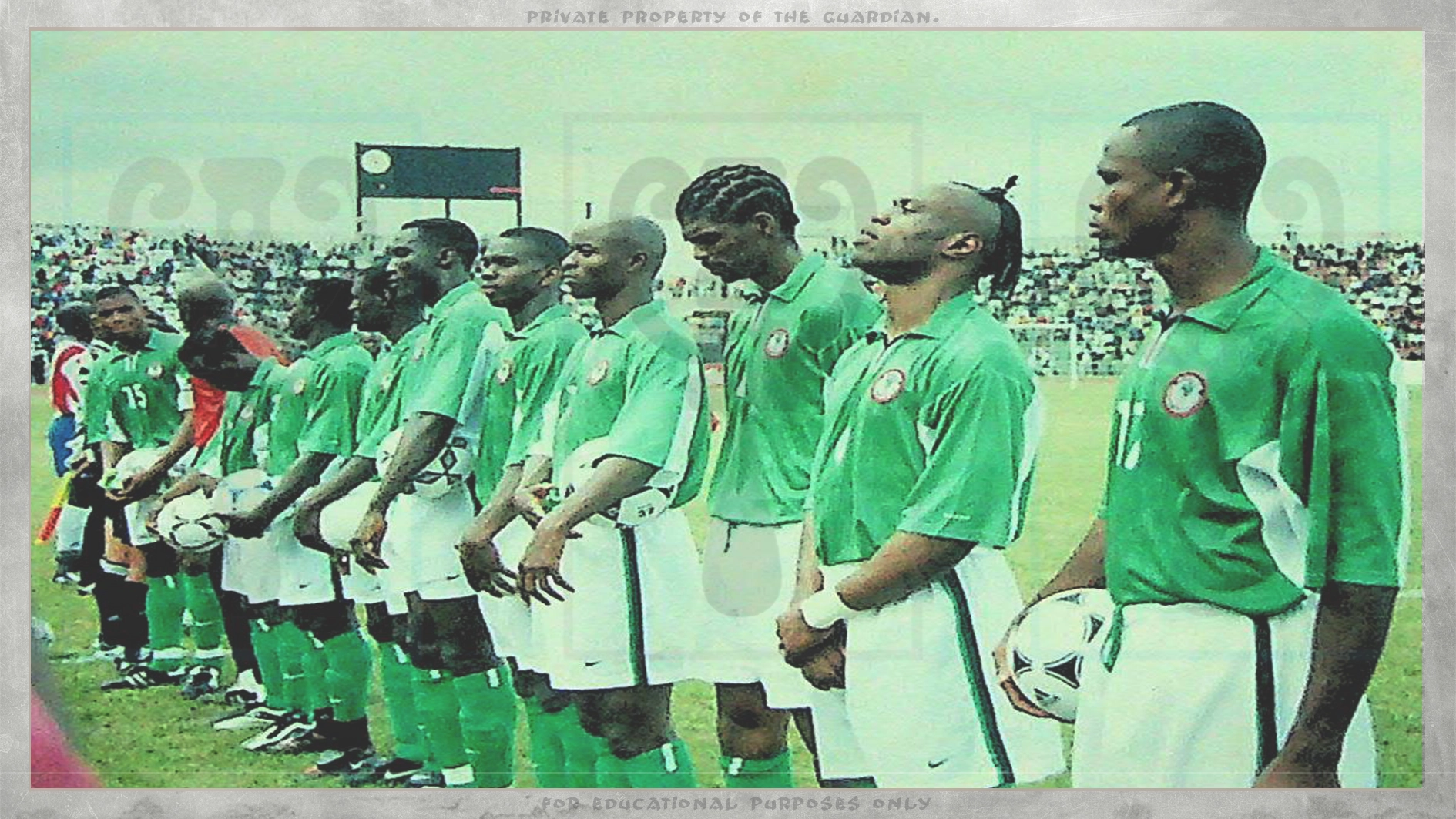
The maiden edition of the FIFA World Cup was held in 1930. However, Nigeria’s Super Eagles did not qualify for the competition until 1994, when the tournament was hosted by the United States of America (USA).
Since then, the Super Eagles have featured in five additional FIFA World Cup tournaments, making a total of six appearances. Nigeria failed to qualify for the 2006 FIFA World Cup in Germany, the 2022 FIFA World Cup in Qatar, and the 2026 FIFA World Cup to be jointly hosted by the USA, Canada, and Mexico.
In this report, The Guardian’s Oluyemi Ogunseyin reviews the Super Eagles’ performances at the FIFA World Cup over the years.
USA 94
Drawn in Group D alongside Argentina, Greece, and Bulgaria, Nigeria made its FIFA World Cup debut at the 1994 tournament in the United States. Led by Dutch coach Clemens Westerhof and powered by the raw talent of players such as Peter Rufai, Augustine Eguavoen, Ben Iroha, Stephen Keshi, Austin ‘Jay-Jay’ Okocha, Samson Siasia, Finidi George, Victor Ikpeba, Sunday Oliseh, Daniel Amokachi, and Rashidi Yekini, the Super Eagles announced themselves on the global stage in spectacular fashion.
The Nigerian team arrived in the United States accompanied by their vibrant supporters, the Nigerian Football Supporters Club, whose colourful displays, drums, trumpets, songs, and energetic atmosphere added excitement to the tournament.
The Super Eagles dazzled from their opening group match, playing with flair and fluidity as they thrashed a Bulgaria side led by Hristo Stoichkov 3-0.
In the 21st minute, the late Rashidi Yekini, assisted by Finidi George, scored Nigeria’s first-ever FIFA World Cup goal. Daniel Amokachi doubled the lead in the 43rd minute after another assist from Yekini, before Emmanuel Amuneke sealed the emphatic victory with a header in the 55th minute, again assisted by Finidi.
Nigeria lost 2-1 to Argentina in their second group match despite taking an early lead through Samson Siasia in the eighth minute. Claudio Caniggia scored twice to hand Argentina victory in a game remembered as the final international appearance of the late Diego Armando Maradona, who was later suspended after failing a drug test for ephedrine.
Despite the defeat, Nigeria topped Group D on goal difference after beating Greece 2-0 through goals from Finidi George and Daniel Amokachi. Argentina also progressed to the knockout stage.
Nigeria’s reward for finishing top of the group was a Round of 16 clash against eventual finalists Italy. Emmanuel Amuneke gave the Super Eagles the lead, but Roberto Baggio equalised late in the game before scoring the winner in extra time to send Italy through and break Nigerian hearts.
Nevertheless, the Super Eagles were widely celebrated for their entertaining style of football and were ranked fifth in the world by FIFA after the tournament — the highest ranking ever achieved by an African national team at the time.
France 1998
Nigeria returned to the FIFA World Cup in France in 1998 and once again reached the Round of 16, matching their performance from USA ’94.
With Bora Milutinović in charge and many members of the 1994 squad returning, expectations were high heading into the tournament.
Drawn in Group D alongside Spain, Bulgaria, and Paraguay, Nigeria stunned fancied Spain 3-2 in one of the biggest upsets of the tournament, coming from behind twice. Sunday Oliseh scored the winning goal with a stunning long-range strike that remains one of Nigeria’s greatest World Cup moments.
The Super Eagles secured qualification for the knockout stage with a 1-0 victory over Bulgaria, although they later suffered a 3-1 defeat to Paraguay in their final group game.
Nigeria’s hopes of surpassing the Round of 16 were dashed after a heavy 4-1 defeat to Denmark in the second round.
Notably, France ’98 remains the only FIFA World Cup tournament in which Nigeria qualified without facing Argentina in the finals.
Japan/Korea 2002
The 2002 World Cup in South Korea and Japan saw Nigeria again qualify with optimism. With a new squad and distinctive pastel green kits, the Super Eagles were expected to build on its strong performances in the 2000 and 2002 African Cup of Nations (AFCON).
This time around at the 2002 World Cup in Asia, Nigeria was drawn in group F with powerhouses Sweden, Argentina, and England. The first game against Argentina started with a strong defence that kept the first half scoreless. In the 61st minute, Gabriel Batistuta breached the Nigerian defence to put Argentina ahead and the South Americans would go on to win the game 1-0.
Nigeria’s second game against Sweden saw them take the lead courtesy of a wonderful goal by Julius Aghahowa but the Super Eagles eventually lost 2–1. Nigeria then drew 0–0 with England and bowed out in the first round.
South Africa 2010
After failing to qualify for the 2006 World Cup in Germany, the Super Eagles returned in 2010. On 14 November 2009, Nigeria qualified for the mundial after defeating Kenya by 3–2 in Nairobi.
Nigeria, however, lost its opening match against Argentina 1–0 at Ellis Park Stadium following a controversial Gabriel Heinze header in the sixth minute. In its second game, Nigeria led early on by a goal from Kalu Uche. A red card against Sani Kaita gave Greece the advantage.
Greece scored the equaliser late in the first half and Nigeria conceded the second goal in the second half with the Super Eagles eventually losing the game 2–1.
In their last group stage match against South Korea, Nigeria took an early lead in the 12th minute off of a great finish by Uche after a low cross from Chidi Odiah. However, goals from Lee Jung-Soo and Park Chu-Young gave South Korea a 2–1 lead, which looked to be enough for South Korea to advance into the round of 16.
However, Nigeria got a chance in the 66th minute, on the end of a pass from
Yusuf Ayila that was fed through the South Korean defense was none other than Yakubu Aiyegbeni. The pass found Aiyegbeni’s foot about four yards away from the empty goal but the striker shockingly pushed the ball wide of the left post to leave South Korea still ahead 2–1. Three minutes later, Yakubu was able to calmly finish a penalty to tie the score at two apiece, but Nigeria was unable to score again and the match ended in a 2–2 draw.
With this result, Nigeria was eliminated from the 2010 World Cup with just one point, while South Korea advanced into the round of 16 with four points. On 30 June 2010, following the team’s early exit and poor showing, the then President of Nigeria, Goodluck Jonathan suspended the national football team from international competitions for two years.
This suspension put the team at risk of being banned from international football by FIFA for reasons of political interference. On 5 July 2010, the Nigerian government rescinded its ban of the national football team from FIFA/CAF football competitions. Nigeria was indefinitely banned from international football due to government interference following the 2010 World Cup. Four days later, however, the ban was “provisionally lifted”.
Brazil 2014
Nigeria’s campaign in the 2014 FIFA World Cup opened with a disappointing 0–0 draw against Iran. Four days later, the team played their second game against Bosnia and Herzegovina, with a controversial 29th-minute goal by Peter Odemwingie giving the Super Eagles their first World Cup win since 1998.
They faced Argentina four days later, with the game ending in a five-goal thriller as the Albiceleste secured a hard-fought 3-2 victory. A third-minute Lionel Messi goal for the opposition was followed almost instantly with an equaliser by Ahmed Musa.
Messi gave Argentina the lead back just before half-time. In the second half, Musa leveled the game out again, as Messi was substituted and handed over his captaincy to Marcos Rojo, only for his replacement to put Argentina 3–2 ahead minutes later.
Nigeria lost the match, but still qualified for the round of 16. In the Round of 16, Nigeria faced France, an 18th-minute stabbed shot from Emmanuel Emenike saw the ball in the net, past the French goal-keeper but the goal was ruled off-side by the linesman.
Nigeria held them off until the 79th minute when a cross and a Paul Pogba header gifted France the lead. An accidental own goal by Super Eagles Captain Joseph Yobo in injury time put the result beyond any doubt, as the Super Eagles crashed out of the tournament. That was the third time Nigeria got eliminated in the World Cup round of 16.
Russia 2018
The Super Eagles became the first African team to qualify for the 2018 FIFA World Cup hosted by Russia after beating Zambia 1–0 in Uyo, Akwa Ibom State. On 3 June 2018, coach Gernot Rohr unveiled a 23-man squad for the 2018 FIFA World Cup.
They, however, lost their first group match 2-0 to Croatia in Kaliningrad, before t hey won 2–0 in the second match against brave Iceland, with Musa scoring a brace to increase his World Cup tally to four goals.
Nigeria had a huge chance to qualify for the round of 16 as Argentina got demolished 3–0 by Croatia. Despite this advantage, the Super Eagles lost 2–1 to Argentina in their last group stage match, with Victor Moses scoring Nigeria’s lone goal. Following Iceland’s defeat to Croatia, Nigeria missed the opportunity to advance to the round of 16 and got eliminated from the tournament.
