 Follow Us on Google News
 Follow Us on Google Discover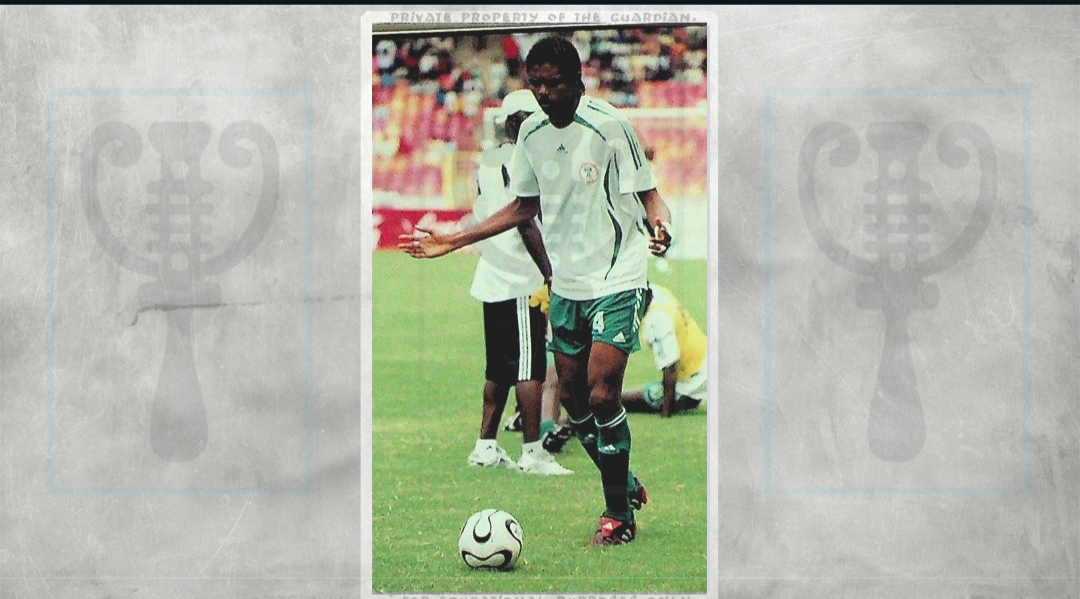
The history of Nigerian football will be incomplete without mentioning the legendary Nwankwo Kanu, whose legacy in the sport is undoubtedly one from the archives.
Born on August 1, 1976, in Owerri, Imo State, and nicknamed Papilo, Kanu rose from humble beginnings to become one of Africa and the world’s most decorated footballers, having won a plethora of trophies at both club and international levels.
Few footballers have carried the hopes of a nation and inspired generations the way Kanu has done, with his story one of talent, resilience, humility, and service to humanity.
His professional journey, which began at Iwuanyanwu Nationale in Nigeria, took him to some of the biggest clubs in world football, including Ajax Amsterdam of Holland, Inter Milan of Italy, Arsenal, West Bromwich Albion, and Portsmouth all in England.
Kanu’s trophy cabinet reflects a remarkable career. He won the UEFA Champions League with Ajax, Premier League titles with Arsenal, the UEFA Cup with Inter Milan, multiple FA Cups, and, famously, helped Nigeria secure the men’s football gold medal at the 1996 Atlanta Olympics, one of the greatest achievements in the sporting history of the West African nation.
The 49-year-old also remains one of the few players in football history to have won the Champions League, Premier League, FA Cup, UEFA Cup, and an Olympic gold medal.
Beyond football, Kanu’s greatest victory may have come off the pitch. Shortly after the Atlanta Olympics, doctors discovered a serious heart defect that threatened both his life and career.
Following a successful surgery, he returned to elite football and transformed his personal challenge into a mission to help others, leading him to establish the Kanu Heart Foundation in 2000.
This is an initiative that has funded life-saving heart surgeries for hundreds of underprivileged children across Nigeria and the African continent in general.
A two-time African Footballer of the Year, UNICEF Goodwill Ambassador, and global ambassador for Nigerian football, Kanu remains an enduring symbol of excellence, perseverance, and compassion.
His elegant style, extraordinary vision, and unforgettable moments on the field continue to inspire football lovers around the world.
Kanu’s Club Career
Iwuanyanwu Nationale
Kanu began his career at local side, Federation Works, before securing a transfer to Iwuanyanwu Nationale also in Nigeria.
Ajax Amsterdam
After a brilliant performance in Nigeria’s victorious U-17 World Championship campaign, he was signed by Dutch giants Ajax in 1993 for an undisclosed fee.
He made his debut for Ajax that year and went on to score 25 goals in 54 appearances. Kanu also came on as a substitute in Ajax’s 1–0 win over AC Milan in the 1995 UEFA Champions League final.
The next year, Ajax reached the final again, but lost to Juventus on penalties. Kanu started and played the entirety of that match.
Inter Milan
In 1996, Serie A club Inter Milan bought Kanu from Ajax for a transfer fee reportedly worth $4.7 million. That summer, he captained the Nigerian Dream Team that won gold at the Olympics, and scored two late goals in the semi-finals against Brazil to overturn a 2–3 scoreline into a 4–3 win in extra time. Kanu was also named African Footballer of the Year for that year.
However, soon after returning from the Olympics, Kanu underwent a medical examination at Inter, which revealed a serious heart defect, and it was believed by doctors that his career was over.
He, however, underwent successful surgery in November 1996 and did not return to his club until April 1997.
Arsenal
In February 1999, after making only 12 Serie A appearances and scoring just one goal for Inter, Kanu joined Arsenal for £4.15 million. He made his debut for the Gunners against Sheffield United in the FA Cup.
He scored his first goal for the North London club in the next round of the FA Cup against Derby County, coming off the substitutes’ bench to net the only goal of the game.
He quickly became known for his goal-scoring prowess from the bench, scoring important goals against Sheffield Wednesday, Tottenham Hotspur, and Aston Villa as a substitute.
Kanu became very popular among the fans for his two-fingered salute, which started in 1999 against Middlesbrough something that he later explained was based on the team’s nickname, The Gunners.
Kanu was named African Footballer of the Year for the second time in 1999. In the 1999–2000 season, he scored 17 times in 50 matches for the Gunners, including a hat-trick in 15 minutes against Chelsea in October 1999 to turn a 2–0 deficit into a 3–2 victory at Stamford Bridge.
Kanu then won the 2003 FA Cup with Arsenal. He is also a member of the “Invincibles”, the Arsenal side that finished the 2003–04 season of the Premier League undefeated.
He played 197 games for Arsenal, scoring 44 goals. In the summer of 2004, after his contract with Arsenal ended, he moved to West Bromwich Albion on a free transfer. In 2008, Kanu was voted 13th in the “Gunners’ Greatest 50 Players” poll.
The 49-year-old’s Premier League medal collection is matched only by John Obi Mikel who played 249 times in the midfield for Chelsea over a 10-year period. Kanu won 113 of the EPL games he played and lost 85.
West Bromwich Albion
West Bromwich Albion had just been promoted to the Premier League for the second time in the space of two years but Kanu started as a regular for the club, making his debut in a 1–1 draw away at Blackburn Rovers on 14 August 2004.
He scored his first goal for Albion on 18 September 2004, an 88th-minute equalizer in a 1–1 home draw against Fulham.
Nevertheless, the 2004–05 season was ultimately a memorable one for West Brom which became the first club to avoid relegation from the Premier League after being bottom of the table at Christmas.
In his two years at The Hawthorns, he made 58 appearances, 16 of them as a substitute and scored nine goals.
Portsmouth
Kanu was a free agent following his departure from West Brom, and he signed for Portsmouth on a one-year deal shortly before the start of the 2006–07 season.
Kanu made his debut for Portsmouth as a substitute against Blackburn Rovers on 19 August 2006, the opening day of the 2006–07 Premier League season. He scored twice and missed a penalty.
Kanu went on to finish the season as the top scorer for Portsmouth, with 12 goals altogether. He then signed a new one-year deal with the club.
In his second season at Portsmouth, Kanu scored in both the FA Cup 1–0 semi-final win against West Brom and the 1–0 win in the final against Cardiff City, earning him a third FA Cup winner’s medal.
International career
Kanu was a member of the Nigerian national team from 1994 to 2011, making his debut for the Super Eagles in a friendly against Sweden.
Earlier on at the start of his career, Kanu was instrumental in Nigeria’s overall success at the 1993 FIFA U-17 World Championship in Japan and their subsequent 2–1 victory over Ghana in the final.
With five goals, he was the second joint-scorer in the tournament with Peter Anosike and Manuel Neira, behind compatriot and captain Wilson Oruma.
As well as winning the Olympic gold in the football event at the 1996 Olympics in Atlanta, where he scored the winning goal in the 4–3 semi-final win over Brazil, his second goal of the match, Kanu participated at the 1998 and 2002 FIFA World Cups.
On 24 June 2010, Kanu ended his international career following Nigeria’s exit from that year’s World Cup in South Africa. The Super Eagles lost their group matches against Argentina and Greece, before drawing 2–2 with South Korea. He won 86 international caps and scored 13 goals for Nigeria.
