 Get Guardian on Google
Tunisian President Kais Saied has set about dismantling institutional checks on his authority since his July power grab, and state television is an obvious target.
Before the 2011 revolution that ousted authoritarian President Zine el-Abidine Ben Ali, state television spouted the government line and shunned guests who deviated from it. Afterwards, the state channel Wataniya broadcast talk shows with an array of politicians and commentators, including Islamists, leftists, and human rights activists – people who previously were more likely to be in prison or exile than on air.
On July 25, 2021, Saied suspended parliament, sacked the prime minister, and announced his intention to direct the judiciary. The next day, police evicted the pan-Arab news channel Al Jazeera from its Tunis headquarters. On July 28, Saied replaced Wataniya’s director.
Saied has since suspended much of the post-revolutionary constitution and dissolved the High Judicial Council, a body intended to protect judicial independence. If he passes a draft decree-law on associations, he will endanger the freedom that independent groups have enjoyed since 2011.
Meanwhile, Saied’s roadmap for a return to normal governance involves a “national consultation” on the country’s political future, followed by a constitutional referendum and parliamentary elections in July and December, respectively.
Since August, Wataniya’s talk shows have excluded almost everyone who openly doubts the president’s path. They invited no one who called his actions a “coup,” or who questioned the wisdom of the national consultation that bypassed constitutional institutions in favor of Saied’s preferred style of “direct democracy.”

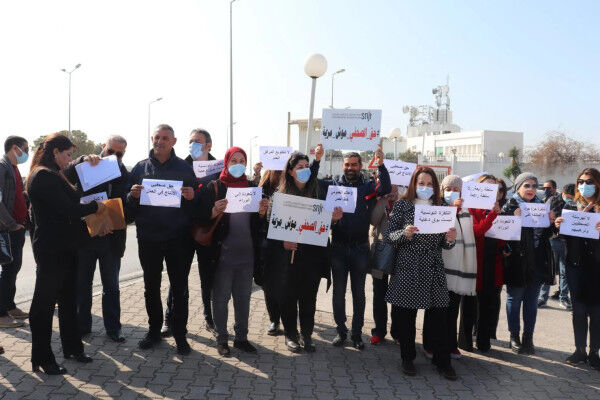
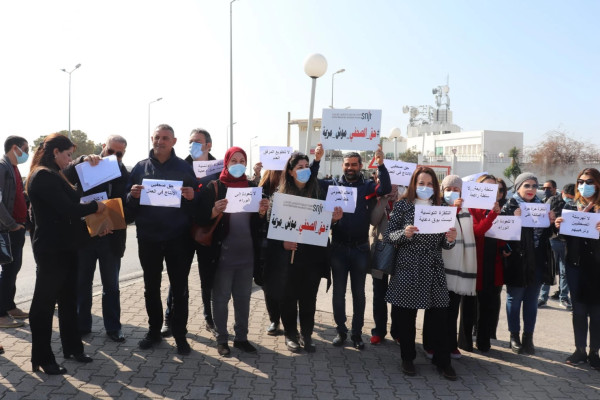
Fortunately, Tunisians still hear opposition views on state radio and several privately owned television stations. But at state television, some staff are angry to see one of the revolution’s accomplishments eroding. They brandish their institution’s 2012 editorial charter, which says that its mission is to “fulfill the citizen’s right to free and impartial media … independently of any political or economic pressure…. Independence means the freedom to choose subjects and guests without any external influences.”
On March 11, the National Syndicate of Tunisian Journalists (SNJT) threatened a journalists’ strike if the state did not meet their demands to reverse both the censorship and deteriorating conditions at Wataniya.
Yassine el-Bahri, a Wataniya cameraman who is also a SNJT vice president, said, “Our television is supposed to be public, not governmental.”
A struggle is under way to preserve that distinction.
Distributed by APO Group on behalf of Human Rights Watch (HRW).