 Follow Us on Google News


 Follow Us on Google Discover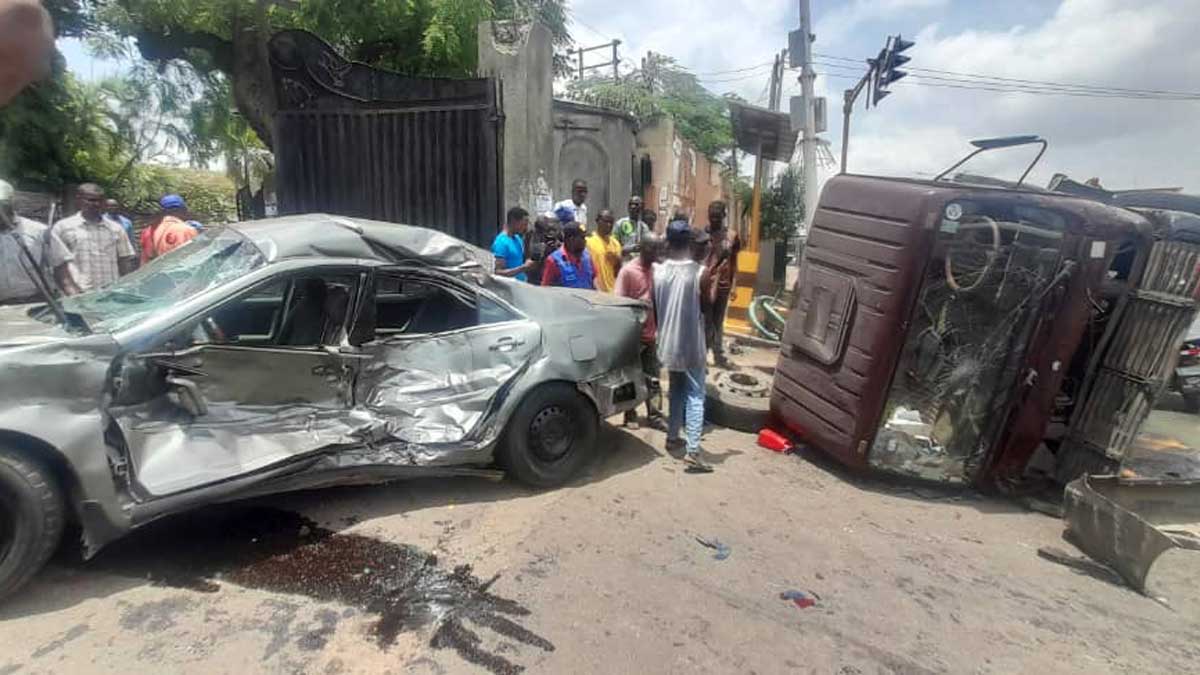

Experts have said that defensive driving, coupled with a good road network, are critical to reducing road traffic crashes (RTCs).
[ad]
The stakeholders, who met at the onthehighway Africa’s Road Safety Project 52 training event for volunteers in Lagos, also urged the police and Federal Road Safety Corps (FRSC) to enforce discipline on the highways to enhance safety and security of lives.
Council member of the Manufacturers Association of Nigeria (MAN), Anambra, Enugu, and Ebonyi State Branch, Ijeoma Ezeasor, said road safety is a shared responsibility, and that everyone must work together to achieve it.
Managing Director of Truckmasters Nigeria, Tony Arenyeka, in his goodwill address, stressed the shared responsibility of road safety.
He said the government is responsible for constructing new and better roads for the nation, but drivers, pedestrians, and cyclists also have a role to play in ensuring road safety.
The Special Guest Speaker, Dr Oseme Oigiagbe, spoke on defensive driving techniques.
He highlighted that defensive driving enables drivers to identify and avoid potential road hazards, saving lives, time, and money. He urged motorists to imbibe this skill to combat road traffic crashes.

The event’s speakers, including the Chief Guest Chairperson of the Red Cross Society of Nigeria, Lagos branch, Adebola Kolawole, also reiterated the message, emphasising the shared responsibility on road safety.
In response to this need for increased advocacy and involvement, the Founder of on the highway Africa, Julie Chi-Nwaoha, conceptualised her Road Safety Project 52, which is aimed at strengthening road safety and aiding the Federal Road Safety Corps (FRSC) by enlisting volunteers.
Bearing in mind that road safety is everyone’s business, Chi-Nwaoha called for volunteers to help the Corps meet its mandate of eradicating RTCs and promoting a safer driving environment.
She explained that road traffic injuries are a leading cause of death for people aged five to 44; they kill more people yearly than malaria.
[ad]

