 Follow Us on Google News


 Follow Us on Google Discover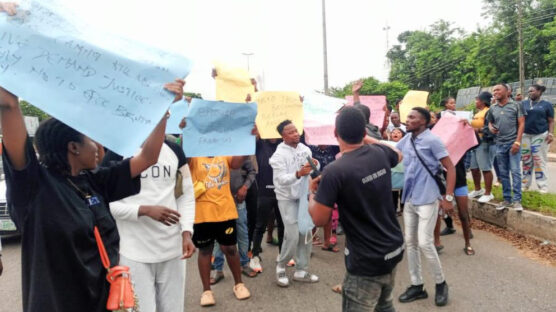

A Ghanaian court blocked a planned youth-led protest on Wednesday aimed at addressing corruption, the high cost of living and the president’s failure to sign a controversial anti-LGBTQ bill into law.
[ad]
The protest, dubbed “The Gen-Z demo,” was organized by a coalition of civil society and pressure groups and scheduled to take place from July 31 to August 6.
The organizers hoped to emulate similar youth-led protests in Kenya and Uganda, aiming to pressure President Nana Akufo-Addo’s government to address the depreciating cedi currency and soaring living costs.
High court judge Mary Yanzuh blocked the protest following a police application seeking to prohibit the event.
The police argued that the extended duration of the protest posed security and logistical challenges.

“Given the number of days proposed for the protest, providing adequate security would severely strain our human, logistical, and operational capabilities, especially in this election year with other political activities taking place,” police prosecutor Sylvester Asare told AFP.
[ad]
READ ALSO: Ghana parliament passes anti-LGBTQ bill
“We are deeply disappointed by the court’s decision,” said Bernard Mornah, one of the protest organizers. “This protest was a chance for the youth to voice their frustrations and demand accountability.”
“Blocking this demonstration silences our calls for change and undermines our democratic rights,” he told AFP.
Ebenezer Havor, a convener of the demonstration, also expressed frustration over the ruling.
He told AFP: “Our intention was to call on the president and his team to implement measures to fix the economy, tackle corruption, and show their commitment to the Sexual and Ghanaian Family Values Bill.”
“This bill reflects the values of many Ghanaians, and the president’s refusal to sign it is a significant point of contention.
[ad]
“Ghana’s parliament voted to pass the controversial bill to severely restrict LGBTQ rights in February, but the president has yet to validate it into law.
Activists have condemned the so called “anti-gay bill”, but it is widely supported in Ghana, where in a separate ruling earlier this month the supreme court upheld a law criminalizing gay sex.
– Economic challenges –
The protest cancellation comes as Ghana grapples with economic challenges.
Despite a slight easing of inflation to 22.8 percent in June 2024, the figure remains well above the central bank’s target band of 6-10 percent.
Ghana, a major producer of gold and exporter of cocoa, has been struggling with external debt servicing since 2022, prompting a $3 billion debt relief agreement with the International Monetary Fund.
READ ALSO: Ghana president delays decision on anti-LGBTQ law
The latest Afro barometer report on democratic trends in Africa highlights growing dissatisfaction with democratic institutions and leadership on the continent.
While young people in Africa are supportive of democratic principles, they are increasingly disillusioned with their leaders’ ability to deliver tangible benefits, the report said.
The blocked protest in Ghana underscores this widening gap between young people and their government.But the pressure groups remain undeterred and have vowed to continue their advocacy through other means.
“Our voices will not be silenced,” Mornah said. “We will find new ways to demand the change that Ghana needs.”
[ad]

