 Follow Us on Google News
 Follow Us on Google Discover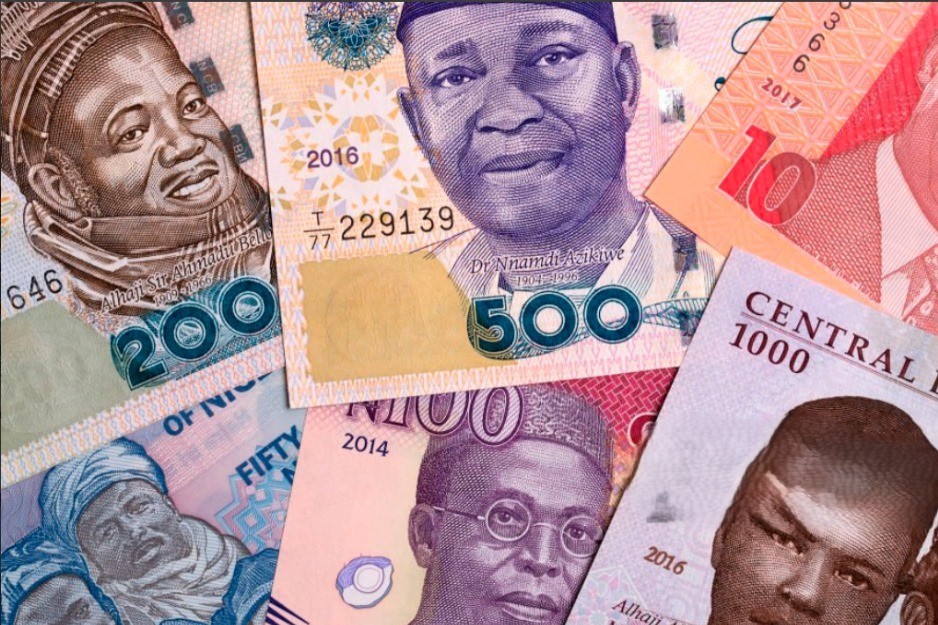
When the Central Bank of Nigeria (CBN) announced in October 2022 that it would redesign the ₦200, ₦500, and ₦1000 banknotes, the country collectively gasped. The last major currency redesign occurred nearly two decades ago, and this move, framed under the noble objectives of curbing inflation, controlling money laundering, and promoting a cashless economy, came with a sharp deadline: all existing high-value notes would cease to be legal tender by January 31, 2023.
As a financial analyst observing the policy landscape, I find the decision both daring and precarious, akin to a high-stakes chess move in the middle of a storm. In theory, currency redesigns can offer governments a powerful tool for economic recalibration, but timing, implementation strategy, and public trust determine whether the gambit will succeed or collapse into chaos. Unfortunately, early signs suggest that the latter may be playing out.
The Motivation
The CBN Governor, Godwin Emefiele, cited five key motivations for the policy: reducing counterfeit currency, mopping up excess liquidity outside the banking system, promoting financial inclusion, encouraging digital transactions, and tightening control over money supply to address Nigeria’s inflation woes. On paper, these are legitimate goals.
As of 2022, over 85% of the currency in circulation, about ₦2.7 trillion out of ₦3.2 trillion, was held outside the formal banking system. This level of currency hoarding hampers monetary policy effectiveness. In a country where informal transactions dominate the economy, many large-scale financial activities remain outside regulatory oversight. In theory, flushing this money back into the banking system through a redesign could give the apex bank a clearer handle on liquidity and help stabilize inflation, which hovered above 21% by October. But intention alone does not guarantee success.
Implementation Challenges
The biggest challenge, as any seasoned economist would note, is not the policy’s rationale but its execution. In developed economies with high banking penetration and digital infrastructure, transitions like these are still handled with caution. In Nigeria, where internet penetration is barely 51%, mobile network disruptions are common, and just 45% of adults hold a bank account (EFInA, 2020), such rapid implementation risks backfiring.
The initial six-week window for returning old notes and accessing the new ones is highly unrealistic. Rural dwellers, who often have limited access to financial services, face even greater disadvantages. Reports from Borno, Benue, and parts of Ekiti already indicate confusion, scarcity of new notes, and queues at banks. Small businesses, market women, and artisans, the very backbone of Nigeria’s informal economy, are struggling to conduct daily transactions as banks run short of new cash. This is not just an inconvenience; it threatens to paralyze commerce.
Cash Scarcity and the Risk of Recessionary Shock
What we’re witnessing in real time is a liquidity squeeze that could mirror a mild form of recessionary shock. When an economy starves of liquidity, business slows down, consumer confidence drops, and the velocity of money, how quickly money changes hands plummets.
Already, there are reports of increased demand for Point-of-Sale (PoS) operators, whose fees have soared. But this isn’t a sign of digital transformation, it’s desperation. With cash becoming scarce and new notes not readily available, traders and consumers alike are trapped in a limbo. Worse still, a policy that was meant to reduce crime is inadvertently opening new avenues for exploitation. Fake new notes are already circulating in markets.
If this persists through January, we may see declines in GDP growth, particularly in the informal sector, which contributes nearly 65% of Nigeria’s GDP. Consumer spending will fall, and micro, small, and medium enterprises (MSMEs) may face solvency threats. The ripple effect could exacerbate unemployment, which is already at 33%, and underemployment, currently at 22.8%.
Political Undertones and the 2023 Elections
While the economic arguments for the redesign are notable, one cannot ignore the political undercurrents. Coming just months before the 2023 general elections, critics have argued that the policy is targeted at political actors who have hoarded cash for vote-buying. Emefiele’s insistence on not shifting the January 31 deadline has only fueled these speculations.
The CBN’s independence is constitutionally protected, but political realities in Nigeria often seep into monetary policy. If this policy is indeed politically motivated, its economic consequences may be considered collateral damage in a larger power play. Yet, history has shown that tampering with monetary systems for short-term political goals rarely ends well.
India’s 2016 demonetization exercise is a case in point. While it temporarily disrupted illicit wealth flows, the long-term impact on inflation was negligible, and the economic shock to small businesses was considerable. Nigeria risks repeating that mistake.
What Should Be Done Differently?
A better approach would have been a phased transition, supported by a robust digital literacy campaign and targeted incentives for rural banking. Instead of a six-week conversion period, a three-month or even six-month window would have cushioned the shocks. The CBN could have deployed mobile banking vans to rural communities or leveraged Nigeria’s 1.4 million PoS agents more effectively to serve as distribution points for the new notes.
Additionally, the rollout should have included a clear communication strategy. Many Nigerians first heard about the policy via WhatsApp broadcasts or unverified social media posts. This information gap sowed confusion, fear, and resistance. Monetary policies are only as effective as the public’s understanding and compliance. In this case, both are lacking.
Long-Term Implications
In the long term, the policy may help boost financial inclusion if Nigerians are nudged into digital platforms. Fintech players like OPay, PalmPay, and Moniepoint have already seen a spike in transactions, indicating growing acceptance of digital payments. But such gains must not come at the cost of short-term economic distress.
The CBN will need to tread carefully going forward. If the policy leads to widespread hardship, public trust in the central bank, already fragile, could erode further. Worse, it may drive people back into informal savings mechanisms, undoing any gains in formalization.
For investors, the uncertainty surrounding Nigeria’s monetary policies adds another layer of risk. While the equities market has performed well in 2022, driven by domestic investors fleeing inflation, sustained volatility in the monetary space may deter foreign portfolio investors who already face challenges in repatriating funds.
The currency redesign policy is a classic example of good intentions meeting poor execution. While the Central Bank of Nigeria must be commended for taking bold steps to address inflation and bring more transparency to financial flows, its approach so far risks alienating the very people it aims to help.
The coming weeks will determine if this policy becomes a landmark reform or just another chapter in Nigeria’s long history of monetary misadventures. Policymakers must listen to feedback from the public, ease the transition period, and implement corrective measures quickly. A functional currency system is the bedrock of a healthy economy. Tampering with it without adequate infrastructure or timing can lead not to reform, but to ruin.
Olaniyan is a finance professional with a strong background in financial management, strategic planning, and risk analysis

