 Follow Us on Google News


 Follow Us on Google Discover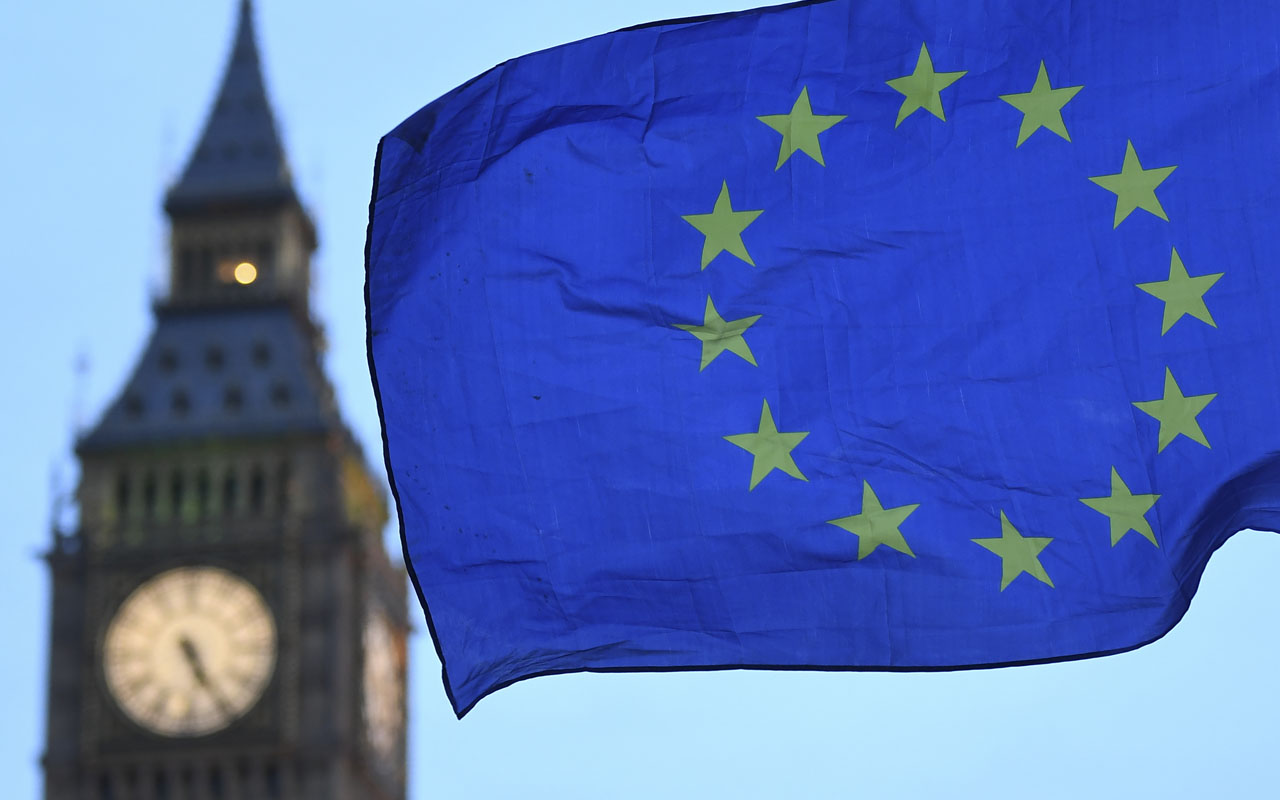

It is one for a “Biafrexit” in Nigeria. On March 29, 2017, the British government took an historic decision by formally triggering off or invoking the all important “article 50” of the European Union treaty of Rome signaling her final departure from the 44-year old European Union.
The recent British action to formally relinquish her membership of the 28 member nations organisation came on the heels of the historic referendum organised by the British Government in 2016 to leave the European Union which the British people considered anti-British interests and anti-thetic to her democratic values and norms.
According to the British Prime Minister Theresa May, in her historic speech to the British Parliament, announcing Britain’s departure from the EU, the British people would no longer be subjected to the rather obnoxious and totally unacceptable laws of the EU in far-away Brussels, but would now be able to conduct their own affairs based on the age-long British democratic principles and values. In essence, the British people have now regained their independence from the rather unwieldy and incompatible European Union.
[ad]
At the outset of the formation of the European Union (EU), the British never hid their disenchantment with lack of enthusiasm for the affairs of the EU occasioned by the bureaucratic bottlenecks as well as the undemocratic process often experienced in running the affairs of the EU at its head-quarters in Brussels. This total lack of enthusiasm obviously was responsible for the British refusal to join the European single monetary system, the “Euro” but rather maintained their own monetary system, the British pound sterling considered to be stronger than the “Euro”.
The European Union leaders in Brussels had always been suspicious of Britain’s real motives within the Union and had often accused her of hypocrisy and always picking policies that only suited the British national interest thereby undermining the spirit and letters of the European Union charter.
It is, however, assumed that the European leaders will now heave a sigh of relief consequent upon Britain’s final departure from the union despite the public expression of regrets and sadness by EU leaders in Berlin, Paris and Brussels. The European leaders had always considered the British posture as that of a dog in the manger or a clog in the wheel of progress.
Although an air of uncertainty seems to be hanging over the future of the 27 member European Union, nonetheless the European leaders seem determined and resolute more than ever before to maintain and further consolidate the unity of the Union despite unexpected departure of Britain from the EU.

The historic decision to leave the EU, no doubt was greeted with mixed feelings across the countries that make up the European Union and even beyond, nevertheless the British decision should be respected by all and sundry as it was clearly the true reflection of the collective will of the British people freely expressed through the democratic process.
It is pertinent to mention in this piece, however, that the Scottish Parliament which is an integral part of the United Kingdom recently approved the conduct of a second referendum or “Scotexit” for the independence of Scotland from the United Kingdom as a fallout or the consequence of “Brexit.” It will be recalled that the Scottish people in 2014 organised the first referendum or “Scotexit” for Scotland’s independence from the United Kingdom but was narrowly defeated by a slim margin of votes. It is equally instructive to observe also that the Scottish people voted overwhelmingly to remain in the European Union during the “Brexit” referendum unlike her counterparts in the United Kingdom such as England, Wales and Northern Ireland who voted decisively to leave the EU hence the Scottish current agitation to opt out of the UK in order to maintain her membership of the European Union.
[ad]
The British Prime Minister, Theresa May recently visited the capital of Scotland, Edinburgh where she met with the first Minister of Scotland, Nicola Sturgeon ostensibly to dissuade her from proceeding with the second referendum for independence as was the case with her predecessor David Cameron who swiftly deployed his political dexterity and brinkmanship and dramatically turned the table against the proponents of the “YES” vote who were already on the verge of securing decisive victory for the Scottish independence during that historic referendum.
It has become imperative, therefore, that the Nigerian authorities should take a cue from the British experience with the European Union and urgently take the necessary steps to organise a referendum for the people of the South East region alongside any other ethnic nationality or nationalities who had long been agitating for self-determination and independence in accordance with the United Nations Charter on human rights.
Let us, therefore, adopt our own version of “Brexit” known as “Biaexit” or “Biafrexit” just as the Scottish people will soon have their own “Scotexit” to determine their own future. It is said that what is good for the goose is also good for the gander. Let us, therefore, make haste while the sun still shines by allowing the people of “Biafra” to take their destiny into their own hands through a referendum in order to ascertain the true wishes of the people.
Akabogu, a public affairs analyst, wrote from Enugwu-Ukwu, Anambra State.
[ad]

