 Follow Us on Google News


 Follow Us on Google Discover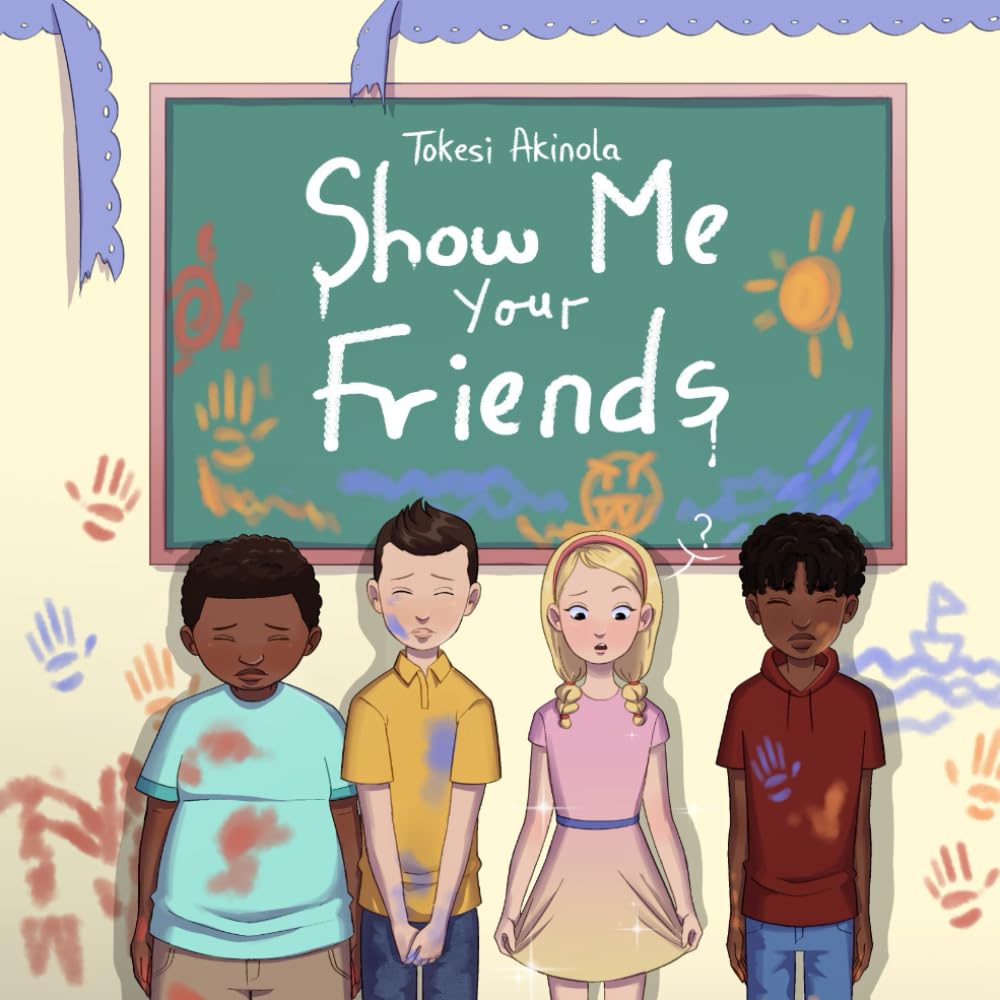
From the proverb ‘Birds of a feather flock together’ to the African philosophy of Ubuntu — I am because we are — few truths are as enduring as the idea that our friendships shape who we become. Tokesi Akinola’s Show Me Your Friend is an illustrated storybook that takes this maxim seriously. Positioned as both a children’s tale and a moral guide, it asks readers of all ages to reflect on how companionship moulds character, choices, and ultimately, destiny.
The story unfolds in four chapters, tracing the antics of Luke, Bill, Papi, and Lucy. What begins as innocent mischief escalates when Papi gets trapped in an iron barricade, exposing the frailties of trust and the weight of peer influence. Bill’s false accusation against Lucy further illustrates how association and reputation can damage credibility, even in the face of honesty. Adult figures—teachers, parents, and particularly Lucy’s father—step in as guides, steering the children toward reflection and accountability. The narrative closes with a clear moral: integrity, honesty, and discernment are essential life skills, and friendships are central to sustaining them.
Stylistically, Akinola opts for clarity over complexity. The tone is pastoral and direct, almost like that of a mentor speaking to younger readers. Simple language, reinforced by illustrations, makes the book accessible to children, while its moral weight invites parents, educators, and even professionals to reconsider their own circles of influence. In this, the book succeeds as both story and cultural mirror.
Yet, the book’s strengths are also its limits. Its central theme—that friends shape destiny—is pressed so firmly and repeated so often that nuance is sometimes lost. Friendships are presented in stark binaries: uplifting or corrupting, liberating or entrapping. While effective for children, this simplicity risks underestimating the ambiguities of adult relationships.
Another tension lies in its religious framing. Scriptural references lend moral authority for some audiences but may alienate secular readers who prefer psychological or sociological grounding. The story’s appeal could have been broadened by balancing faith-based insights with more universal frames of reference.
Nevertheless, Show Me Your Friend arrives at a timely moment. In an age where digital interactions often replace real-world connections, Akinola reminds readers of the formative power of community. The book resonates as a call to parents, guardians, and young people to reflect on the company they keep — and for adults, a nudge to audit the alliances shaping their personal and professional lives.

Ultimately, Akinola’s book is both a cautionary tale and a cultural reminder. Its lesson is clear and direct: friendships are not casual embellishments of life but scaffolding for our futures. If it errs on the side of certainty, it does so out of conviction that the stakes—character, destiny, and community — could not be higher.

